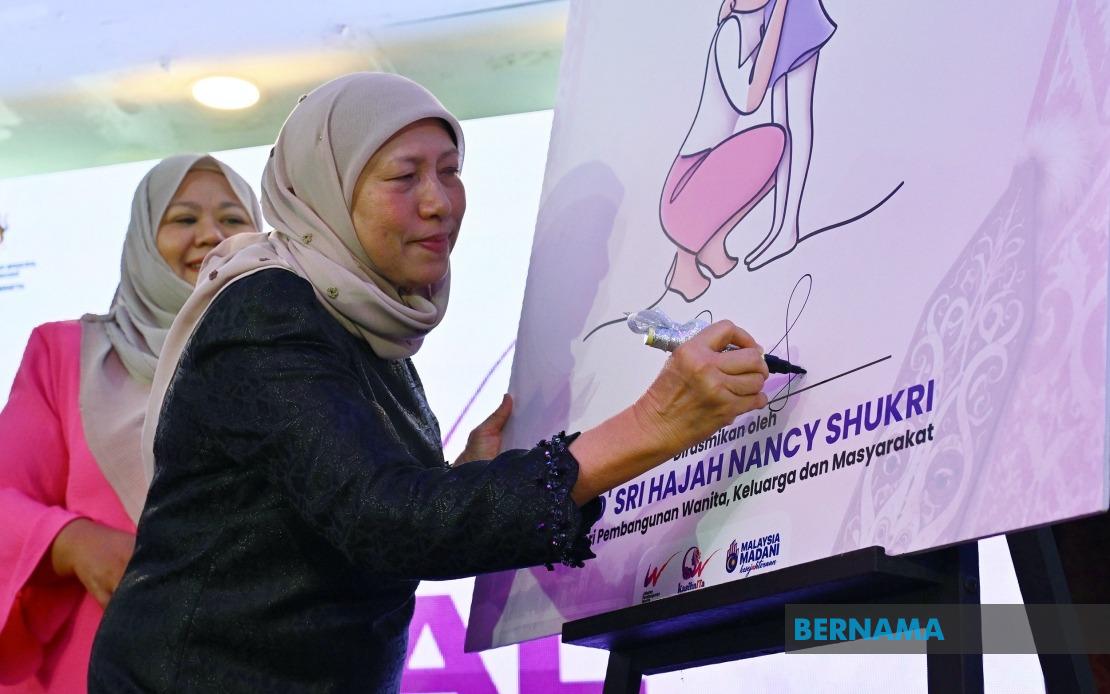
The Ministry of Women, Family and Community Development has inaugurated the latest phase of its Single Mothers Support programme in Sarawak, marking a significant expansion of the national initiative designed to strengthen the economic resilience and social standing of single mothers across the country. Minister Datuk Seri Nancy Shukri presided over the opening of the three-day KasihnITa 2026 programme in Kuching, which attracted approximately 130 participants seeking practical guidance on managing household finances and navigating available welfare provisions. The launch in Sarawak follows earlier rollout stages in Selangor, reflecting the government's phased approach to bringing comprehensive support services to single-mother households in different regions.
The programme represents a coordinated effort across multiple pillars of the federal government, deliberately bringing together institutions that address different dimensions of single mothers' challenges. The Credit Counselling and Debt Management Agency, Bank Negara Malaysia, the Legal Aid Department, and the Syariah Judiciary Department all participate, each contributing specialised knowledge relevant to the lived experiences of single mothers. Rather than operating in isolation, these agencies deliver integrated advisory services within a single platform, allowing participants to access information about debt management, financial planning, legal recourse, and religious considerations simultaneously. This integrated model reflects recognition that single mothers' struggles rarely fit neatly into bureaucratic silos; women navigating single parenthood often encounter overlapping financial, legal, and social pressures that require coordinated solutions.
Financial literacy emerged as a central pillar of the KasihnITa initiative. Many single mothers lack formal training in household budgeting, investment fundamentals, or long-term financial planning, challenges that are exacerbated by limited household incomes and competing demands for scarce resources. By equipping participants with structured knowledge about financial management, the programme aims to help women make more informed decisions about allocating money across essential needs, debt servicing, children's education, and modest savings. For Malaysia's single-mother population, which often faces higher poverty risks and vulnerability to economic shocks compared to two-parent households, this capacity-building component addresses a critical gap in the social support infrastructure.
Equally significant is the legal dimension embedded within KasihnITa. Child maintenance remains a persistent challenge in Malaysian family law, with many single mothers reporting difficulty enforcing court-ordered maintenance payments from ex-partners. The programme provides a dedicated platform for mothers to receive guidance from the Legal Aid Department regarding mechanisms for pursuing delinquent maintenance claims, while the Syariah Judiciary Department addresses questions specific to Islamic family law contexts. By demystifying legal processes and clarifying the remedies available when ex-husbands fail to honour financial obligations toward their children, the initiative empowers mothers with information that can translate directly into improved family welfare. This addresses not merely financial hardship but also the psychological burden many single mothers carry when unable to secure the resources children are legally entitled to receive.
Minister Nancy Shukri emphasised that the programme's design prioritises gathering direct feedback from participants to inform future policy adjustments and programme enhancements. Rather than assuming government officials fully understand single mothers' needs, the KasihnITa framework treats participants as valuable sources of insight into gaps in existing services and emerging challenges. This feedback-driven approach contrasts with top-down policy formulation and reflects a commitment to evidence-based refinement of women's development initiatives. By listening to the voices of those directly experiencing single motherhood, policymakers can identify which services remain inaccessible, which offerings miss practical realities, and which interventions truly deliver value. For Malaysia's broader women's empowerment agenda, this participatory dimension models how government can move beyond symbolic commitment toward substantive responsiveness to women's actual circumstances.
The psychological and social dimensions of single motherhood also received explicit attention in Minister Shukri's remarks. Beyond material assistance and knowledge transfer, KasihnITa creates peer-support spaces where single mothers share experiences and build mutual encouragement networks. Isolation intensifies the burden of solo parenting; when women connect with others navigating similar challenges, they gain practical advice from peers, reduce shame or stigma, and develop collective confidence that solutions exist. The three-day programme format, which brings participants together for sustained interaction, facilitates relationship-building and emotional validation alongside technical skill development. This holistic approach recognises that sustainable empowerment requires attending to emotional and relational dimensions alongside financial and legal ones.
The placement of Sarawak as the second major rollout location reflects the government's recognition that single mothers constitute a meaningful proportion of the state's population and warrant targeted policy attention. Sarawak, as one of Malaysia's two largest states by geography and a region with distinct economic structures and cultural contexts, benefits from having national programmes adapted to local circumstances. The three-day engagement format allows facilitators from federal agencies to spend sufficient time understanding Sarawak-specific contexts, whether related to employment patterns, cost of living variations, or cultural norms affecting single mothers' social standing and access to informal support networks. This regionally-grounded implementation model enhances the relevance and effectiveness of national initiatives.
The KasihnITa initiative sits within a broader Malaysian policy environment increasingly attentive to women's economic security and family welfare. Single motherhood has become statistically more common across Malaysia as a consequence of delayed marriage, increased divorce, widowhood, and non-marital births, creating a growing population segment whose needs have not always been adequately addressed by traditional family-support policies designed around nuclear two-parent households. By naming single mothers as an explicit policy target and developing dedicated programmes, the government signals that women raising children alone deserve recognition as worthy of state investment and developmental attention. This represents a modest but meaningful shift in how Malaysian policy frameworks conceptualise family diversity and women's roles.
The child maintenance dimension carries particular significance for Malaysia's legal and judicial systems. While Islamic law and civil family law in Malaysia establish clear obligations for fathers to support their children financially, enforcement mechanisms have historically been inconsistent and time-consuming. KasihnIta's inclusion of legal guidance from both the Legal Aid Department and the Syariah Judiciary Department addresses this enforcement gap by helping mothers understand their rights and the practical steps available to compel compliance. By connecting mothers with legal resources and information, the programme transforms abstract legal entitlements into concrete possibilities for improving family income security. For children, whose welfare depends on reliable financial support, this justice dimension has measurable implications for educational access, nutritional adequacy, and developmental outcomes.
Looking forward, the staged rollout of KasihnITa across Malaysia's states and federal territories offers an opportunity to test, learn, and refine what comprehensive single-mother support looks like in the Malaysian context. Feedback from Selangor and Sarawak participants will likely inform how the programme expands to other regions, which services require strengthening, and which new partnerships or interventions might enhance effectiveness. As Malaysia continues to diversify its economy and society, policies that strengthen the resilience of single-mother households contribute to broader social stability and inclusive growth. Minister Shukri's framing of KasihnITa as part of a larger commitment to ensuring no woman is left behind in Malaysia's development agenda positions single mothers not as welfare recipients but as participants deserving of genuine partnership in building prosperous, resilient communities.

