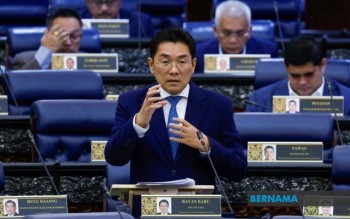
Deputy Investment, Trade and Industry Minister Sim Tze Tzin has announced that Kedah secured RM1.4 billion in approved investments spanning 50 projects during the first quarter of 2026, reflecting sustained momentum in the state's industrial development drive. Speaking during parliamentary question-and-answer proceedings on June 29, Sim emphasised that this injection of capital underscores the government's deliberate positioning of major industrial hubs—Kulim Hi-Tech Park, Kedah Rubber City, and the Kerian Integrated Green Industrial Park—as pivotal engines for broader regional economic expansion.
The investment achievement carries particular significance for Malaysian manufacturing competitiveness in Southeast Asia. With regional rivals strengthening their industrial bases, Kedah's ability to continue attracting substantial foreign direct investment demonstrates the state's enduring appeal as a location for technology-intensive operations. The scale of the first-quarter intake suggests the northern region remains attractive to international investors despite global economic headwinds, a positive indicator for Malaysia's manufacturing-led growth strategy in a period of shifting supply chains and increasing nearshoring trends.
Crucially, the government's articulated approach extends beyond conventional industrial clustering. Parliamentary member Ahmad Tarmizi Sulaiman (PN–Sik) had specifically challenged ministers to explain how districts like Sik, Baling, and Padang Terap—communities historically dependent on agriculture—would benefit materially from high-technology investments occurring within industrial parks. Sim's response revealed a deliberate strategy to harness spillover effects, positioning these surrounding areas as beneficiaries through employment creation and the development of local supply-chain enterprises. This reflects an evolving understanding among policymakers that industrial development must address persistent disparities between urban and rural prosperity.
The government's commitment to infrastructure enhancement forms a cornerstone of this inclusive growth vision. Federal Route FT004, which connects Kulim Hi-Tech Park to Bukit Karangan, is undergoing widening works anticipated to conclude by April 2028. This investment in connectivity aims to functionally integrate rural districts into the industrial ecosystem, reducing transportation costs and journey times that currently inhibit smaller vendors from participating in supply chains anchored by multinational manufacturers. The completion of this project could fundamentally alter economic geography in the region, allowing agro-industrial and food-processing enterprises in Baling to access the procurement networks of technology parks and larger manufacturers.
Agriculture-based industrialisation represents a key pillar of the government's vision for inclusive prosperity in northern Kedah. Sim highlighted that sectors including food processing and agro-industries remain ministry priorities for the identified rural districts, signalling that the advancement of the northern region need not replicate the high-technology corridor model but rather build upon existing economic foundations. This diversification approach reduces the risk of creating isolated industrial enclaves disconnected from surrounding communities, instead fostering integrated value chains where rural agricultural production feeds into modern processing facilities capable of serving domestic and export markets.
The New Incentive Framework, which became operational in March 2026, represents an instrumental policy lever designed to strengthen these interconnections. By offering enhanced government incentives to foreign investors who increase their utilisation of local vendors and domestically manufactured components, the framework creates financial incentives for multinational enterprises to embed themselves within Malaysian supply ecosystems rather than maintaining isolated operational islands. This structure acknowledges economic realities: manufacturing competitiveness increasingly hinges on supply-chain resilience and local integration, factors rewarded through the incentive structure.
For Malaysian and Southeast Asian readers, the implications are multifaceted. Domestically, the framework signals an attempt to translate industrial investment into widely distributed prosperity rather than concentrated wealth creation. This matters politically and socially, as rural communities that perceive themselves excluded from growth narratives become sources of electoral volatility and social discontent. Regionally, Malaysia's experience in encouraging localisation within foreign-invested industries offers lessons for neighbouring economies wrestling with similar challenges of ensuring that manufacturing expansion benefits workers beyond major metropolitan areas. Countries including Thailand and Vietnam face comparable questions about whether industrial clusters generate inclusive growth or perpetuate regional inequality.
The technology transfer dimension embedded within the incentive framework also warrants attention. By encouraging foreign investors to source from local companies, the policy creates pathways for Malaysian firms to absorb technical knowledge, quality standards, and operational practices from multinational partners. Over time, this knowledge diffusion strengthens the competitive capabilities of domestic enterprises, potentially enabling them to eventually export independently or supply regional supply chains. This contrasts with purely extractive foreign investment models where local participation remains confined to low-value activities.
However, translating policy ambition into ground-level outcomes requires sustained implementation rigour. Infrastructure projects frequently encounter delays beyond scheduled completion dates, potentially disrupting the sequencing upon which supply-chain integration depends. The April 2028 deadline for Federal Route FT004 widening remains approximately two years distant; any slippage would postpone the functional connectivity necessary for rural vendors to reliably serve industrial park procurement needs. Additionally, the effectiveness of the New Incentive Framework depends upon foreign investors having genuine access to qualified local suppliers capable of meeting quality and volume requirements. If such suppliers remain underdeveloped, even enhanced financial incentives may prove insufficient to drive localisation.
The government's articulated vision reflects sophisticated understanding of how modern economies function. Industrial parks cannot exist as disconnected economic islands; their sustainability and social legitimacy depend upon generating opportunities throughout surrounding regions. By deploying infrastructure investment, incentive restructuring, and sectoral diversification, the government seeks to ensure that Kedah's RM1.4 billion in first-quarter investments catalyse broader prosperity rather than concentrate benefits among multinational corporations and urban professionals. Whether this integrated approach succeeds will depend ultimately upon disciplined execution and willingness to adapt strategies if initial results disappoint.

