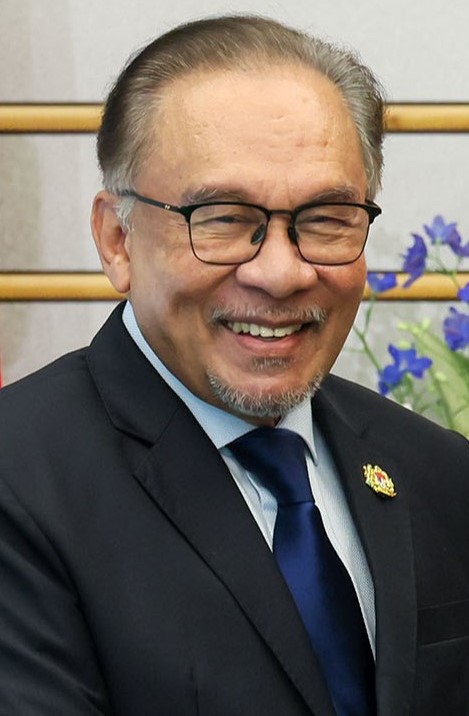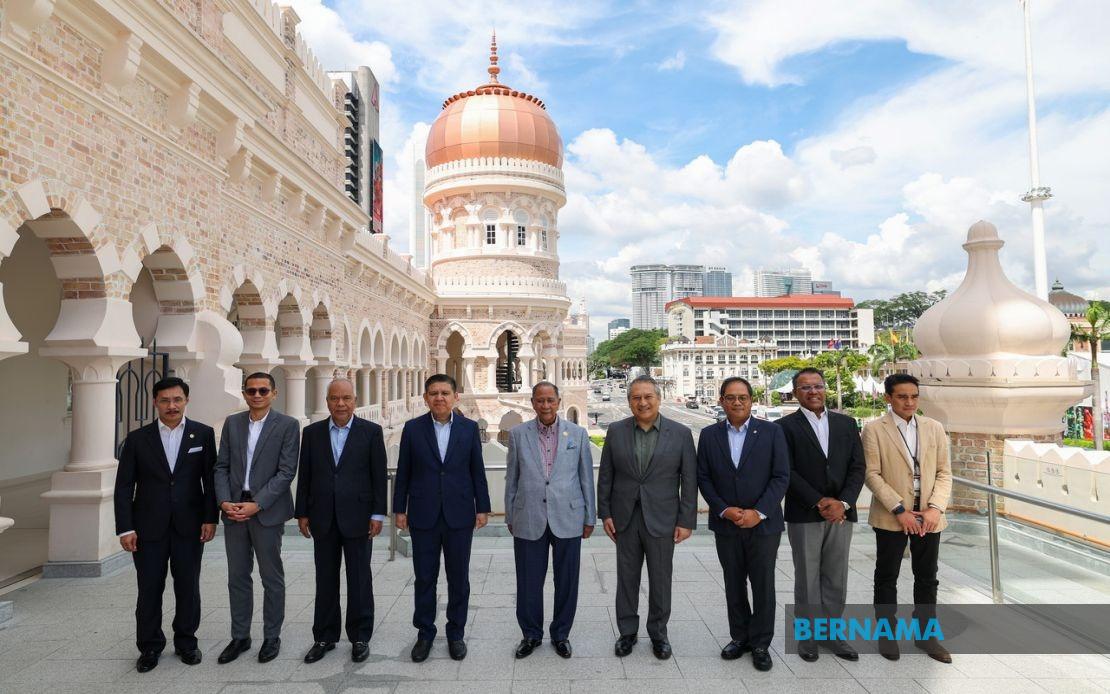
The Sultan of Kedah, Al Aminul Karim Sultan Sallehuddin Sultan Badlishah, conducted a tour of the Sultan Abdul Samad Building in Kuala Lumpur on June 24, examining one of Malaysia's most historically significant public structures. His Royal Highness arrived mid-morning and spent approximately three hours exploring the meticulously restored landmark, which stands as a testament to both Malaysia's architectural heritage and its journey toward independence and nationhood.
Khazanah Nasional Berhad, the sovereign wealth fund responsible for overseeing the building's restoration and public programming, extended a formal welcome to the royal visitor. Managing director Datuk Amirul Feisal Wan Zahir received His Royal Highness, accompanied by senior leadership including chief corporate officer and general legal adviser Datuk Mohamed Nasri Sallehuddin and head of real assets Selvendran Katheerayson. The presence of these senior executives underscored the importance placed on the visit by the state-owned entity entrusted with preserving the nation's heritage properties.
During his visit, the Sultan engaged with the building's primary exhibition spaces, beginning with the Confluence Hall, which presents a comprehensive narrative of Kuala Lumpur's origins and urban evolution. Think City, the organization managing curatorial and educational programming, provided detailed briefings on the exhibits through senior manager Mariana Isa. This gallery represents a deliberate effort to contextualize the building within the broader story of Malaysia's capital, moving beyond architectural restoration to encompass the social, economic, and political dimensions of the city's development.
The tour extended to the Visionary Hall, featuring scaled architectural models and interactive multimedia presentations that document future-oriented planning and infrastructure development in the capital. These exhibits serve to bridge the building's historic significance with contemporary urban discourse, illustrating how heritage sites can function as platforms for discussing ongoing city development challenges and opportunities. The Sultan also accessed the balcony area above the Porte Cochere, affording views of the building's famous architectural features and the surrounding cityscape.
The itinerary included a visit to the School of Hard Knocks, a social enterprise operated by Royal Selangor that operates within the building's premises. This component of the tour highlighted how heritage conservation can incorporate contemporary community programs and skills training initiatives, generating economic and social value beyond preservation alone. A light luncheon concluded the formal activities before the Sultan's departure at mid-afternoon.
Khazanah Nasional's leadership articulated the significance of royal patronage in validating the organization's conservation efforts. Amirul Feisal emphasized that the visit represented recognition of work extending far beyond structural restoration to encompass historical documentation and public education. He framed heritage preservation not merely as architectural conservation but as a contribution to national historical consciousness, acknowledging the symbolic importance of royal endorsement for such initiatives within Malaysian institutional and social contexts.
The building has attracted substantial public engagement since its opening to the public on February 2, welcoming approximately 200,000 visitors in its initial months of operation. This visitor volume indicates strong public interest in heritage sites when made accessible and supported by quality curatorial programming. For Malaysian readers and Southeast Asian observers, the figure demonstrates that heritage tourism can constitute a viable economic and cultural activity when properly resourced and managed.
The Sultan Abdul Samad Building itself carries immense historical weight in Malaysia's national narrative. Originally constructed as the Secretariat Building during the colonial period, it functioned as the administrative center of the British Malayan establishment. The structure assumed profound symbolic significance on August 31, 1957, when the Union Jack was lowered from its flagpole and the Federation of Malaya flag raised in its place, marking the moment of formal independence. This specific historical event—the physical manifestation of decolonization—continues to resonate in Malaysian collective memory and institutional identity.
The restoration effort represents an eleven-month conservation program undertaken through the Khazanah Heritage Fund initiative. His Majesty Sultan Ibrahim, King of Malaysia, officially inaugurated the completion of Phase One restoration works on January 31, affirming the project's importance at the highest institutional level. The phased approach suggests ongoing commitment to the building's restoration, with additional phases likely planned or under consideration, positioning this as a long-term heritage stewardship initiative rather than a one-time conservation effort.
For Malaysian policymakers and heritage professionals, the project demonstrates how state-owned entities can leverage institutional resources toward cultural preservation while maintaining public access and contemporary relevance. The integration of multiple programming elements—historical exhibitions, community enterprises, and public facilities—within a single restored structure creates a more dynamic and financially sustainable heritage site than traditional museum approaches alone might achieve. The royal visits by both the King and the Kedah Sultan underscore governmental commitment to heritage preservation as a matter of national importance.
The significance of this restoration extends to Selangor and broader Malaysian identity. As the seat of early administrative authority, the building encapsulates the transition from colonial governance to independent statehood. For Southeast Asian observers, it exemplifies how former colonial administrative centers can be repurposed as sites of national heritage and historical reflection rather than remaining symbols of imperial dominance. The democratization of access to such buildings through public visitation programs represents a deliberate decolonization of spaces historically reserved for bureaucratic elites.
The Sultan of Kedah's tour contributes to a pattern of royal engagement with heritage preservation initiatives across Malaysia's sultanates. As Malaysia continues developing its cultural tourism sector and enhancing historical consciousness among younger generations, such high-profile visits lend legitimacy and visibility to conservation work. The building's reopening and its reception by both national and state leadership suggest growing recognition that heritage preservation constitutes not merely preservationist nostalgia but essential infrastructure for democratic citizenship and national cohesion, particularly in increasingly pluralistic societies navigating complex historical legacies.