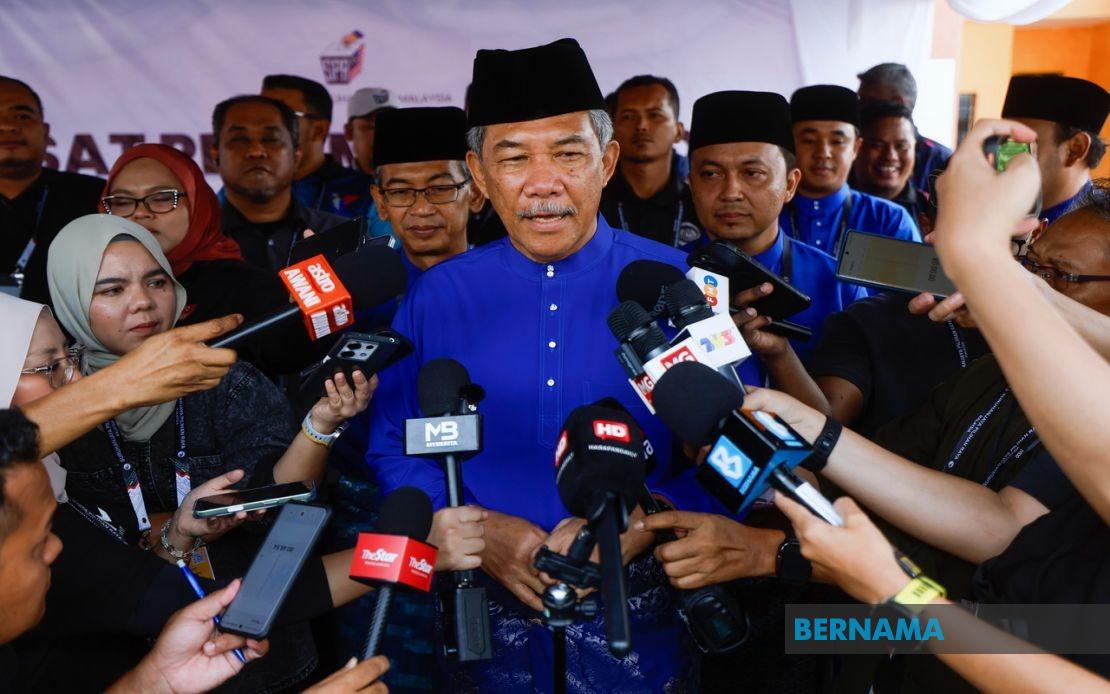
Barisan Nasional deputy chairman Datuk Seri Mohamad Hasan has issued a firm directive to party operatives in Negeri Sembilan, cautioning them against exploiting the state's traditional customs and adat governance during the ongoing election campaign. Speaking in Rembau following nomination proceedings, Mohamad stressed that adat-related matters must remain insulated from political contestation if the coalition hopes to maintain social cohesion throughout the 16th state election cycle.
The warning carries particular weight given Negeri Sembilan's historically sensitive relationship with its adat institution and Yang di-Pertuan Besar, which remains a defining feature of the state's constitutional governance. Unlike other Malaysian states, Negeri Sembilan operates under a unique system where nine district chiefs collectively elect the ruler, and adat customs govern significant aspects of land tenure and succession. This distinctive arrangement means that references to adat issues can quickly become flashpoints in electoral discourse, especially when candidates sense electoral advantage in highlighting perceived grievances or institutional challenges.
As UMNO deputy president, Mohamad conveyed his message with particular clarity, emphasizing that party machinery at all levels must respect the boundaries between customary governance and partisan political advocacy. He explicitly stated that adat institutions deserve protection from politicization, suggesting that mixing traditional governance frameworks into campaign narratives would only generate avoidable friction within communities. This position reflects a broader acknowledgement within BN leadership that certain institutional pillars in Malaysian federalism demand bipartisan respect, even during intensely competitive electoral periods.
The underlying concern appears to centre on preventing the kind of polarization that could weaken social fabric in constituencies where election campaigns might otherwise pivot toward cultural or institutional grievances. By pre-emptively establishing this norm, Mohamad signalled that BN seeks a campaign environment focused on development, economic delivery, and administrative competence rather than deeper constitutional or adat-related disputes. The directive essentially establishes a self-imposed code limiting the scope of acceptable campaign rhetoric.
Mohamad's comments also shed light on the evolving coalition arrangements in Negeri Sembilan. He clarified that BN and Perikatan Nasional continue operating under an electoral understanding rather than a formal coalition partnership, a distinction that carries implications for governance and future collaboration. Under this arrangement, the two coalitions coordinate efforts to maximize combined electoral strength, with candidates dividing constituencies to avoid direct confrontation in certain seats. This tactical approach proved successful in Johor but requires careful calibration in Negeri Sembilan, where the political landscape presents different dynamics.
The electoral cooperation framework means that in constituencies where BN does not field candidates, PN can campaign with the tacit understanding that BN supporters may direct preferences toward PN nominees. Conversely, BN can expect similar support consolidation in constituencies where BN contests directly. This arrangement aims to prevent vote-splitting that could benefit the opposition coalition, thereby amplifying the combined influence of both Peninsular Malaysian-focused coalitions. Mohamad indicated optimism that such cooperation would yield victories across all 36 state legislative seats, though such projections often require substantial ground-level execution.
The distinction between electoral understanding and formal coalition proves semantically important in Malaysian politics, where coalition architecture carries constitutional and governance consequences. BN's careful language suggests it wishes to preserve flexibility in post-election alliances and governance arrangements rather than committing to a permanent merger of organizational identities and decision-making structures. This approach differs from the Johor model, which some observers interpret as a more consolidated formal arrangement. For Negeri Sembilan, maintaining somewhat looser ties may reflect calculations about local political culture and the preferences of participating parties.
The election timeline appears compressed, with early voting scheduled for July 28 and general polling day set for August 1, following the state assembly's dissolution on June 5. This relatively short campaign window may itself discourage extended discussion of complex adat issues, as candidates prioritize addressing voter concerns about immediate economic conditions, local service delivery, and familiar partisan dividing lines. The rapid pace typically favors incumbent coalitions with established ground machinery and administrative visibility.
For Malaysian politics more broadly, Mohamad's intervention highlights ongoing tension between electoral competition and institutional stability. As campaigns become more aggressive and social media amplifies marginal viewpoints, maintaining agreed boundaries around sensitive cultural or constitutional matters requires consistent leadership reinforcement. Senior figures across coalitions periodically remind operatives that certain topics transcend partisan advantage and deserve protection from campaign instrumentalization. These reminders often prove necessary because campaign pressures and lower-level operatives may not voluntarily respect such boundaries without explicit guidance.
The Negeri Sembilan election assumes regional significance given the state's pivotal constitutional position and its demonstration effects for adjacent states. How different coalitions campaign in Negeri Sembilan may influence whether similar electoral understandings prove workable elsewhere in the peninsula. The election also provides a test case for whether BN and PN can sustain their coordination mechanism over multiple electoral cycles, or whether tactical arrangements prove temporary and contingent on particular political circumstances.
Ultimately, Mohamad's directive reflects mature political leadership recognizing that not every political advantage worth pursuing carries acceptable costs. By institutionalizing a norm against adat politicization, BN leadership attempts to prevent escalation dynamics that could produce lasting community divisions extending far beyond the election cycle. Whether this norm holds will depend on whether all levels of both BN and PN organizational hierarchies respect the guidance, a test that becomes more stringent as campaign intensity peaks in coming weeks.

