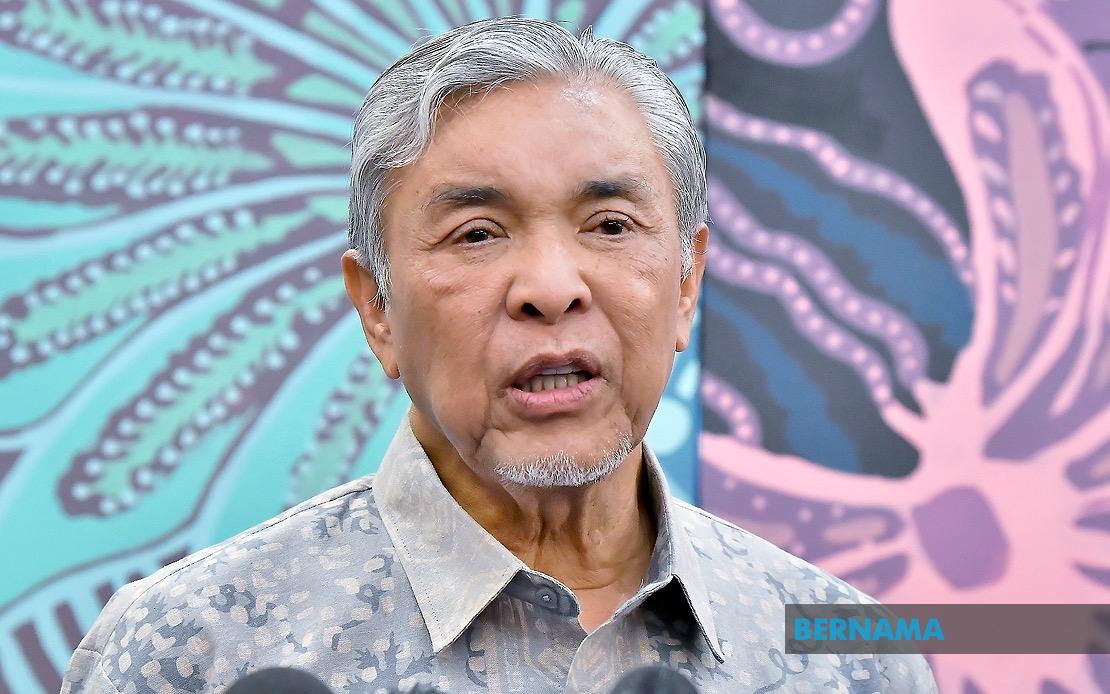
Deputy Prime Minister Datuk Seri Dr Ahmad Zahid Hamidi moved to address public concerns about the South East Johor Development Authority's (KEJORA) proposed expansion, emphasizing that the initiative centres on development coordination rather than land ownership. Speaking at the KEJORA 2025 Excellent Service Awards ceremony in Kota Tinggi, Ahmad Zahid, who also holds the Rural and Regional Development portfolio, stressed the need to correct misconceptions about the agency's intentions in the affected districts.
The clarification proved timely, as expansion proposals by development authorities often trigger concerns among local communities regarding property rights and land control. Ahmad Zahid's statement sought to reassure residents that KEJORA's focus remains on facilitating coordinated growth strategies across the region, working alongside existing district administrations rather than consolidating territorial control. This distinction carries particular weight in Malaysia's federal system, where state governments and district authorities maintain significant jurisdictional powers over land matters.
Central to the expansion proposal is KEJORA's demonstrated track record of project delivery. The authority has achieved a 98.3 per cent success rate across its implementation portfolio, a metric that Ahmad Zahid presented as the primary justification for extending the agency's development mandate. This performance suggests that KEJORA's administrative capacity and project management expertise have proven effective in transforming previously underdeveloped areas, providing a compelling argument for stakeholders considering expansion into neighbouring districts.
Pengerang emerged as a focal point of the development discussion, with Ahmad Zahid highlighting how mega projects and tourism initiatives have catalyzed rapid economic transformation in the district. The convergence of infrastructure investment, port development, and leisure sector growth has created momentum that regional planners believe warrants expanded coordination mechanisms. Ahmad Zahid framed the expansion as a natural response to this acceleration, enabling KEJORA to support the Johor government's broader vision for south-eastern development without requiring land transfers or administrative consolidation.
Public acceptance appeared strong based on preliminary feedback gathering. KEJORA conducted a public consultation study that reportedly generated 96 per cent support among respondents for the expansion proposal. This relatively high level of backing, if accurately representative, suggests that communities in target areas view expanded development coordination as beneficial rather than threatening. However, the methodology and representativeness of such surveys warrant scrutiny, as official reports often present optimistic findings that may not fully capture community complexity or minority concerns.
The expansion proposal remains contingent on formal approval from Malaysia's constitutional monarchy. Ahmad Zahid explicitly noted that implementation depends on consent from His Majesty Sultan Ibrahim and Tunku Mahkota Ismail, the Regent of Johor. This constitutional safeguard underscores the significance of the initiative and reflects the formal procedures governing development authority expansion in Malaysian states with hereditary rulers. The requirement for royal approval adds a governance layer that distinguishes such proposals from purely administrative decisions.
Financial commitment to the region demonstrates government seriousness about south-eastern Johor's development trajectory. The Rural and Regional Development Ministry has allocated approximately RM138 million to KEJORA for regional projects, with 107 programmes already implemented and roughly 350 additional smaller initiatives planned under the current budget. This substantial funding pipeline indicates sustained governmental investment in transforming the area's economic and social infrastructure over multiple budget cycles.
Parallel initiatives seek to strengthen Pengerang's administrative standing. Minister in the Prime Minister's Department Datuk Seri Azalina Othman Said, who represents Pengerang in Parliament, proposed elevating the district to formal status, a structural change that would grant it greater administrative autonomy and potentially attract additional development resources. Ahmad Zahid expressed support for this complementary proposal, recognizing that district status would provide the institutional framework necessary to manage Pengerang's expanding population and economic activity.
Azalina also advocated for establishing a new hospital facility in Pengerang to address healthcare capacity gaps accompanying rapid population growth. This infrastructure proposal reflects the practical challenges emerging across south-eastern Johor as economic growth outpaces traditional service provision. Healthcare, education, and transportation systems frequently become bottlenecks in rapidly developing regions, requiring proactive investment to prevent service degradation. The hospital initiative addresses a genuine gap in Pengerang's existing infrastructure portfolio.
The interconnected nature of these development proposals reveals an integrated approach to regional transformation. Rather than pursuing isolated projects, government entities are coordinating expanded development authority powers, district administrative upgrades, and critical infrastructure investment simultaneously. This holistic strategy acknowledges that sustainable development requires aligned institutional, administrative, and physical infrastructure improvements working in concert.
For Malaysian policymakers and Southeast Asian observers, the KEJORA expansion case illustrates contemporary approaches to managing rapid regional growth. Rather than creating new administrative structures from scratch, existing development authorities expand their coordinating roles while maintaining compatibility with existing federalism frameworks and state autonomy. This model offers potential lessons for other Malaysian states and regional governments managing similar growth pressures in emerging economic zones.

