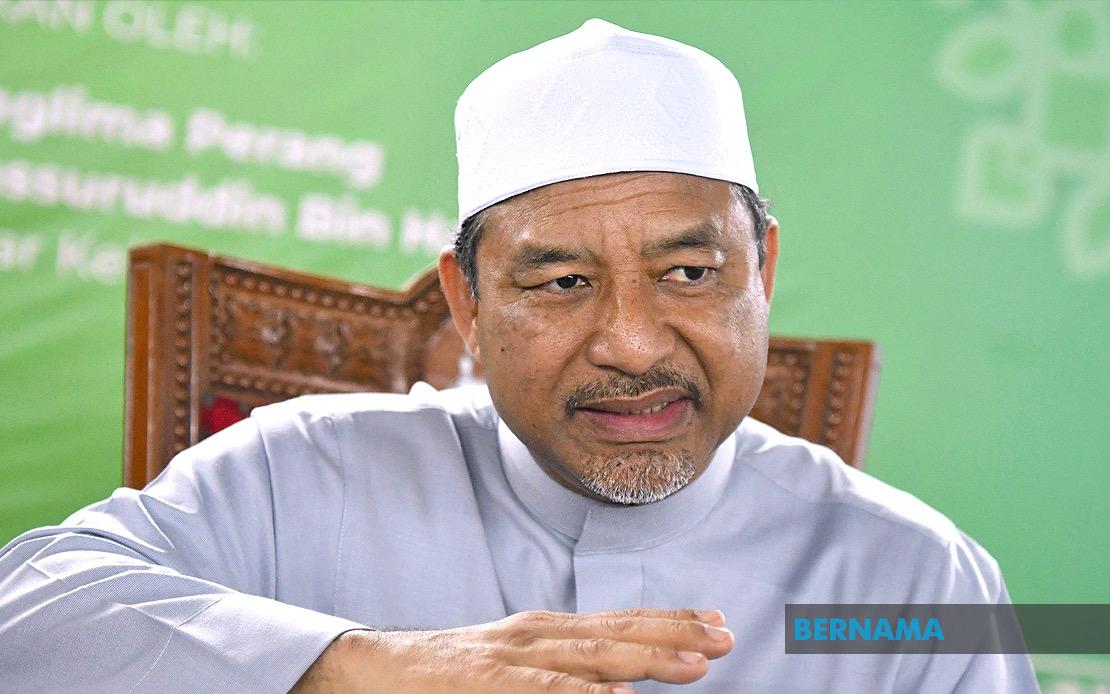
Kelantan's approach to cultural preservation takes a carefully calibrated stance that seeks to honor the state's artistic traditions while ensuring they remain consistent with Islamic values. Menteri Besar Datuk Mohd Nassuruddin Daud articulated this position at the conclusion of the Kelantan Arts Festival (FKRK) 2026 in Pasir Puteh, emphasizing that the state government views cultural heritage not as expendable vestiges of the past but as integral components of Kelantan's identity and economic development through tourism.
The announcement represents a significant clarification of Kelantan's cultural policy, addressing long-standing tensions between tradition and religious interpretation. Rather than adopting a blanket rejection of heritage practices, the state government has adopted what might be termed a refinement approach. Nassuruddin explained that arts and cultural expressions handed down through generations remain valued, but undergo a process of careful examination to ensure alignment with Islamic moral and ethical standards. This framework acknowledges that not all traditional elements can withstand scrutiny against contemporary Islamic principles, yet it creates pathways for modified versions to be revived and celebrated.
The practical implications of this policy have already manifested in several instances. Certain traditional performances were previously restricted due to elements deemed incompatible with Islamic teachings. However, the Kelantan government has signaled willingness to permit their reinstatement once the problematic elements are removed or reformed. This pragmatic approach demonstrates recognition that cultural forms exist on a spectrum rather than as binary acceptable or unacceptable categories, offering room for negotiation and creative adaptation rather than wholesale elimination.
Kelantan's historical relationship with Islamic scholarship has profoundly shaped its cultural landscape. The state has long positioned itself as a center where Islamic learning intertwines with cultural expression, creating a distinctive synthesis reflected across performing arts, traditional games, handicrafts, and culinary traditions. The Menteri Besar framed this integration not as cultural dilution but as authentic to Kelantan's identity, suggesting that the region's artistic expressions naturally emerged from communities whose worldview was fundamentally shaped by Islamic values.
The FKRK 2026 festival itself served purposes extending far beyond entertainment. As a four-day event organized by the Ministry of Tourism, Arts and Culture in collaboration with the National Culture and Arts Department (JKKN) Kelantan, it functioned as a nexus connecting heritage practitioners with younger generations, facilitating knowledge transfer, stimulating local economic activity, and projecting Kelantan's distinctive character to domestic and potential international visitors. The festival thus becomes both a preservation mechanism and an economic development tool, linking cultural continuity with tourism revenue.
Particular attention has been directed toward revitalizing traditional games including gasing uri, congkak, dam aji, and tating. Nassuruddin characterized these recreational practices as bearing significance beyond mere nostalgia, presenting them as counterweights to technology's increasingly dominant role in youth lifestyle. In an era when younger Malaysians spend substantial time with digital devices, traditional games offer alternative social engagement that embodies cultural knowledge while promoting face-to-face interaction and physical activity. This rationale reflects broader Southeast Asian concerns about cultural erosion amid rapid technological adoption.
The festival's emphasis on Kelantan's cultural assets encompassed diverse domains. Traditional handicrafts, for instance, represent both artistic expression and economic opportunity for rural artisans. Performing arts carry historical narratives and aesthetic principles developed over centuries. Traditional food reflects agricultural patterns, flavor preferences, and communal values specific to the region. When considered collectively, these cultural elements constitute what Nassuruddin termed valuable treasures embodying the wisdom and philosophy of the Malay community, warranting preservation for subsequent generations who might otherwise lose connection to their heritage.
This approach has implications extending beyond Kelantan's borders. Other Malaysian states with significant cultural traditions face comparable questions about how to balance preservation with contemporary values. Kelantan's framework of refinement rather than rejection offers a potential model, suggesting that cultural continuity need not require wholesale resistance to modernization or alternative value systems. Instead, communities can thoughtfully evaluate which elements merit preservation in modified form, which require deeper structural changes, and which may legitimately fade as societies evolve.
The policy also reflects recognition that tourism development increasingly depends on cultural authenticity and distinctiveness. Travelers increasingly seek experiences reflecting genuine local traditions rather than manufactured attractions. By positioning cultural preservation as aligned with rather than opposed to Islamic principles, Kelantan positions itself to attract both domestic visitors seeking connection to heritage and international tourists interested in experiencing authentic Malaysian culture rooted in Islamic civilization. This alignment reduces potential conflicts between cultural promotion and religious identity that sometimes create dissonance in other contexts.
The international context matters here as well. Throughout Southeast Asia, countries from Indonesia to Thailand navigate similar tensions between heritage preservation and contemporary religious or nationalist interpretations. Kelantan's approach, emphasizing refinement over rejection, potentially offers insights for regions seeking to maintain cultural continuity while responding to shifting value systems. The success of this framework depends significantly on transparent, inclusive processes for determining which cultural elements can be modified versus those requiring more substantial reimagining.
Looking forward, the sustainability of Kelantan's cultural preservation efforts will likely depend on continued investment in documentation, practitioner training, and youth engagement. Festival events like FKRK 2026 provide important platforms for visibility and knowledge sharing, yet long-term vitality requires institutional support ensuring that traditional knowledge transfers effectively to younger generations. The integration of cultural content into educational curricula, support for artisan economies, and creation of performance venues could strengthen the ecosystem sustaining these traditions.
The Menteri Besar's statements ultimately reflect a maturing approach to cultural governance in Malaysia, one that resists false dichotomies between tradition and modernity, between Islamic principles and artistic expression. By framing cultural preservation as compatible with Islamic values rather than antagonistic, Kelantan charts a course that other multiethnic, multireligious societies might study with interest. Whether this balance proves durable will depend on maintaining genuine dialogue between religious scholars, cultural practitioners, and community members about which heritage elements merit preservation and how they might evolve while remaining meaningful.

