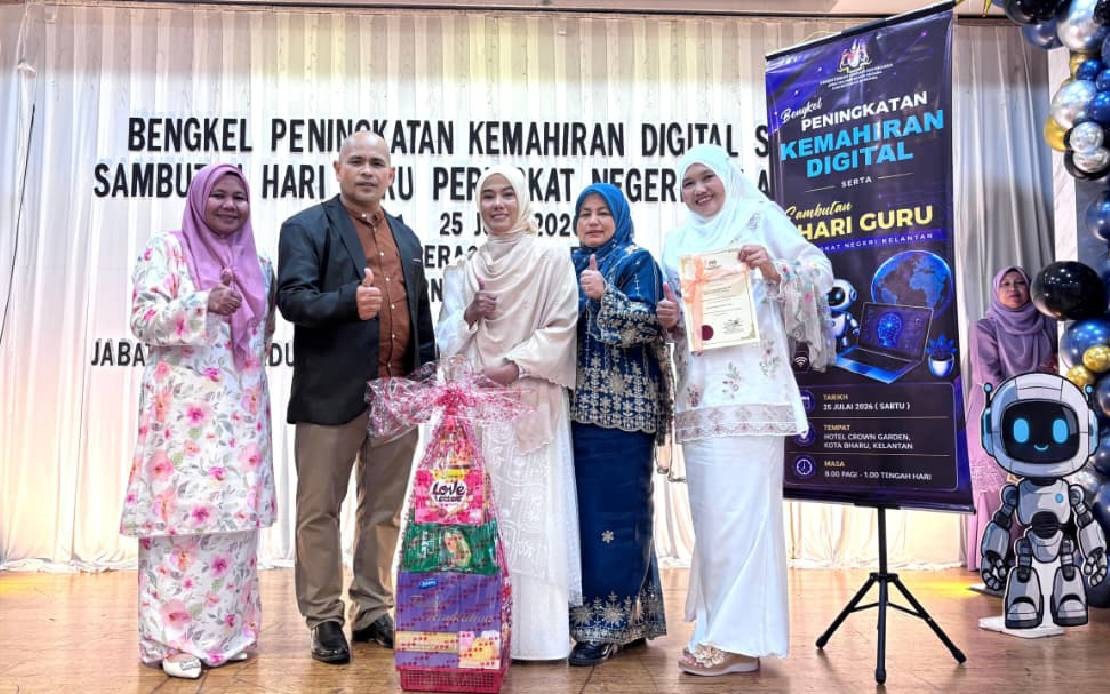
Early childhood educators in Kelantan are being equipped with artificial intelligence tools to reimagine their classroom methods, marking a significant shift towards technological integration in the state's foundational learning institutions. The initiative, spearheaded by the Kelantan Department of National Unity and National Integration (JPNIN), represents a strategic response to the evolving demands of modern education, where digital literacy and technological competency are becoming as fundamental as traditional pedagogical skills.
At a state-level competition held in Kota Bharu on July 25, educators from Unity kindergartens (Tabika) and childcare centres (Taska) across Kelantan showcased their inventive approaches to using AI for enhanced teaching and learning. Zarina Zakaria, the JPNIN director for Kelantan, framed this developmental push as essential preparation for a generation growing up in an increasingly digital landscape. According to her remarks to reporters, AI presents educators with concrete opportunities to craft lessons that are simultaneously more imaginative, participatory, and pedagogically sound—qualities that directly translate into measurable improvements in how young learners absorb and retain information.
The competition itself drew participation from 14 educator groups, each presenting distinct innovations that harnessed AI applications to create more engaging materials for classroom use. Rather than simply introducing technology for its own sake, the participating teams focused on generating teaching aids that respond to contemporary educational challenges while remaining developmentally appropriate for early childhood learners. This emphasis on purpose-driven innovation distinguishes the initiative from superficial tech adoption, grounding the AI integration firmly within established frameworks of child development and pedagogical effectiveness.
Zakaria underscored that maintaining relevance in early childhood education requires institutional responsiveness to technological advancement. She argued that as AI and digital tools become ubiquitous in society, early learning environments must reflect this reality through thoughtfully designed instructional materials. The creation of such materials—drawing on AI capabilities while preserving the human-centred relationship between educator and child—has been positioned as critical infrastructure for ensuring that young learners develop the cognitive foundations they will need as they progress through increasingly tech-enabled educational systems.
Beyond the immediate pedagogical benefits, the competition initiative serves a broader strategic function within Kelantan's educational ecosystem. By creating a public forum for educators to present and celebrate their AI-informed work, the JPNIN has established a mechanism for recognizing professional creativity and expertise among staff typically working with limited resources and public visibility. This recognition component carries particular significance in the Malaysian context, where early childhood educators often receive less institutional support and professional acknowledgment compared to their counterparts in primary and secondary education.
The competition framework also institutionalizes knowledge-sharing across Kelantan's early childhood sector. When educators see their peers' successful applications of AI—whether for adaptive learning modules, interactive storytelling platforms, or personalized progress-tracking systems—they gain concrete models to adapt and refine within their own practice contexts. This horizontal diffusion of innovation has proven more sustainable in the medium term than top-down directives, as it builds local capacity and fosters a collaborative professional culture.
For Malaysia's broader education modernization agenda, the Kelantan initiative signals an important recognition that technological advancement must begin at the foundational level. While many policy discussions focus on secondary and tertiary education, the integration of AI-assisted learning in early childhood settings addresses the critical period when educational trajectories are being established. Children who encounter interactive, responsive, and technology-enhanced instruction in their earliest formal learning years develop comfort with digital tools that supports their subsequent academic engagement.
The initiative also reflects evolving international standards in early childhood education, where developed economies have begun systematically incorporating digital literacy and technology familiarity into kindergarten curricula. By pursuing this direction, Kelantan positions itself within a global movement toward technological integration while addressing local educational priorities. This alignment with international best practices can support Kelantan's competitiveness in attracting educators and families seeking forward-thinking learning environments.
However, the success of such initiatives ultimately depends on sustained implementation beyond the competition phase. Educators need ongoing professional development to effectively utilize AI tools, access to reliable technology infrastructure, and institutional support for experimentation and refinement. The JPNIN's emphasis on creating mechanisms for educators to share and learn from one another suggests an understanding that scaling innovation requires more than one-off competitive events.
The Kelantan programme also raises important considerations about equity and access within Malaysia's early childhood education landscape. As some states advance AI integration, variations in technological adoption across regions could widen disparities in educational quality. Ensuring that innovations pioneered in Kelantan are adapted and deployed across other Malaysian states, particularly in rural and underserved areas, will be essential for realizing systemic benefits from these advances.
Moving forward, the JPNIN's continued promotion of AI adoption in early childhood settings positions educators as active innovators rather than passive technology consumers. This framing matters considerably, as it acknowledges that meaningful educational transformation requires buy-in and creative contribution from practitioners with deep understanding of child development and classroom realities. The Kelantan model demonstrates that technology integration in education need not mean standardization or displacement of teacher expertise—rather, it can enhance and amplify the distinctive capabilities that skilled educators bring to their work.

