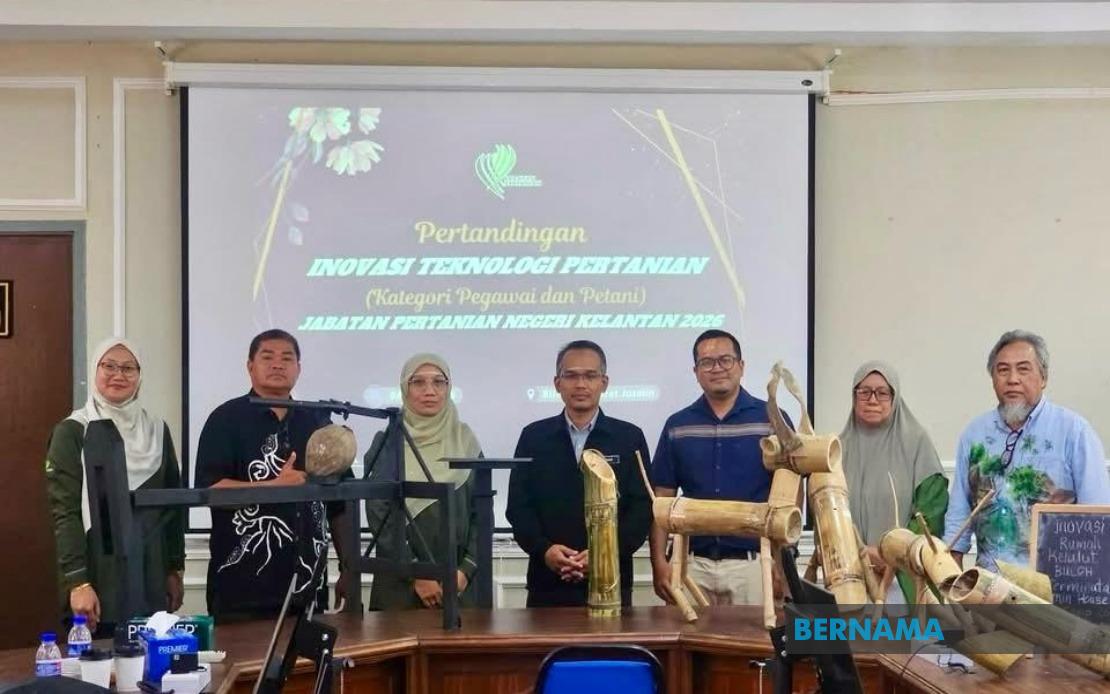
An agricultural innovation emerging from Kelantan could reshape how Malaysia's durian industry handles one of its most labour-intensive and dangerous tasks. Plantation entrepreneur Che Adnan Che Kadir, 56, has developed a portable coconut dehusking device that earned a four-star rating at the Kelantan Department of Agriculture's 2026 Agricultural Technology Innovation Competition, prompting judges to propose a potentially lucrative expansion into durian processing.
The genesis of Che Adnan's invention lies in the practical frustrations of his own farming operation. On his six-hectare farm in Kampung Chetok, Pasir Mas, the traditional method of removing coconut husks proved cumbersome and hazardous. Conventional dehusking demands significant manual effort, typically consuming two to three minutes per fruit while exposing workers to cut and puncture injuries. When Che Adnan designed and built his solution in 2024, he aimed primarily to address safety concerns and productivity losses on his own property. What he created, however, has broader implications for tropical agriculture across the region.
Weighing just 3.5 kilograms, the device dramatically compresses processing time. Standard workers can now complete the dehusking process in approximately one minute, with particularly skilled operators achieving results in as little as 40 to 45 seconds. This threefold to fourfold improvement in efficiency translates directly into cost savings and reduced workplace injury risk, both significant concerns in smallholder farming communities where mechanisation remains limited. The portability of the equipment means farmers can utilise it across multiple work sites without requiring permanent installation infrastructure.
Judging panels comprising representatives from the Department of Agriculture, the Malaysian Agricultural Research and Development Institute, and polytechnic institutions recognised potential beyond coconuts. They specifically identified durians as the primary candidate for adaptation, a recommendation that carries considerable weight given Malaysia's position as a global durian powerhouse. The spiky fruit presents formidable processing challenges: opening durians safely requires considerable skill and experience, as workers must navigate thick, sharp exterior spines whilst avoiding damage to the precious flesh within. Many injuries in durian processing facilities occur during opening and cleaning stages, making mechanical assistance particularly valuable.
Che Adnan's successful achievement at the state competition positions him as a potential representative for Kelantan at National Innovation Week in Putrajaya, scheduled for late September. Selection would elevate his invention into the national arena, exposing the technology to policymakers, industry stakeholders, and potential commercialisation partners. The visibility gained through national competition could catalyse the investment and partnerships necessary for productionisation.
The inventor acknowledges that progressing from award-winning prototype to market-ready product requires substantial refinement. Judges provided specific recommendations for design improvements that must be addressed before pursuing commercialisation. These suggestions likely encompass durability enhancements, standardisation for different fruit sizes and varieties, safety feature optimisation, and user-friendliness modifications. Implementing such changes demands resources beyond Che Adnan's current capacity, creating a natural convergence with the available innovation grant programme.
The RM10,000 innovation grant accompanying national competition entry would provide essential capital for prototype refinement and preliminary market testing. More significantly, securing such funding validates the innovation's merit within official agricultural technology frameworks, potentially opening pathways to larger development grants and industrial partnerships. For Malaysian agricultural entrepreneurs operating outside conventional institutional structures, grant programme participation represents a crucial stepping stone toward professional product development.
The durian adaptation concept carries particular relevance for Southeast Asia's agricultural economy. Thailand, Vietnam, and Indonesia have all expanded durian cultivation substantially over the past decade, competing intensely with Malaysia for market share. Processing inefficiencies and labour costs represent significant competitive disadvantages. A practical, affordable mechanical solution could provide Malaysian producers with operational advantages whilst establishing technology export opportunities throughout the region. Malaysian agricultural equipment manufacturers might license or adapt the technology for regional markets, creating additional commercial value chains.
Che Adnan's journey illustrates an important pattern in agricultural innovation: practical solutions often emerge from farmers addressing their own operational challenges rather than from top-down research initiatives. His willingness to share the technology through competitive evaluation channels, rather than attempting to monopolise the innovation, demonstrates the collaborative mindset increasingly valued in agricultural development. The judges' suggestion to expand beyond coconuts reveals how agricultural technology competitions serve as discovery mechanisms, identifying innovations with potential applications far broader than original designers anticipated.
The pathway from farm innovation to commercial product remains challenging in Malaysia's agricultural sector, where smallholder inventors frequently lack access to design expertise, manufacturing facilities, and market distribution networks. Che Adnan's next steps will determine whether this promising innovation reaches the wider agricultural industry or remains confined to individual farm operations. His stated aspiration to develop the durian-adapted version whilst maintaining affordability and practical functionality suggests commitment to genuine industry benefit rather than purely commercial extraction.
For Malaysia's agricultural sector, particularly the increasingly valuable durian industry, innovations addressing labour constraints and safety concerns arrive at opportune moments. Rising wages, worker shortages, and growing occupational health regulations make mechanical assistance increasingly economically rational. If Che Adnan succeeds in adapting his coconut device for durian processing, the impact could extend throughout horticultural operations, improving both worker safety and agricultural productivity across tropical fruit industries throughout Southeast Asia.

