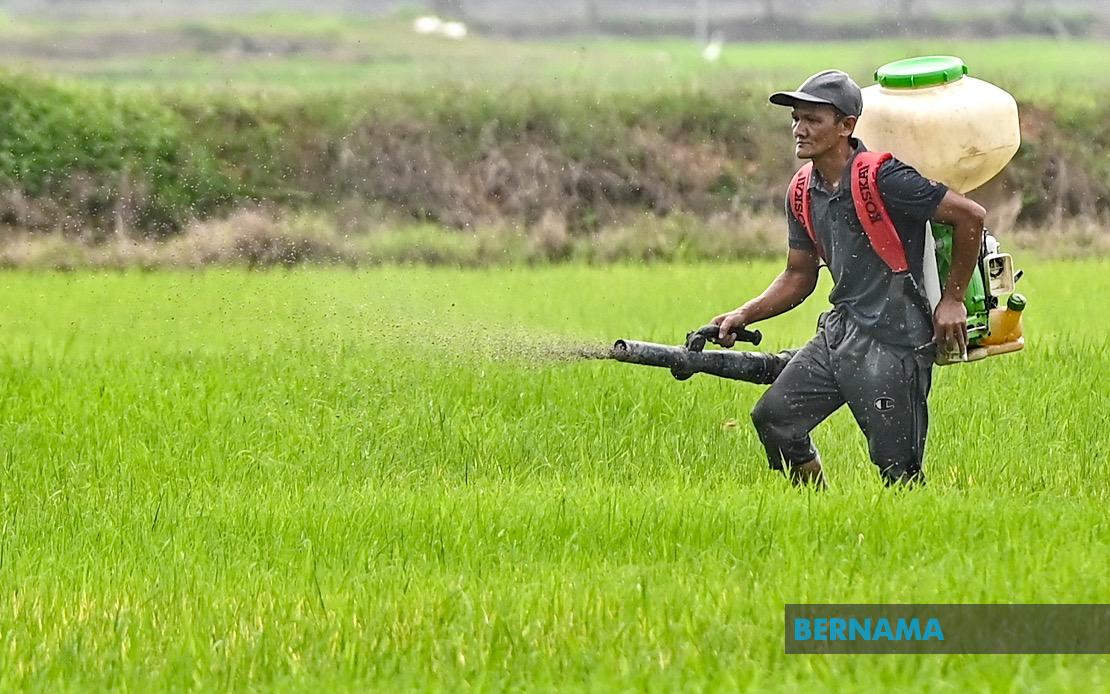
Kelantan's government is doubling down on its agricultural sector with a substantial RM3.64 million funding commitment directed towards the state Agriculture Department this year. The investment, revealed during a state legislative assembly session at the Kota Darulnaim Complex in Kota Bharu, funds a comprehensive suite of 10 development projects designed to strengthen food security and rural livelihoods across the northeastern state. The announcement reflects growing recognition that sustained agricultural development remains central to regional economic resilience and community welfare.
The strategic focus encompasses a deliberately broad portfolio spanning underutilised farmland activation, rice paddies, diverse commodity crops, and the commercial cultivation of vegetables and fruits. By targeting multiple agricultural streams simultaneously, Kelantan hopes to reduce dependency on food imports while creating employment opportunities across rural communities. The phased approach acknowledges that agricultural transformation requires investment across the entire value chain, from production infrastructure through to market access and entrepreneurial support.
A significant component of the initiative channels resources through the Kelantan State Agriculture Development Corporation (PKPNK), which operates advanced agricultural facilities. The corporation currently manages commercial operations centred on high-value crops at Rong Chenok Agro Valley, including chilli fertigation systems, honeydew melon production, and hydroponic vegetable cultivation. These modern agricultural techniques represent a departure from traditional farming methods and signal Kelantan's commitment to productivity gains and climate-resilient farming practices that reduce water consumption and dependency on seasonal rainfall patterns.
The livestock sector has emerged as a significant growth area within Kelantan's agricultural strategy. Over 380 smallholder breeders have participated in state government support programmes covering cattle, goats, sheep, deer, buffalo, and quail production, complemented by provision of essential equipment and technical guidance. This diversification within livestock farming reduces risk for rural producers and provides multiple income streams, particularly important given the vulnerability of single-crop communities to market fluctuations and environmental pressures. The state's commitment to equipment provision demonstrates understanding that financial barriers alone often prevent farmers from adopting improved practices.
Aquaculture represents perhaps the most impressive growth trajectory within Kelantan's food production landscape. The fisheries sector received RM382,094 in channelled support benefiting 122 breeders, while the state's 2025 aquaculture output reached 7,901.74 tonnes valued at RM76.2 million, with production targets of 8,000 tonnes established for the current year. These figures position aquaculture as a substantive contributor to state agricultural output and regional food supplies, with the sector demonstrating both scale and commercial viability that can attract broader investment interest.
Key infrastructure investments underscore the state's systematic approach to fisheries expansion. The PKPNK operates hatchery facilities with annual production capacity of one million catfish fry and 500,000 tilapia fry, substantially exceeding current demand and positioning Kelantan as a potential breeding stock supplier for other Malaysian states. Additionally, over 130 artificial hatcheries have been constructed across the state, while 1.26 million fish and prawn juveniles were released into public waters. The white prawn project operating at Pantai Geting in Tumpat generates approximately 400,000 kilogrammes annually, creating commercial-scale production that generates meaningful export revenue potential.
The entrepreneurship dimension reflects understanding that agricultural productivity gains must translate into viable income opportunities for participating farmers and smallholders. As of June, 1,560 entrepreneurs had accessed 74 marketing infrastructure facilities and 99 sales outlets established by the state, creating channels that bypass traditional middlemen and improve farmer returns. This focus on market access recognises that even efficient production becomes economically unviable without reliable sales mechanisms, a lesson learned across Southeast Asia where farmers frequently struggle to monetise surplus production due to inadequate distribution infrastructure.
The Kota Bharu Rural Transformation Centre (RTC) stands as the flagship initiative within Kelantan's agricultural marketing strategy, functioning as an integrated agro-food distribution and marketing hub. Operating since 2012, the centre has provided business space to approximately 800 entrepreneurs while generating cumulative sales of RM4.16 billion across the thirteen-year period. This represents approximately RM319 million in annual average turnover, demonstrating that well-designed rural infrastructure can generate substantial commercial activity and provide viable platforms for smallholder agricultural enterprises. The RTC model offers lessons applicable across Malaysia's other agricultural states seeking to modernise rural marketing systems.
Kelantan's integrated approach demonstrates how state governments can coordinate support across production, processing, and marketing dimensions simultaneously. Rather than treating agriculture as an isolated sector, the state has constructed an ecosystem where PKPNK provides advanced production facilities and breeding stock, extension programmes support smallholder adoption, and the RTC provides guaranteed market access. This ecosystem approach differs markedly from traditional subsidy-based agricultural support that often creates dependency without improving underlying competitiveness. The strategy suggests that Southeast Asian agricultural development increasingly requires coordinated public investment spanning technology, training, and market infrastructure rather than reliance on price supports or input subsidies alone.
The broader implications for Malaysia's agricultural policy merit consideration, particularly as the nation seeks to reduce food import dependency and strengthen rural incomes amid climate variability and competing land use pressures. Kelantan's experience suggests that strategic state-level investment in modern production facilities, coupled with robust market infrastructure, can generate measurable productivity gains and create commercial opportunities attracting private capital. The success metrics—growing aquaculture output, expanding smallholder participation, and substantial RTC revenues—provide evidence that this model works within Malaysian conditions and contexts.
However, sustaining momentum requires addressing emerging challenges including youth engagement in agriculture, climate adaptation, and competitive positioning amid regional trade dynamics. Kelantan's RM3.64 million allocation must be viewed within context of ongoing operational costs, facility maintenance, and the need for continuous technology upgrading to maintain competitive advantage. Southeast Asian agricultural sectors face intensifying competition from Vietnam, Thailand, and Indonesia, requiring Malaysian producers to emphasise quality, sustainability, and differentiation rather than volume competition alone. Future funding allocations should increasingly prioritise research and development, certification for premium markets, and digital infrastructure enabling farmers to access price information and market opportunities directly.
The state assembly discussion reflecting Mohd Adanan Hassan's inquiry demonstrates continued legislative attention to food security, a national priority gaining prominence as supply chain vulnerabilities and climate-related production risks become more apparent. Kelantan's targeted investment provides a demonstration model for other Malaysian states considering similar agricultural transformation strategies. As the nation navigates longer-term food security challenges, replicating and scaling Kelantan's integrated approach across multiple states could substantially enhance Malaysia's self-sufficiency in key agricultural commodities while generating employment and supporting rural development objectives simultaneously.

