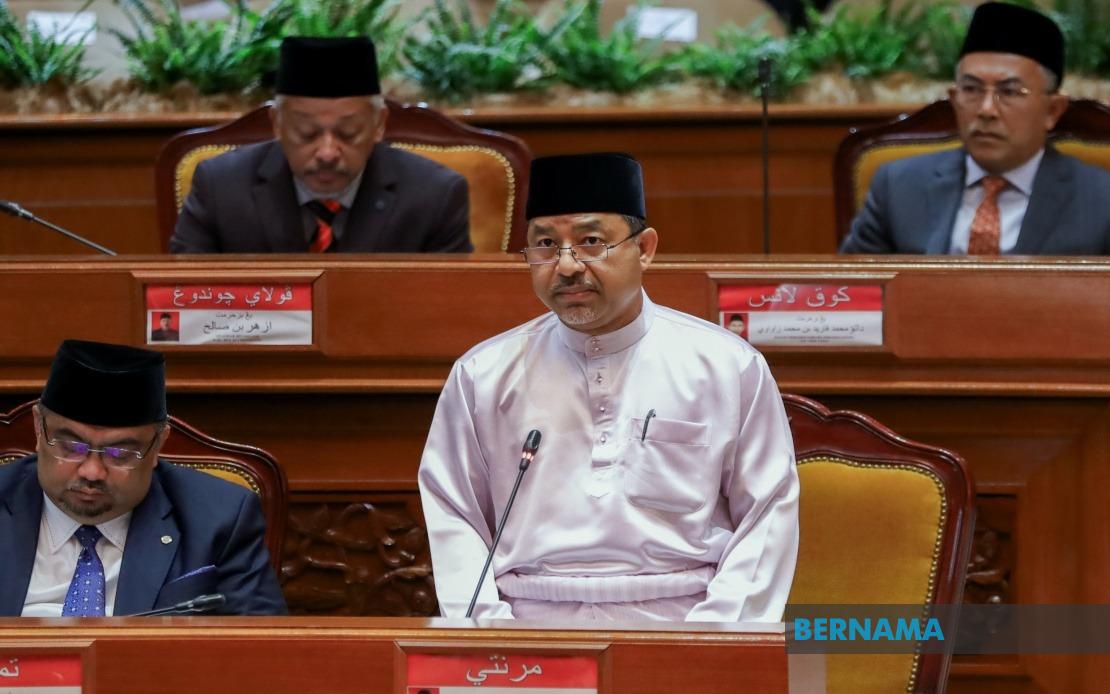
Kelantan maintains its position as the Malaysian state with the most extensive Malay reserve land holdings, according to the state's chief administrator. Menteri Besar Datuk Mohd Nassuruddin Daud revealed during a legislative assembly session that the accumulated Malay reserve acreage stands at 526,083 hectares, accounting for 91.5 per cent of Kelantan's entire landmass across 816,020 individual ownership titles as documented through June 2026. This consolidated figure reflects data compiled from all eleven districts within the state.
The remaining non-Malay reserve land parcels total 48,344 hectares, constituting just 8.4 per cent of the state's overall land base and represented through 43,255 registered titles. When combined, these categories yield a complete inventory of 574,427 hectares encompassing 859,275 total titles, providing a comprehensive snapshot of Kelantan's property ownership landscape. The extraordinarily high proportion of land designated for Malay reservation—surpassing nine-tenths of total state holdings—underscores the distinctive character of Kelantan's land administration policies within the Malaysian federation.
Geographically, reserve land distribution varies considerably across Kelantan's constituent districts. Gua Musang emerges as the dominant holder with 122,735 hectares of designated Malay reserve territory, a figure substantially exceeding other administrative zones. The districts of Pasir Mas and Tanah Merah follow at 56,656 and 56,246 hectares respectively, while Kuala Krai registers 53,473 hectares. This concentration in larger districts reflects both demographic patterns and historical land administration practices that have evolved over decades of state governance.
When measured by proportional intensity rather than raw acreage, the distribution reveals a different hierarchy. Tanah Merah district achieves the highest percentage conversion, with 99.9 per cent of its territory designated as Malay reserve—effectively representing near-total reservation status. Tumpat, Pasir Puteh, Bachok, Pasir Mas, Kota Bharu, and Jeli similarly maintain exceptionally elevated reservation percentages, though precise figures for each were not individually itemized. This pattern indicates that while certain districts like Gua Musang dominate in absolute terms due to larger total areas, other districts have pursued nearly comprehensive reservation policies affecting their respective jurisdictions.
The state authority has recorded no diminution of reserve land status during the period under review, suggesting stable property regime management and consistent application of reservation protections. This preservation contrasts with some other Malaysian states where demographic shifts and development pressures have occasionally generated competing claims on reserved lands. Kelantan's maintenance of existing reservation boundaries reflects both legislative commitment and administrative discipline in protecting the constitutional framework governing Malay property rights within the state.
Under Section 13A of the Kelantan Malay Reservations Enactment, the regulatory framework permits specified categories of non-Malay individuals to acquire ownership interests within designated reserve areas, subject to strict oversight mechanisms. Simultaneously, this legal provision grants state administrators considerable discretionary authority to govern and supervise all transactions affecting reserve lands, with explicit powers to obstruct or prohibit transfers deemed prejudicial to the integrity or collective interests of the reservation system itself. This dual mechanism—permitting limited access while maintaining governmental control—balances individual transaction rights against broader communal preservation objectives.
The significance of Kelantan's reserve land holdings extends beyond mere statistical comparison among Malaysian states. These protected territories function as foundational assets supporting Malay-Muslim economic participation, rural livelihoods, and cultural continuity within one of Malaysia's most traditionally conservative regions. The scale of Kelantan's reserves—more than half a million hectares—represents a material economic base that, while sometimes underutilized, remains symbolically and practically central to state identity and constitutional bargains undergirding Malaysian federalism.
The Menteri Besar's public reaffirmation of Kelantan's preeminence in reserve land holdings serves multiple functions within current political discourse. It reinforces the state government's custodianship credentials among constituents for whom land protection resonates as a priority concern, particularly within rural constituencies dependent on agricultural activities and customary tenure patterns. The statement also implicitly validates Kelantan's governance model and administrative competence in maintaining this substantial asset across multiple administrations and changing economic circumstances.
For Malaysian policymakers and analysts tracking federalism and state autonomy issues, Kelantan's data reveals how constitutional protections for Malay reservation have been operationalized across decades. The state demonstrates both the endurance of these mechanisms and their capacity to coexist with modern property regimes and commercial transactions. However, the largely unutilized potential of these lands—many held in fragmented ownership patterns unsuitable for efficient productive deployment—raises ongoing questions about optimal development strategies that could enhance returns for Malay landholders while respecting reservation principles.

