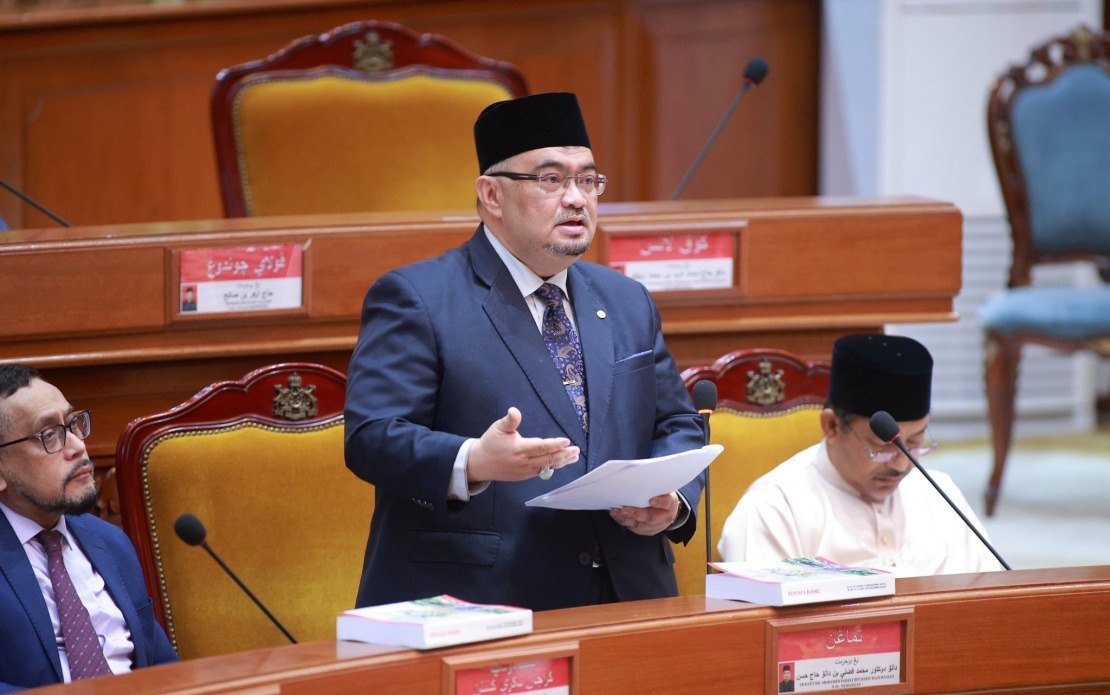
Kelantan's state government has ramped up its enforcement campaign against unauthorised land encroachment and illegal mining, with authorities opening 63 investigation files so far this year following a series of targeted operations across the state's most affected regions. The enforcement push, disclosed during the Kelantan State Legislative Assembly sitting in Kota Bharu, underscores growing official concern about the scale and sophistication of illegal mining networks operating across Peninsular Malaysia's northern territories.
Deputy Menteri Besar Datuk Dr Mohamed Fadzli Hassan outlined the scope of the crackdown, which has concentrated resources on four key districts where such activities have been particularly persistent. The Gua Musang, Kuala Krai, Jeli and Tanah Merah districts bore the brunt of 77 separate enforcement operations mounted by state authorities and their law enforcement partners. This sustained campaign reflects recognition among Kelantan's leadership that preventing land encroachment requires consistent, large-scale intervention rather than sporadic raids.
Beyond investigations opened, the enforcement apparatus has made significant headway in disrupting the operational capacity of illegal mining syndicates. Authorities seized 65 excavators and related heavy equipment estimated at RM15.8 million in total value, a substantial blow to groups relying on mechanised extraction operations. The confiscation of such expensive machinery strikes at the economic viability of illegal mining networks, forcing them to rebuild their equipment stockpiles or abandon operations altogether. For context, the loss of dozens of excavators represents considerable financial pressure on criminal enterprises typically operating with relatively tight profit margins after accounting for corruption payments and logistics costs.
The investigation papers have been forwarded to the Prosecution Unit of the Kelantan Land and Mines Office, tasked with determining whether cases merit prosecution and what charges might be appropriate. This institutional layering is significant because it separates investigative and enforcement functions from prosecutorial decision-making, potentially allowing for more rigorous case evaluation before charges proceed. The PTG's involvement also ensures that cases are handled by specialists familiar with mining regulations and land law complexities that generalist prosecutors might overlook.
Yet beneath the headline numbers lies a more troubling dimension that state representatives themselves acknowledged during assembly proceedings. Encroachment and illegal mining in Malaysia typically involve networks extending beyond individual operators to include landlords, middlemen, local officials, and sometimes prominent figures whose connections provide protection. When Datuk Mohd Syahbuddin Hashim raised the possibility that masterminds and beneficiaries operating behind frontline workers might evade prosecution, Mohamed Fadzli confirmed that investigations would pursue these higher-level actors. This admission suggests authorities recognise they may currently be prosecuting only the visible operators while more influential organisers escape accountability.
The deputy minister indicated that authorities have identified land ownership details relevant to pursuing larger conspiracies, a necessary prerequisite for tracing financial flows and identifying who genuinely profits from illegal extraction. Ground-level enforcement typically captures contract workers and equipment operators, but determining who owns the land, who arranged the logistics, and who receives payment demands substantially more investigative effort. The fact that Mohamed Fadzli qualified his response by noting that police reports would be lodged "once we identify the activity as illegal" suggests some cases still require clarification on whether activities are genuinely unlicensed or potentially involve technical violations of existing permits.
Looking ahead, Kelantan officials have initiated discussions about penalty structures for repeat offences, indicating awareness that existing sanctions may prove insufficient as deterrents. Criminal syndicates undertaking illegal mining often calculate costs associated with potential enforcement against projected profits, meaning modest fines or brief equipment confiscations might be factored into operating budgets rather than avoided entirely. Heavier sentences, substantial fines linked to extracted material value, and extended equipment seizures could shift these economic calculations against illegal operators.
The challenge facing Kelantan authorities extends beyond enforcement mechanics to the underlying economic incentives driving encroachment and illegal mining. In rural districts where employment opportunities remain limited and land values fluctuate unpredictably, unauthorised land use and unregulated extraction can appear economically rational to local communities with few alternatives. Addressing this dimension requires complementary development initiatives, formalised pathways for land access, and legitimate extraction licensing schemes—approaches more demanding than enforcement campaigns alone.
For Malaysian readers, the Kelantan case exemplifies broader struggles across several states where land governance remains contested and resource extraction inadequately regulated. Selangor, Pahang, and Perak have reported comparable enforcement operations against illegal mining, suggesting the problem reflects systemic rather than isolated state-level weaknesses. Kelantan's willingness to publicise these enforcement figures and acknowledge investigative challenges into higher-level conspirators demonstrates transparency that should pressure other states toward equivalent disclosure. Regional investors monitoring Malaysia's governance standards will likely scrutinise whether such crackdowns translate into sustained prosecution rates and meaningful penalties for convicted operators.

