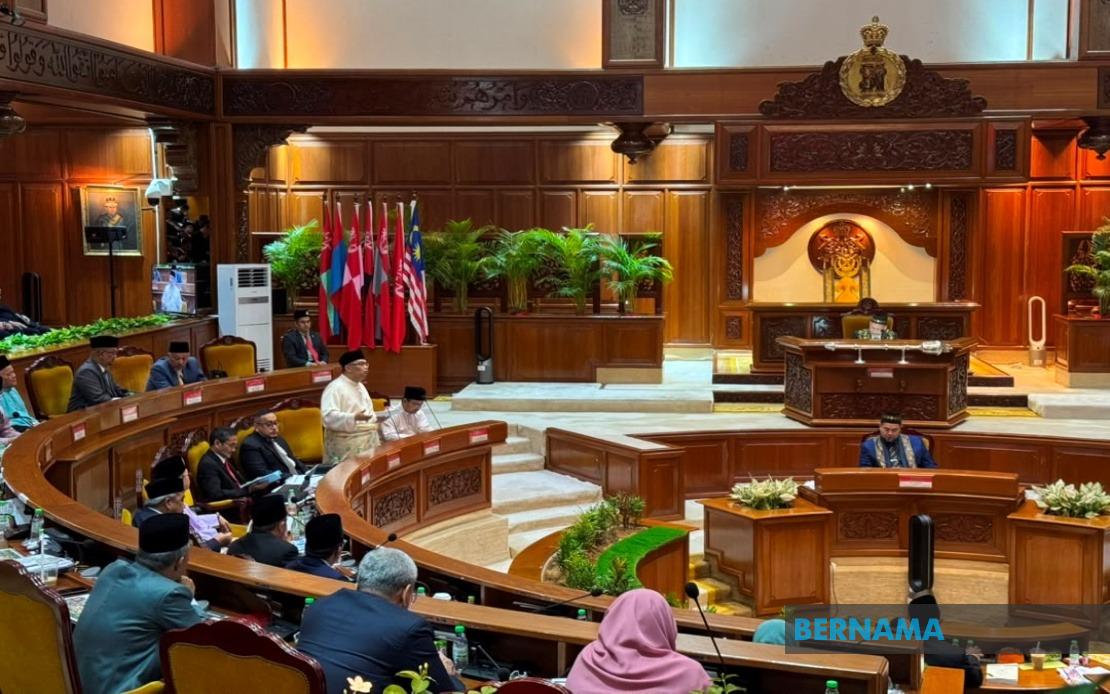
The Kelantan state legislative assembly has unanimously approved the Syariah Criminal Offences (Kelantan) Bill 2026, representing a legislative response to constitutional constraints on state religious law-making authority. The bill was tabled by Deputy Menteri Besar Datuk Dr Mohamed Fadzli Hassan and received support from assemblymen representing Pasir Tumboh, Melor, Galas, Jelawat, Kota Lama and Chempaka constituencies. Menteri Besar Datuk Mohd Nassuruddin Daud delivered remarks during the third reading before the measure secured passage under the watchful eye of assembly Speaker Datuk Mohd Amar Nik Abdullah.
The bill emerged from painstaking legislative revision, as Mohd Nassuruddin emphasised during the assembly sitting. State officials stressed that the measure underwent rigorous scrutiny and multiple refinement stages before formal introduction to lawmakers. The administration framed the legislation as a carefully calibrated effort to clarify and strengthen Syariah criminal provisions rather than a wholesale overhaul. This deliberative approach, the menteri besar argued, reflected principles already embedded in the state's earlier Syariah Criminal Code, demonstrating continuity in legislative philosophy across different iterations of the law.
At its core, the bill comprises nine distinct parts structured across 62 clauses alongside a single schedule, containing several substantive reforms to how Islamic criminal law operates within Kelantan. The legislation introduces fresh provisions governing obligations around performing obligatory prayers, protecting bodily integrity and private parts, preserving intellectual capacities, implementing restorative justice mechanisms, and establishing a compound system that allows certain offences to be settled through financial penalties rather than court proceedings. Notably, the bill prioritises whipping as the preferred punishment method where applicable, reflecting traditional Islamic jurisprudential approaches to criminal sentencing.
This legislative undertaking became necessary following a decisive Federal Court ruling in February 2024 that fundamentally challenged Kelantan's authority to enact certain religious criminal laws. In an 8-1 majority decision, the court declared 16 of 18 provisions within the Kelantan Syariah Criminal Code (I) Enactment 2019 unconstitutional and void. The court determined that these provisions transgressed the constitutional division between federal and state powers, finding that the state assembly had overstepped its legislative jurisdiction by creating offences that properly fell within federal domain according to the Malaysian constitution. This judgment catalysed intense debate about federalism and religious law-making in Malaysia's constitutional framework.
The constitutional invalidation stemmed from a petition filed by a Kelantan-based lawyer, whose legal challenge prompted the Federal Court to reconsider the boundaries of state syariah legislative competence. The court's interpretation reinforced established constitutional doctrine that certain criminal matters remain exclusively or predominantly federal responsibilities, even when those matters involve religious law. This outcome created considerable uncertainty for Kelantan's religious affairs apparatus and prompted recalibration of how the state could legitimately exercise its syariah criminal code authority.
Kelantan's new bill represents the state's attempt to navigate these constitutional constraints while maintaining its commitment to Islamic jurisprudential governance. By restructuring provisions, clarifying language, and potentially narrowing the scope of certain offences, legislators hope to craft a framework that respects federal constitutional limits whilst preserving the state's ability to prosecute Islamic criminal violations. The unanimous passage suggests broad political consensus within Kelantan that strengthening syariah law administration remains a priority, despite the federal court's earlier intervention.
For Malaysian federalism more broadly, the Kelantan bill illustrates the practical complications arising when constitutional ambiguities intersect with state-level religious legislative ambitions. Each state possesses distinct syariah legal frameworks reflecting local jurisprudential traditions and community preferences. However, these state-level arrangements must harmonise with federal constitutional parameters and increasingly, with Federal Court interpretations that police the boundaries of state authority. The Kelantan situation exemplifies how state governments must essentially redesign legislation to remain within judicially-determined constitutional limits.
The implications extend beyond Kelantan alone. Other Malaysian states with robust syariah legislative programmes may scrutinise their own codes for potential constitutional vulnerabilities exposed by the Federal Court's reasoning. States contemplating syariah criminal law reforms or enhancements will likely factor in the constitutional constraints now clearly articulated through the Kelantan precedent. This could create a period of legislative caution or alternatively, prompt states to seek federal cooperation in addressing syariah criminal governance gaps.
The bill's emphasis on restorative approaches and compound mechanisms reflects contemporary trends in criminal justice philosophy, where discretionary settlement options increasingly complement formal court proceedings. By allowing certain syariah offences to be resolved through financial arrangements, Kelantan's framework potentially reduces strain on religious courts whilst providing alleged offenders with alternatives to conviction and custodial sentences. This pragmatic dimension addresses administrative pressures within Malaysia's syariah court system, which has faced considerable caseload expansion.
Moving forward, the bill requires royal assent to become law, following standard constitutional procedures for state legislation. Implementation will require training Kelantan's syariah enforcement personnel and religious court officials on the new provisions' interpretation and application. The state's Islamic affairs department will need to develop prosecutorial guidelines reflecting the bill's various reforms, particularly regarding compound mechanisms and the prioritisation of whipping penalties. Public communication about the bill's substantive changes will also become important, ensuring religious communities and legal practitioners understand how the new framework operates.

