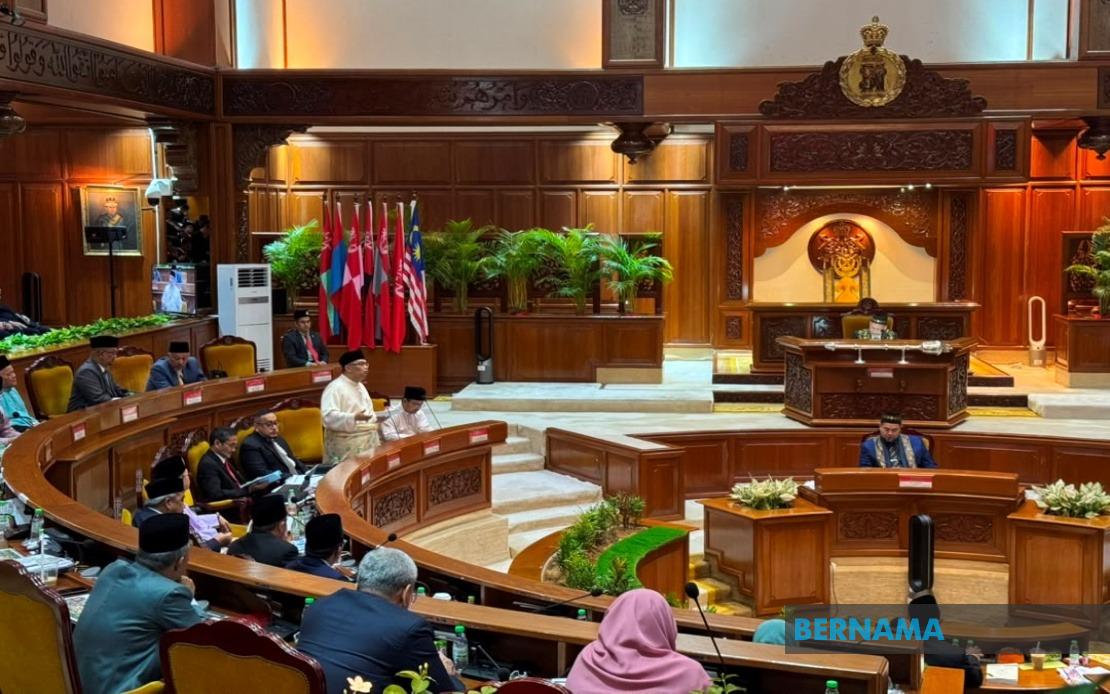
Kelantan's State Legislative Assembly has unanimously passed the Syariah Criminal Offences (Kelantan) Bill 2026, marking a significant legislative shift in how the northern state approaches Islamic law enforcement. The comprehensive overhaul restructures the existing framework across nine parts and 62 clauses, reflecting the state government's stated intention to modernise its syariah criminal justice system whilst maintaining stringent religious standards. According to Kelantan Deputy Menteri Besar Datuk Dr Mohamed Fadzli Hassan, the Bill represents a deliberate move toward a more methodical and authoritative legal architecture that distinguishes itself from previous iterations through three pivotal reforms: restorative sentencing mechanisms, compoundable offence provisions, and recalibrated penalty structures.
The restorative sentencing component introduces community service as a rehabilitative pathway for certain religious offences. Under this framework, individuals convicted of qualifying infractions must complete mandatory community service within a twelve-month window, theoretically encouraging behavioural reformation rather than purely punitive incarceration. This approach mirrors growing international recognition of restorative justice models, though its application within Islamic legal contexts remains comparatively novel. The reform suggests an attempt to balance theological strictures with practical rehabilitation objectives, addressing long-standing criticisms that traditional syariah enforcement prioritised punishment over offender reintegration.
Compoundable offences represent another architectural shift. The Bill grants the Sultan of Kelantan discretionary authority to designate specific offences as subject to composition—essentially permitting financial settlement or other agreed remedies outside formal prosecution. This mechanism operates through orders published in the state gazette, establishing clear procedural guidelines and standardised settlement forms. For offenders and complainants alike, compounding offers alternative dispute resolution pathways, potentially reducing court congestion whilst generating state revenue. However, the discretionary framework introduces variability depending on monarchical discretion and bureaucratic implementation, raising questions about consistency and transparency in how such determinations are applied across different offence categories.
Penalty enhancement represents the Bill's most visibly stringent component. The legislation prioritises whipping sentences for serious religious transgressions, including attempted apostasy, parental neglect of children's Islamic instruction, breaches of modesty and bodily decorum standards, consumption of intoxicating substances, gambling activities, unlawful sexual intercourse, and out-of-wedlock pregnancies. By elevating corporal punishment for these offences, Kelantan signals commitment to enforcing religious boundaries with heightened consequences. For Malaysian observers and particularly those in other states, this development reflects deepening divergence in syariah implementation methodologies across the country's thirteen jurisdictions, each possessing autonomous legislative authority over Islamic affairs within their territories.
The Bill introduces six substantive new provisions addressing previously under-codified religious obligations. Clause 10 criminalises neglect or abandonment of mandatory daily prayers, establishing legal sanction for a devotional practice traditionally enforced through community and family pressure. Clauses 15 and 16 legislate offences concerning bodily modesty—protecting private parts and other body areas—extending state regulatory reach into personal conduct spheres. Clause 33 addresses intellectual protection, prohibiting engagement with substances or information deemed intellectually corrupting, reflecting contemporary concerns about ideological influences alongside traditional vice categories. These additions substantially expand the Bill's jurisdictional scope beyond conventional syariah criminal taxonomy into quotidian religious practice regulation.
Significantly, the legislation repeals and reconstitutes existing provisions from the Kelantan Syariah Criminal Code Enactment (EKJS) 2019. Section 11 concerning places of worship desecration has been refined as Clause 12, now framed specifically around disturbance of Muslim worship spaces. More substantially, provisions regarding sodomy have been removed from their original statutory location but substantially reintroduced through Clauses 15 and 16's bodily modesty framework. This legislative restructuring potentially achieves similar regulatory outcomes through reformulated language, though the textual shift may carry implications for interpretative jurisprudence and enforcement application precedent.
The compounding mechanism itself comprises two integrated clauses establishing comprehensive composition frameworks. Clause 59 formalises general procedures for syariah offence compounding, whilst Clause 60 delineates authority parameters for relevant officials administering composition arrangements. This dual-clause structure suggests administrative sophistication, attempting to distinguish between substantive settlement principles and enforcement institutional powers. Practically, such provisions acknowledge that not all religious infractions warrant full prosecutorial engagement, potentially reserving judicial resources for more serious matters whilst providing conflict resolution alternatives for lesser transgressions.
For Southeast Asian regional analysis, Kelantan's legislative trajectory warrants close examination. Malaysia's syariah legal ecosystem remains fragmented, with each state pursuing distinct modernisation pathways. Kelantan's Bill 2026 reflects philosophical prioritisation of community-based rehabilitation alongside enhanced penalties—superficially contradictory but practically complementary through selective application mechanisms. This bifurcated approach potentially influences other states' legislative considerations, particularly Terengganu, Pahang, and Perlis, which periodically review their syariah frameworks. International human rights observers have historically criticised corporal punishment provisions, making Kelantan's enhanced whipping penalties a probable flashpoint for international scrutiny and domestic civil society dialogue.
Implementation questions loom considerably larger than statutory language. The one-year community service completion requirement demands institutional infrastructure—monitoring systems, supervisory personnel, and compliance verification mechanisms—which many states lack capacity to sustain comprehensively. Compounding discretion, whilst providing flexibility, introduces potential for inconsistent application if guidelines remain inadequately detailed. The new bodily modesty and intellectual protection provisions require enforcement officers to interpret subjective standards, creating space for differential application across demographic and socioeconomic contexts. Success ultimately depends on administrative capacity, official training, and supervisory oversight mechanisms that transcend statutory text.
The Bill's unanimous passage reflects Kelantan's political consensus regarding syariah law enhancement, unsurprising given the state's governance composition and Islamic-centred political positioning. However, unanimous passage masks potential implementation complexity arising from competing reform objectives. Restorative sentencing philosophy emphasises rehabilitation and social reintegration, whereas enhanced penalty rates signal severity and deterrence orientation—philosophically distinct penological frameworks that may generate operational tensions during case-specific application. Courts and enforcement authorities must navigate these sometimes-contradictory directives, interpreting legislative intent from statutory structure rather than explicit reconciliation statements.
For Malaysian residents and businesses, particularly those in Kelantan, the Bill's implications extend across contractual, employment, and personal conduct domains. Religious compliance requirements now attain statutory force rather than remaining customary expectations, creating legal exposure previously absent. Non-Muslim individuals conducting business in Kelantan face regulatory environments affecting workforce composition and operational procedures regarding Muslim employees and stakeholders. The legislation simultaneously represents state capacity assertion within federal constitutional architecture allocating syariah matters to state jurisdiction, reflecting ongoing federalism dynamics within Malaysia's constitutional framework where religious authority distributes across multiple governmental levels.

