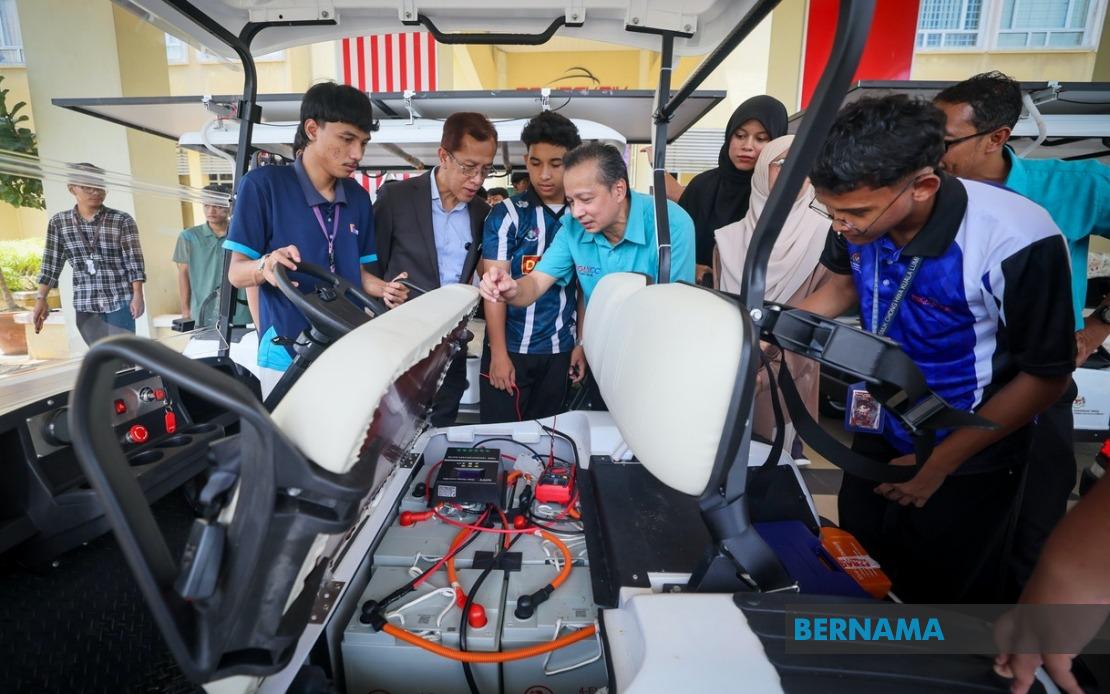
Jeli Kelantan Polytechnic has unveiled the region's first solar-powered buggy cars following successful completion of an ambitious technology innovation project designed and constructed by its electrical engineering students. The initiative represents a tangible demonstration of how vocational institutions can bridge the gap between classroom learning and real-world renewable energy applications, a skill set increasingly demanded across Southeast Asia as nations grapple with sustainability targets and rising energy costs.
The Solar Buggy Car Technology Innovation Project consumed approximately RM300,000 in funding and enlisted the collaborative effort of 20 third-semester diploma students specialising in Electrical Engineering with a focus on green energy. Remarkably, these students accomplished the design, assembly, and deployment of the vehicles within a compressed timeframe of roughly one month, underscoring both their technical capability and the pedagogical effectiveness of hands-on learning methodologies. The project operated under the academic guidance of lecturer Chung Boon Chuan, who orchestrated students' transition from foundational knowledge acquired during their first semester into sophisticated practical engineering work.
The polytechnic currently operates six fully functional solar-powered units comprising four four-seater vehicles and two two-seater variants, with each buggy carrying a price tag of approximately RM40,000. The core innovation lies in the integration of photovoltaic panels that enable battery charging through captured solar energy, fundamentally reducing reliance on conventional electricity grid supply. This represents a meaningful contribution to campus operations and demonstrates the viability of solar technology for localised transportation needs, a consideration relevant to other educational institutions and organisations seeking to reduce their carbon footprint across Malaysia and the broader region.
Director Mohd Zamre Ab Rahman contextualised the project within the polytechnic's broader institutional commitment to establishing itself as a genuinely green campus. Beyond symbolic gestures, the organisation is systematically expanding its renewable energy infrastructure and educational offerings to position itself as a credible training ground for technicians and engineers entering a rapidly evolving industrial sector. This strategic positioning reflects recognition that Malaysia's transition toward cleaner energy production will necessitate a substantially enlarged workforce equipped with contemporary technical expertise.
The Diploma in Electrical Engineering (Green Energy) programme, introduced in July of the previous year, has experienced remarkable early uptake, with student enrolment doubling from 40 to 80 participants in the current academic cycle. This dramatic expansion mirrors regional and national trends as educational institutions respond to labour market signals indicating heightened demand for green energy specialists. The programme's curriculum explicitly prepares graduates for employment in a sector experiencing tangible growth, particularly within Kelantan where substantial solar farm developments have materialised in locations such as Tok Uban and Pasir Mas.
These solar installations represent significant capital investments that generate employment opportunities across design, construction, operation, and maintenance phases. For a state historically dependent on conventional energy sources and traditional industries, the emergence of renewable energy infrastructure signals economic diversification and positions Kelantan as an emerging centre for green technology development within the Malaysian landscape. Polytechnic graduates equipped with specialised knowledge become essential assets for project developers and utility operators navigating this transition.
Recognising the importance of infrastructure and facilities to support quality education in this emerging discipline, the Ministry of Higher Education allocated RM2 million to Jeli Kelantan Polytechnic during the previous fiscal year specifically designated for laboratory upgrades and procurement of specialised equipment relevant to green energy instruction. This financial commitment reflects federal-level recognition that vocational training institutions require substantial investment to maintain curricula aligned with industry requirements and technological advancement. Such allocations are critical for institutions in rural and semi-rural settings where private sector support may be limited.
Beyond its primary educational mission, the polytechnic has positioned itself as a service provider willing to undertake solar panel installation projects on buggy vehicles for external clients including government agencies and private organisations. This commercial dimension serves multiple institutional objectives: it generates revenue streams, provides authentic project experience for students transitioning toward employment, demonstrates technology viability to potential adopters, and creates pathways for knowledge transfer between the institution and broader economic actors. Such partnerships represent a contemporary approach to vocational education that emphasises practical skills development and industry engagement.
The solar buggy initiative carries particular significance for Malaysia's broader energy transition goals and workforce development strategy. As the nation seeks to increase renewable energy capacity and meet commitments under international climate frameworks, educational institutions must produce technicians capable of designing, installing, and maintaining such systems. The shortage of trained personnel in green technologies has already emerged as a bottleneck constraining sector expansion, making programmes like those at Jeli Kelantan Polytechnic essential infrastructure for economic development. The buggy cars themselves function as mobile demonstrations that familiarise the public with solar technology feasibility and build confidence in renewable energy solutions.
For regional observers, particularly those in Indonesia, Thailand, and Vietnam similarly confronting energy security and environmental challenges, Malaysia's investment in green energy vocational training offers instructive lessons regarding institutional capacity building. The polytechnic model demonstrates how relatively modest capital investments in targeted programmes can catalyse workforce development and technological adoption. The doubling of student intake within a single year suggests that prospective technicians recognise employment opportunities in this emerging sector, indicating market-driven demand that justifies continued educational expansion.

