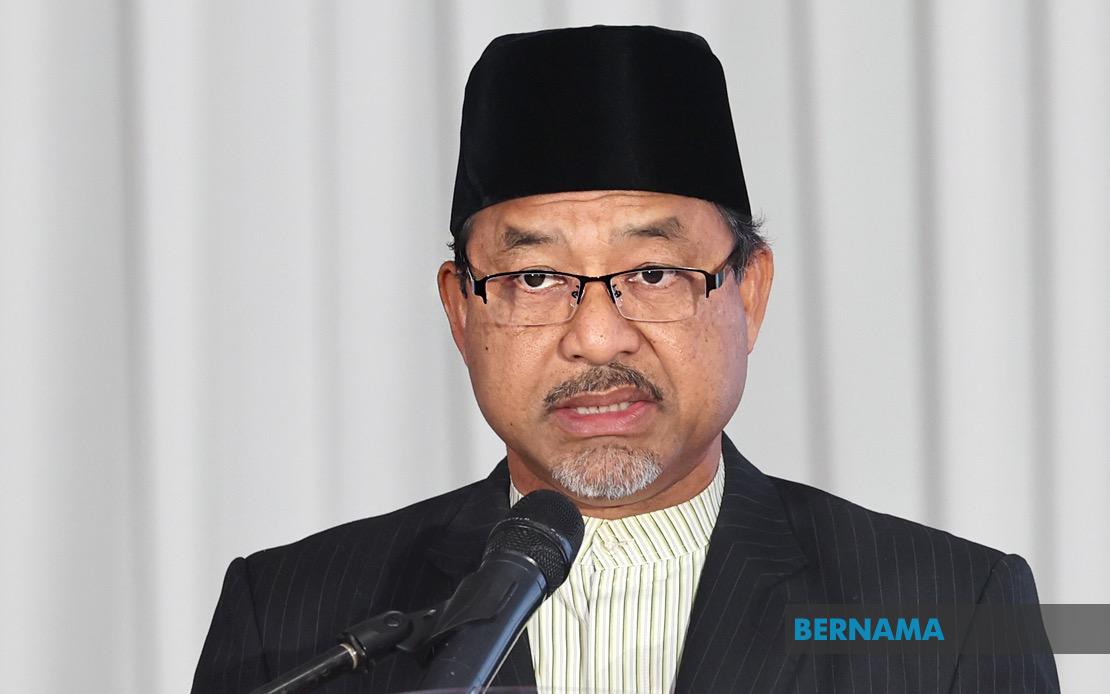
Kelantan's forested expanse continues to exceed the national forest conservation benchmark, with the state maintaining 778,708.34 hectares of woodland—representing 51.79 per cent of its total land mass. This achievement was confirmed in the state legislative assembly by Menteri Besar Datuk Mohd Nassuruddin Daud, who underscored that Kelantan's forest preservation aligns with the broader Peninsular Malaysia Forestry Policy objective of maintaining at least half of the peninsula's terrain under forest and tree vegetation.
The maintenance of this forest threshold represents a significant commitment to environmental stewardship in a state where economic activity and conservation must coexist. Kelantan's forestry sector historically underpinned much of the state's economic foundation, making the balance between resource extraction and preservation particularly delicate. The fact that the state has managed to retain forest cover above the 50 per cent mark while continuing development demonstrates an attempt to reconcile these competing pressures—a balancing act that many resource-dependent states across Southeast Asia struggle to achieve.
The state administration has deployed multiple mechanisms to achieve this outcome. Through the Kelantan Forestry Department, officials have systematically identified government-owned land parcels suitable for formal gazettement as Permanent Reserved Forests, or HSK in Malaysian terminology. This deliberate process of categorising land provides legal protection and restricts conversion to non-forest uses. Additionally, protected forest areas have been formally gazetted according to specified forest function classifications under the amended National Forestry Enactment framework, creating a layered regulatory structure designed to prevent unauthorised land-use changes.
The technological dimension of Kelantan's forest management strategy merits particular attention. Rather than relying solely on traditional field inspection methods, the state has begun integrating advanced monitoring systems capable of detecting alterations in forest extent and identifying potential encroachment in near real-time. This approach enables quicker identification of threats and more rapid response compared to conventional periodic surveys. For a state managing hundreds of thousands of hectares, such technological capability substantially increases detection probability and creates a deterrent effect against unlawful forest clearing.
Kelantan's participation in the Greening Malaysia campaign reflects a proactive posture extending beyond mere preservation of existing forests. The state government has incorporated forest restoration and tree-planting initiatives into its environmental portfolio, suggesting an intent to expand or rehabilitate degraded forest areas. This demonstrates recognition that forest cover maintenance alone may prove insufficient if existing woodlands continue degrading. Replanting efforts can restore ecosystem functionality and contribute to carbon sequestration objectives increasingly prominent in regional climate discussions.
The verification procedure established by Kelantan's forestry authorities adds a safeguard against false alarms or overreaction to detected anomalies. When technological systems identify potential encroachment or forest loss, ground truthing through physical patrols and field inspections precedes any enforcement response. This measured approach prevents unnecessary conflict while ensuring that enforcement action, when deployed, targets genuine violations rather than measurement errors or natural forest dynamics. The protocol reflects mature environmental management practice.
For Malaysian policymakers and Southeast Asian counterparts, Kelantan's experience provides several instructive elements. The state demonstrates that a developing region can maintain forest cover targets while accommodating economic activity—a crucial message for nations balancing conservation with development aspirations. The integration of technology into monitoring systems offers a scalable model that could be adapted across the region, particularly in jurisdictions with limited personnel resources but access to satellite imagery and geospatial analysis tools.
The broader context of forest preservation in Peninsular Malaysia involves competing claims on land resources. Agricultural expansion, urban development, infrastructure projects, and resource extraction all compete with conservation objectives. Kelantan's achievement of maintaining above-threshold forest cover suggests that deliberate policy commitment, combined with institutional capacity and technological investment, can resist these pressures. However, the sustainability of this outcome depends on continued political will and adequate funding for the Kelantan Forestry Department.
The legislative assembly discussion indicates that forest management remains an active parliamentary concern in Kelantan, with opposition representatives such as Zuraidin Abdullah (PAS-Chetok) engaging the Menteri Besar on the specifics. This scrutiny encourages accountability and suggests ongoing public interest in environmental stewardship. Such engagement, when constructive, can strengthen environmental governance by subjecting forest policy to democratic review.
The peninsula-wide 50 per cent forest cover target itself warrants consideration. Environmental scientists debate whether this threshold provides sufficient protection for biodiversity and ecosystem services, or whether higher percentages would be prudent. Kelantan's 51.79 per cent exceeds the baseline, but margins remain tight. Any significant future deforestation would quickly erode the buffer, emphasising the importance of sustained commitment rather than complacency about current achievements.
For Malaysian and regional investors, Kelantan's forest preservation stance carries implications for long-term land availability and environmental liability. Businesses depending on forest conversion or operating in forest-adjacent sectors face increasingly stringent conditions. Conversely, enterprises aligned with conservation—such as eco-tourism or sustainable timber operations—may find enhanced opportunities within a framework favouring forest retention.
Moving forward, Kelantan's continued forest cover maintenance will depend on several factors: consistent enforcement against illegal logging and encroachment, technological system reliability and funding, climate resilience of existing forest ecosystems, and political continuity of environmental priorities. The state's performance to date demonstrates feasibility, but perpetual vigilance remains necessary in a landscape where economic pressures persist.

