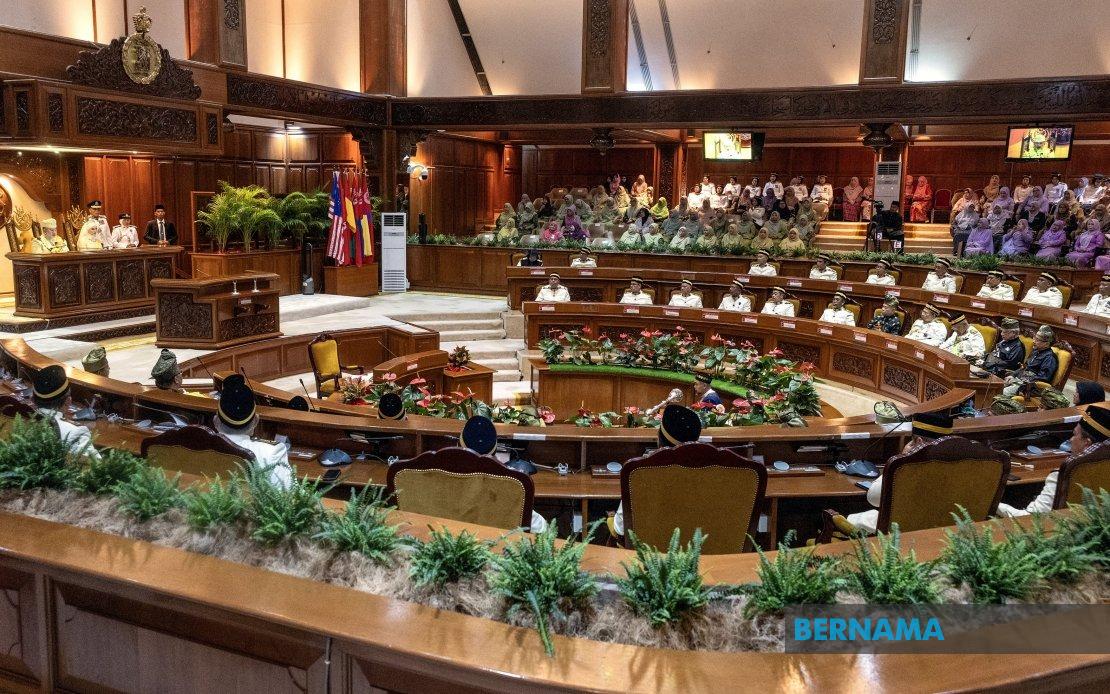
The Kelantan state government is moving forward with legislative reform in religious criminal matters, preparing to table the Syariah Offences (Kelantan) Bill 2026 at the State Legislative Assembly sitting scheduled for next Tuesday. The initiative represents an attempt to resolve constitutional complications that emerged from a landmark Federal Court decision invalidating significant portions of an earlier enactment, creating a legal vacuum that state authorities have since worked to address through careful redrafting.
Deputy Menteri Besar Datuk Dr Mohamed Fadzli Hassan announced the tabling following the State Executive Council meeting in Kota Bharu, explaining that the proposed legislation is designed to supersede the Kelantan Syariah Criminal Code (I) Enactment 2019. The necessity for this replacement stems directly from a pivotal Federal Court judgment delivered on February 9, 2024, which fundamentally altered the legal landscape governing state-level Syariah criminal legislation. The case, initiated by constitutional challenge from lawyer Nik Elin Zurina Nik Abdul Rashid, resulted in an 8-1 majority decision that declared 16 of 18 contested provisions unconstitutional.
The Federal Court's reasoning centred on a critical constitutional principle: the State Legislative Assembly had transgressed its enumerated powers by attempting to legislate on matters falling within federal jurisdiction. This decision highlighted the longstanding tension between federal and state authority in Syariah criminal law, a dispute that has generated significant political and legal debate across Malaysia. The ruling effectively stripped the state of authority over numerous offences that the justices determined were primarily matters for parliamentary legislation, creating practical difficulties for law enforcement and religious administration in Kelantan.
Construction of the replacement bill has proceeded deliberately since mid-2024, with Datuk Dr Mohamed Fadzli noting that the drafting process engaged a multidisciplinary committee comprising civil law practitioners, Syariah legal specialists, constitutional experts, and senior judges from the Syariah judiciary. This collaborative approach reflects an effort to ensure the new legislation withstands constitutional scrutiny by remaining within permissible state legislative boundaries while still addressing genuine religious and administrative concerns. The proposed bill was subsequently referred to the Kelantan Council of Ulama through the institutional framework of the Kelantan Islamic Religious and Malay Customs Council (MAIK) for theological and jurisprudential review.
The proposed Syariah Offences (Kelantan) Bill 2026 embodies a substantial and methodical reconstruction of the state's Syariah criminal law architecture. Comprising nine distinct parts, sixty-two clauses, and a supporting schedule, the legislation has been carefully structured according to constitutional principles emphasizing the "pith and substance" doctrine. This approach aims to distinguish between matters legitimately within state competence—particularly those concerning religious obligations and duties—and those that properly belong to federal legislative authority. Officials have indicated that the new enactment incorporates several provisions intended as reforms, suggesting an attempt not merely to restore the status quo ante but to modernize aspects of Syariah criminal regulation in the state.
The constitutional tension underlying this legislative effort reflects a broader regional dynamic affecting other Muslim-majority Malaysian states contemplating similar reforms. The Federal Court's reasoning in the Nik Elin Zurina case established precedent that constrains state legislatures across Malaysia, not merely Kelantan. Other jurisdictions with comparable Syariah enactments potentially face comparable constitutional vulnerabilities, meaning that Kelantan's approach to remedying the identified defects will likely influence legislative strategies elsewhere. For policymakers in Selangor, Terengganu, Pahang, and other states with substantial Muslim populations, the Kelantan bill represents an instructive test case for how to reconcile state religious legislative aspirations with federal constitutional limits.
Datak Dr Mohamed Fadzli has publicly expressed confidence that the state assembly will unanimously endorse the proposed legislation, a prediction that appears plausible given that constitutional compliance constitutes the primary objective rather than introducing contentious new policies. The assembly's support would likely reflect broad recognition across political factions that resolving the legal ambiguity created by the Federal Court judgment serves the state's practical interests regardless of partisan considerations. Nevertheless, the specific provisions included in the bill merit careful scrutiny from constitutional lawyers and civil liberties advocates, particularly regarding how the legislation navigates between religious authority and individual rights protections.
The timing of the tabling coincides with heightened national discussion concerning the relationship between federal and state powers in religious matters. As Malaysia's Islamic governance architecture continues to evolve through judicial interpretation and legislative adaptation, the Kelantan experience demonstrates how constitutional constraints can compel substantial reworking of state religious legislation. The bill's reception at the assembly will signal whether Kelantan has successfully crafted a legislative response that addresses the Federal Court's constitutional objections while preserving the substantive policy objectives underlying the original 2019 enactment.
For Malaysian legal observers and religious governance specialists, the Kelantan bill represents a significant case study in constitutional federalism and religious law harmonization. The multi-year process of redrafting—incorporating expert input across civil law, Syariah law, constitutional law, and religious studies domains—illustrates the complexity involved in maintaining coherent Islamic legal frameworks within a federal constitutional structure. The outcome will likely influence how other states approach similar challenges, making the assembly debate and passage consequential not merely for Kelantan but for the broader trajectory of Islamic governance reform across the federation.

