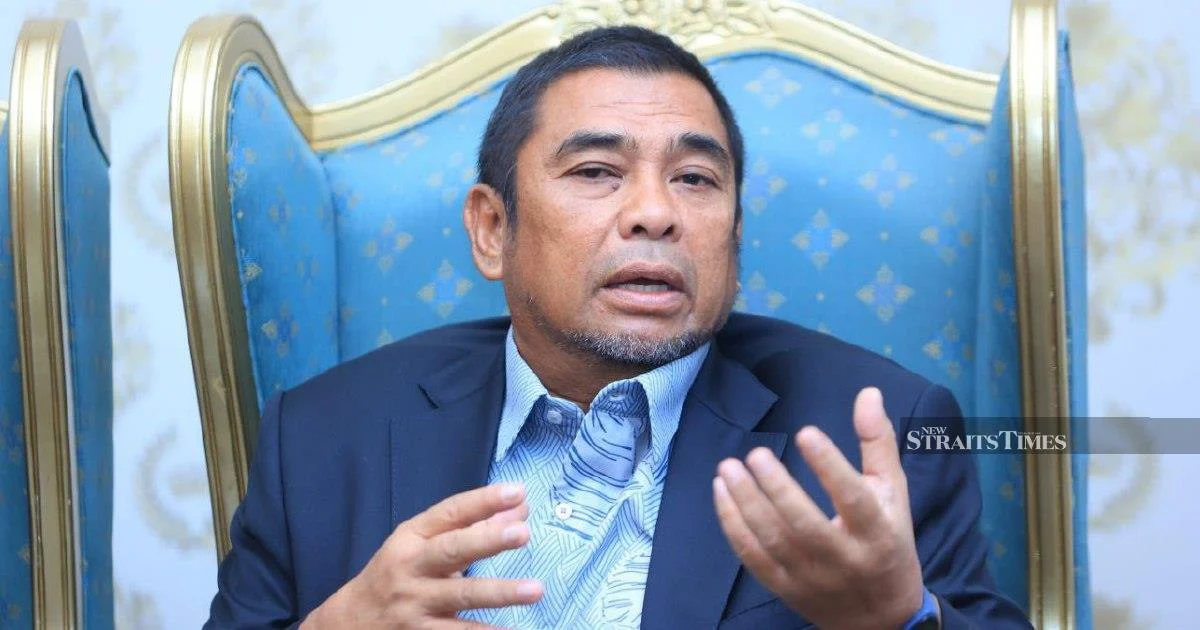
Kelantan Umno has seized on a recent directive from Pas instructing its members to throw support behind Barisan Nasional candidates contesting the Johor state election as evidence that prior accusations against the party were baseless political attacks. The party's leadership in the eastern state contends that the directive represents an implicit acknowledgement from Pas that the controversial "Umdap" label—which has been levelled against Umno in recent political discourse—was nothing more than a calculated smear campaign designed to damage the party's standing among voters.
The term "Umdap" has circulated within Malaysian political circles as a pejorative reference to Umno, frequently deployed by rival parties in their public messaging. Kelantan Umno interprets the Pas directive through a different lens than the initial announcement might suggest, viewing it as a tangible demonstration that factional divisions and inflammatory rhetoric were never genuine ideological differences. According to the party's reading, if Pas genuinely believed the accusations embedded within the "Umdap" label, members would not have received instruction to actively campaign on behalf of Umno-affiliated candidates in the neighbouring state.
This interpretation reveals the delicate political mathematics at play in Malaysia's multiparty system, where coalition-building often requires reconciliation between former antagonists. The Johor election context provides the immediate backdrop for this statement, though the broader implications extend to the fundamental question of electoral cooperation between parties that have previously contested each other's legitimacy. Pas, as an Islamic party with deep roots in the eastern states, maintains significant organisational capacity and grassroots support that can meaningfully influence electoral outcomes when mobilised behind specific candidates.
For Kelantan Umno specifically, the statement carries particular significance given the state's political history. Kelantan has been an Islamic party stronghold for decades, with Pas controlling the state government. The competition between Umno and Pas in this region has historically been intense and occasionally acrimonious, with both parties vying for the support of Muslim-majority constituencies. Any gesture of cooperation from Pas leadership thus carries outsized symbolic weight within Kelantan's political ecosystem.
The directive itself represents a calculated political decision by Pas central leadership, presumably motivated by considerations of national politics and coalition dynamics at the federal level. Such instructions to support rival party candidates do not emerge from ideological alignment but rather from pragmatic calculations about power-sharing arrangements and broader political stability. For Kelantan Umno to extract vindication from this manoeuvre requires voters to accept a particular interpretation of what the directive signifies—namely, that support for BN candidates cannot coexist with genuine belief in the "Umdap" label's substantive criticisms.
The stakes of this rhetorical exchange extend beyond merely defending party reputation. In Malaysian politics, where perception often shapes electoral behaviour as powerfully as policy platforms, the ability to define what political gestures mean carries considerable weight. Kelantan Umno's framing attempts to rewrite the narrative around recent political attacks, transforming what might be viewed as pragmatic power-sharing into a confession of prior bad faith. This reframing effort suggests the party views the "Umdap" criticism as having gained sufficient traction among voters to require active rebuttal.
For Malaysian voters attempting to make sense of shifting political alignments, such statements highlight the sometimes opaque nature of coalition politics. Parties that trade accusations one moment may find themselves collaborating the next, creating a landscape where consistency between rhetoric and action becomes difficult to discern. The apparent contradiction between calling a party corrupt, incompetent, or otherwise fundamentally unfit for office while simultaneously supporting its candidates strains credibility and invites cynicism about political motivations.
The Johor election serves as a testing ground for this cooperative arrangement between Umno and Pas, two parties whose relationship has ranged from collaborative to confrontational depending on broader political circumstances. The outcome of that election may provide clearer signals about whether voters interpret Pas's directive as Kelantan Umno suggests—as vindicating evidence that previous attacks were unfounded—or whether they view it more pragmatically as straightforward electoral mathematics divorced from questions of party integrity.
Kelantan Umno's attempt to extract political advantage from Pas's directive reflects the ongoing struggle within Malaysian politics to establish narrative dominance. The party recognises that allegations of corruption or dysfunction, regardless of their factual basis, can inflict electoral damage if they take root in voter consciousness. By framing the Pas directive as confession rather than cooperation, Kelantan Umno seeks to reclaim the moral high ground and persuade voters that attacks on the party lacked substance. Whether this rhetorical strategy succeeds likely depends on factors beyond the statement itself—including Umno's actual performance in addressing governance concerns and the credibility of the party's recovery efforts.

