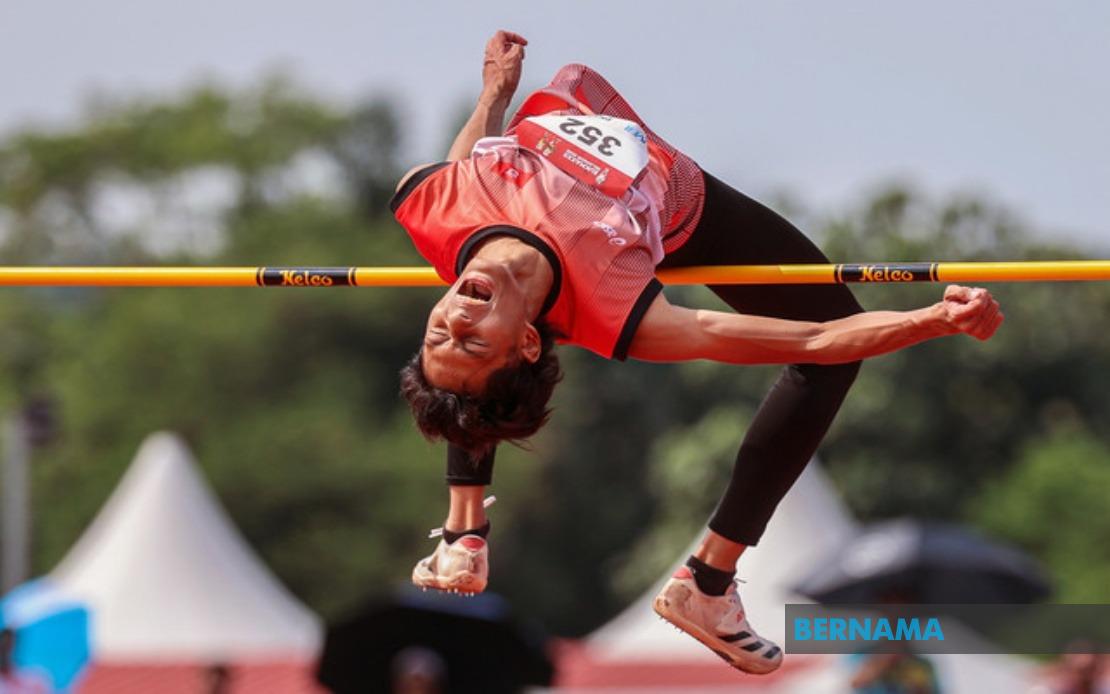
At just 18 years old, Kelantan's Dzul Darwisy Adam Khairulaswari has authored an improbable sporting turnaround at the 2026 SUKMA Games unfolding in Selangor, capturing the high jump gold medal with a commanding performance at the Universiti Putra Malaysia Sports Centre. The teenager's ascent from relative obscurity two years ago, when he finished 11th at the Sarawak edition, underscores the unpredictable trajectories that define athletic development in competitive national sports cycles. His triumph represents not merely a personal milestone but a significant boost for Kelantan's athletics contingent at this biennial championship, adding to the state's medal tally in a discipline where consistent podium finishes have historically been elusive.
Dzul Darwisy's winning clearance of 2.09 metres proved decisive against a competitive field that included formidable Kedah representatives. His performance delivered Kelantan's second athletics gold of the games, underscoring the northern state's growing competitive depth in track and field disciplines. The margin separating the medalists—just five centimetres between his gold-winning height and silver—reflected the razor-thin margins that often determine outcomes in high jump competitions, where fractional improvements translate into decisive advantages. This competitive intensity mirrors regional standards and signals that Malaysian high jump talent is developing capabilities aligned with Southeast Asian benchmarks.
The silver and bronze medals went to Kedah's Muhamad Nawawi Mohamad and Muhammad Naufal Zulkifli, who cleared 2.07 metres and 2.04 metres respectively. Kedah's dual podium presence demonstrates the state's established pipeline in this event, though Dzul Darwisy's emergence as champion suggests the competitive landscape is shifting. The podium composition reflects broader patterns in Malaysian athletics, where talent increasingly emerges from less-predictable quarters, challenging historical hierarchies among athletics-focused states. The presence of multiple strong performers within a single event raises the overall standard of competition and creates pressure for state federations to sustain investment in technical coaching and athlete development programs.
For Dzul Darwisy, this victory carries extraordinary personal significance as his first major championship triumph. The athlete's journey to this moment involved years of incremental progress punctuated by setbacks, including a third-place finish at the 2023 Malaysian School Sports Council championships when he was in Form Three. The intervening years witnessed modest improvements in performance until this year's dramatic acceleration, suggesting that maturation, increased training sophistication, or refinements in technique finally crystallized into competitive advantage. This trajectory—gradual development followed by breakthrough—characterises many successful athletes whose full potential only materialises after sustained effort.
In candid remarks immediately following the competition, Dzul Darwisy described his achievement as both blessing and miracle, emphasising the role of family prayers and supporters' encouragement in sustaining him through his athletic journey. The teenager's emotional response revealed the psychological dimensions of sporting success for young Malaysian athletes, particularly those representing smaller states competing against more resourced rivals. His acknowledgment that this represented his first significant victory at any major tournament underscores how victory at SUKMA, while important, had eluded him despite years of participation in competitive circuits including school championships and regional competitions.
Notably, the athlete competed throughout the championship while managing a back injury, a factor that contextualises his achievement within the reality of athletic competition where performers frequently navigate physical challenges. Despite this physical impediment, Dzul Darwisy surpassed his previous personal best of 2.03 metres, establishing a new benchmark of 2.09 metres. The improvement of six centimetres represents a substantial leap in high jump terms, where incremental gains typically come through painstaking refinement of technique and incremental strength gains. The fact that he achieved this improvement whilst injured suggests considerable latent capability and raises questions about his potential when fully healthy.
The athlete's original target heights of between 2.13 and 2.15 metres went unrealised, suggesting either conservative performance under competition pressure or the physical limitations imposed by his injury. These aspirational targets, however, provide clarity regarding his development trajectory and indicate the benchmarks he considers attainable within medium-term timeframes. The gap between his current performance and these targets suggests realistic pathways for improvement rather than unrealistic ambitions, providing coaching staff with quantifiable developmental objectives.
Dzul Darwisy's immediate focus centres on qualifying for the Southeast Asian Games through breaching the 2.16-metre barrier, a height that would position him competitively within regional competitions. Beyond this, he has identified the SUKMA record of 2.21 metres, established by A. Kavee Alagan of Negeri Sembilan at the 2012 Pahang edition, as an ultimate technical target. This record has stood for fourteen years, suggesting either exceptional performance by Alagan or relatively stagnant development in Malaysian high jump standards over this period. Dzul Darwisy's pursuit of this benchmark would require incremental improvements but appears within conceptual reach given his demonstrated trajectory.
Former national high jump champion Lee Hup Wei, now serving as national reserve coach, attended the competition, bringing to the event the perspective of someone who understands the technical and psychological dimensions of high jump excellence at the national level. His presence signals institutional attention to talent development pipelines and suggests that Dzul Darwisy's emergence has registered with coaching hierarchies responsible for identifying and nurturing athletes with potential for international representation. The involvement of experienced coaches in observing developing talent facilitates knowledge transfer and ensures that breakthrough performances trigger appropriate developmental interventions rather than remaining isolated achievements.
The significance of Dzul Darwisy's achievement extends beyond personal and state-level success to implications for Malaysian athletics' international competitiveness. The Southeast Asian Games represent the immediate competitive horizon, with 2.16 metres serving as a qualifying benchmark that positions athletes competitively within the region. Malaysian high jumpers have historically competed at modest levels in international forums, with few athletes achieving consistent medals in major regional championships. Dzul Darwisy's trajectory, should it continue upward, could contribute to elevating Malaysia's athletic profile and creating pathways that encourage younger athletes to pursue technical events historically neglected in school systems.
The coaching implications of his breakthrough merit consideration. His developmental arc—from 11th place to championship gold over two years—occurred during a period when he was managing injury and reportedly demonstrated modest improvements until recently. This suggests that specific technical interventions, enhanced training protocols, or psychological support mechanisms activated in the period leading to SUKMA 2026 proved effective. Replicating such interventions across other athletes and disciplines could yield broader improvements in Malaysian athletic competitiveness. Furthermore, Dzul Darwisy's success validates continued investment in athletes from smaller states, challenging potential bias toward concentrating resources in traditionally dominant athletic centres.
Looking forward, the challenge for Dzul Darwisy involves maintaining momentum and translating this breakthrough into consistent high-level performance across multiple competitions. Championship victories can sometimes prove ephemeral, particularly for young athletes competing at heightened arousal levels with crowd support and national attention. Converting this single excellent performance into sustained excellence requires systematic training progression, appropriate recovery management, and psychological resilience to handle increased expectations. Malaysian athletics administration will need to provide adequate support structures—coaching expertise, training facilities, medical monitoring, and competition opportunities—to facilitate his continued development.

