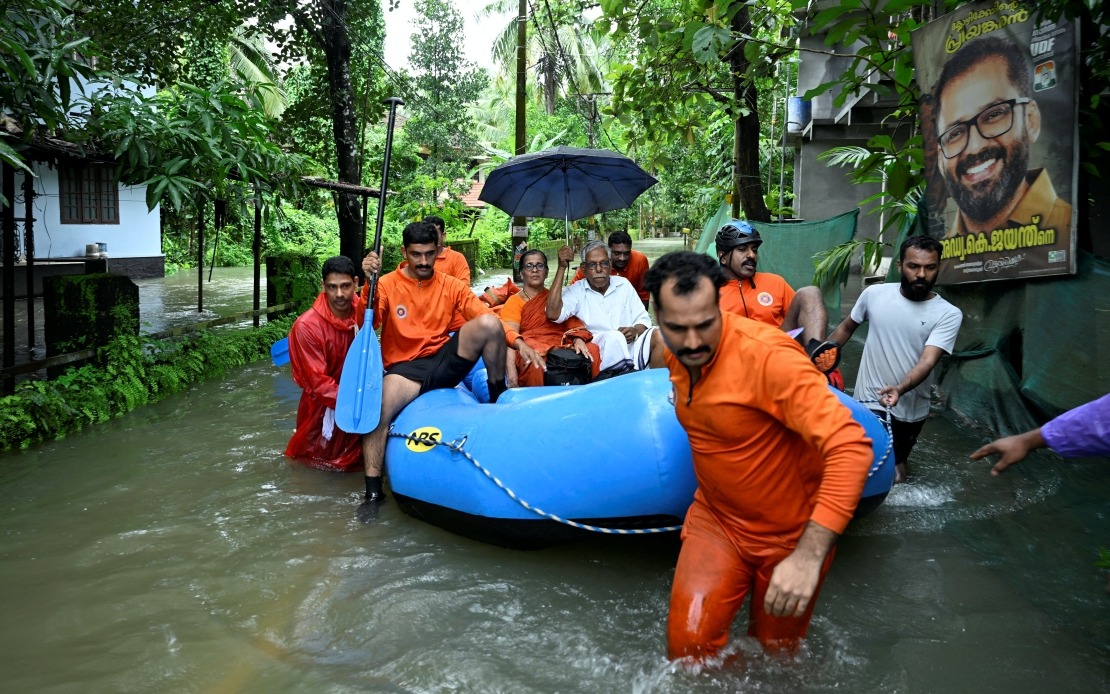
The southern Indian state of Kerala is grappling with an escalating humanitarian crisis as monsoon-driven rainfall intensifies across the region. Authorities reported on Wednesday that the death toll from rain-related incidents has reached 26, with emergency officials warning of further casualties as weather patterns remain volatile. The figure underscores the severity of the current disaster, which has unfolded over recent days as northern Kerala regions received relentless downpours that overwhelmed local infrastructure and triggered cascading environmental hazards.
Chief Minister V D Satheesan disclosed during a press briefing that the disaster has left eleven people injured and four individuals unaccounted for. The Chief Minister's statement revealed the scale of displacement, with approximately 27,048 residents forced to leave their homes and seek shelter in designated relief camps. Across Kerala, authorities have established 462 relief camps to house the displaced population, representing a massive coordinated response to manage the humanitarian fallout. The sheer number of camps required highlights how widely the disaster has scattered communities and disrupted normal life across the state.
The agricultural sector has sustained substantial damage, compounds the economic burden on an already-stressed population. Officials documented crop destruction affecting 1,882 hectares of farmland, impacting the livelihoods of 23,537 farming families. For rural communities dependent on agriculture, such losses carry consequences extending far beyond immediate physical damage, threatening food security and income stability for months to come. The timing of the disaster during the monsoon season, when crops are typically at critical growth stages, makes the agricultural impact particularly severe.
Government relief measures announced by the Chief Minister include enhanced compensation packages for bereaved families and those who have suffered property losses. These financial interventions, while necessary, acknowledge the medium-term reconstruction challenges facing affected communities. The compensation framework reflects government recognition that recovery from such disasters requires sustained economic support beyond emergency shelter and food assistance. Authorities are preparing for extended relief operations, understanding that normalcy will take months to restore across heavily impacted districts.
Meteorological warnings compound concerns about further deterioration. The India Meteorological Department issued an orange alert for Wednesday, indicating expectations of continued heavy precipitation. The IMD bulletin released Wednesday morning forecast widespread rainfall across Kerala, coastal Karnataka, and Telangana extending from August 5 through August 11. This extended forecast period signals that the disaster remains in its active phase, with risks of additional flooding and landslides persisting over coming days. The forecast trajectory suggests affected communities will endure sustained pressure on relief infrastructure and rescue operations.
Northern Kerala regions, particularly high-altitude areas within Kozhikode and Kannur districts, have borne the brunt of the initial assault. Since August 1, these regions experienced intense precipitation that triggered both flash flooding and terrain instability. The geographic concentration of the heaviest rainfall in mountainous districts creates particular challenges, as elevated areas are inherently susceptible to rapid water runoff and slope failures. Communities in these zones face compounded dangers from multiple hazard types simultaneously, requiring emergency responders to manage both water-related incidents and geological disasters.
Floodwaters remain elevated across low-lying areas, preventing natural drainage and maintaining dangerous conditions for stranded populations. Many residential areas remain submerged, trapping residents and complicating relief delivery. The persistence of standing water creates secondary hazards including waterborne disease risks and structural damage progression as buildings remain saturated. Extended submersion also threatens essential infrastructure including water supply systems, sanitation facilities, and transportation networks, potentially triggering disease outbreaks if sanitary conditions deteriorate further.
For Malaysia and the broader Southeast Asian region, Kerala's flooding situation offers critical lessons about monsoon preparedness and climate resilience. The Indian state's experience demonstrates how rapid-onset disasters can overwhelm even moderately resourced administrations, displacing tens of thousands within days. Southeast Asian nations with similar monsoon exposure should note Kerala's vulnerability patterns, particularly regarding high-altitude regions prone to landslides and drainage-challenged lowland zones. The scale of relief camp operations required offers practical insights into disaster response infrastructure planning.
The disaster also reflects broader regional climate patterns affecting the Indian subcontinent and extending into Southeast Asia. Monsoon intensification, possibly linked to climate variability, has been documented with increasing frequency across South Asia. While Kerala's immediate crisis remains locally contained, the meteorological systems driving the rainfall operate at regional scales that influence weather patterns across the Bay of Bengal and potentially affect precipitation in Myanmar, Bangladesh, and Thailand. Tracking Kerala's situation provides valuable data for understanding how South Asian monsoon patterns may be shifting.
Recovery from this magnitude of disaster typically extends beyond immediate relief phases. Once floodwaters recede, authorities will face massive cleanup operations, infrastructure reconstruction, and agricultural rehabilitation programs. The displacement of 27,000 people raises questions about temporary shelter adequacy, access to livelihoods during recovery periods, and psychological support for traumatized populations. Government budgets will face substantial pressures as emergency expenditures compete with developmental spending.
The incident underscores vulnerabilities in India's disaster management systems despite established protocols and emergency frameworks. Real-time information dissemination, evacuation coordination, and inter-agency communication during active disasters remain challenging despite technological advances. Kerala's response, while mobilizing substantial resources, still resulted in casualties and prolonged displacement. These operational gaps, when examined by other South Asian nations, reveal common weaknesses in disaster prevention and response capacity that merit urgent attention.
Looking forward, the coming days remain critical as meteorological warnings suggest continued rainfall intensity. Relief operations must sustain momentum while rescue teams remain positioned for potential additional emergencies. The ultimate death toll and final displacement figures will become clearer only after floodwaters fully recede and systematic accounting concludes. For now, Kerala's authorities remain in crisis management mode, prioritizing immediate survival and safety while acknowledging that long-term recovery will demand sustained commitment and resources.

