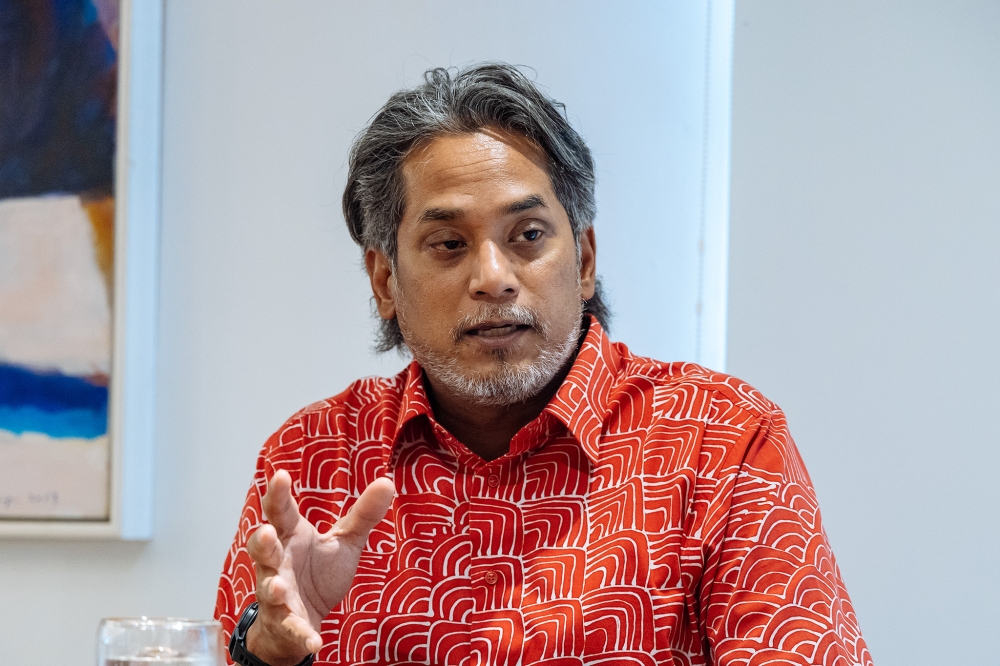
Former Umno Youth chief Khairy Jamaluddin has surfaced as a potential Barisan Nasional candidate for the Rembau state assembly seat in Negeri Sembilan, according to political sources in Seremban, raising the prospect that the high-profile politician could also be positioned for the state's top executive position. The development signals ongoing deliberation within the coalition over candidate selection for the crucial state territory, where electoral dynamics remain fluid ahead of the next general elections.
The consideration of Khairy for Rembau represents a strategic recalibration for Barisan Nasional in Negeri Sembilan, where the coalition has faced competitive challenges in recent polling cycles. Rembau has historically been a significant battleground, and securing it would strengthen BN's position across the state's lower house representation. The constituency's demographic composition and voting patterns have made it a priority area for both the ruling coalition and opposition parties seeking to expand their legislative footprint.
What distinguishes this development is the secondary conversation surrounding whether Khairy might serve as BN's Menteri Besar candidate. Such a move would represent a substantial elevation in his political standing within the state structure, positioning him as a potential administrator rather than merely a state assemblyman. The Menteri Besar position carries considerable influence over state governance, resource allocation, and policy implementation across Negeri Sembilan's administrative apparatus.
Khairy's political journey has been characterised by notable reversals and repositioning. His tenure as Youth and Sports Minister under the previous federal administration demonstrated his capacity to handle substantial portfolios, though his tenure was not without controversy. His previous roles within Umno's youth wing established him as a figure capable of mobilising party grassroots, a skillset that would prove valuable in contesting state-level elections where ground operations remain decisive.
The strategic logic behind considering Khairy for Negeri Sembilan reflects broader calculations within Barisan Nasional's leadership. The coalition has invested significantly in rebuilding its electoral machinery following setbacks in recent national elections, and state-level contests provide opportunities to demonstrate renewed organisational capacity and voter appeal. Deploying prominent federal-level figures in state contests has become a common tactic among major coalitions seeking to elevate candidate profiles and generate media momentum.
For Malaysian voters following national political developments, this situation illustrates how personalised politics continues to shape electoral strategy. Rather than building candidates organically from state-level party structures, coalition leadership often parachutes established figures into competitive contests, a practice that generates both advantages and resentment within party ranks. This dynamic becomes particularly pronounced when federal politicians transition to state-level contests where local networks and community connections traditionally held greater sway.
Negeri Sembilan's political complexion presents both opportunities and risks for any candidate. The state has demonstrated willingness to split its vote between different coalitions, and recent electoral patterns suggest suburban and semi-urban areas remain swing zones. A candidate's ability to articulate state-specific priorities while maintaining coalition discipline becomes critical. Khairy's federal profile could attract urban middle-class voters, though converting name recognition into electoral victories requires demonstrating commitment to local constituency concerns beyond national party positioning.
The timing of this consideration also warrants examination. Political speculation typically intensifies when coalition leadership begins preliminary discussions about candidate strategies, usually occurring several months before formal nomination announcements. That Khairy's name is circulating suggests the internal vetting process has advanced beyond preliminary stages, though formal party endorsements remain pending. Such interim periods often witness competing claims from different party factions, each seeking to influence final selection decisions.
From a regional Southeast Asian perspective, Malaysia's continued reliance on personalised politics and coalition manoeuvring reflects patterns evident across the broader region. Electoral systems that emphasise local representation while maintaining centralised party structures create inherent tensions between local aspirations and coalition-wide strategic considerations. How Barisan Nasional manages such tensions in Negeri Sembilan will provide instructive lessons for other coalitional arrangements navigating similar dynamics.
The potential elevation of Khairy to Menteri Besar would represent a significant concentration of political authority within his hands, combining legislative representation with executive responsibility. Such arrangements create accountability mechanisms whereby voters can directly assess administrative performance against campaign promises. Conversely, defeats at this level carry enhanced consequences, potentially affecting political trajectories substantially more than lower-profile electoral contests.
Barisan Nasional's leadership must also consider party morale implications of deploying federal figures in state contests. Established state-level politicians who aspire to higher office might perceive such decisions as circumventing merit-based advancement, potentially creating friction within party structures that manifest as reduced campaign enthusiasm. Balancing coalition strength in individual constituencies against broader party cohesion remains an ongoing challenge for coalition strategists.
As discussions continue, several variables will determine whether Khairy's candidacy materialises in its proposed form. Consultation with Negeri Sembilan's state party structures, assessment of local incumbent preferences, and evaluation of opposition strength in Rembau will all influence final decisions. The coming weeks should clarify whether Khairy's emergence represents genuine positioning or speculative reporting.

