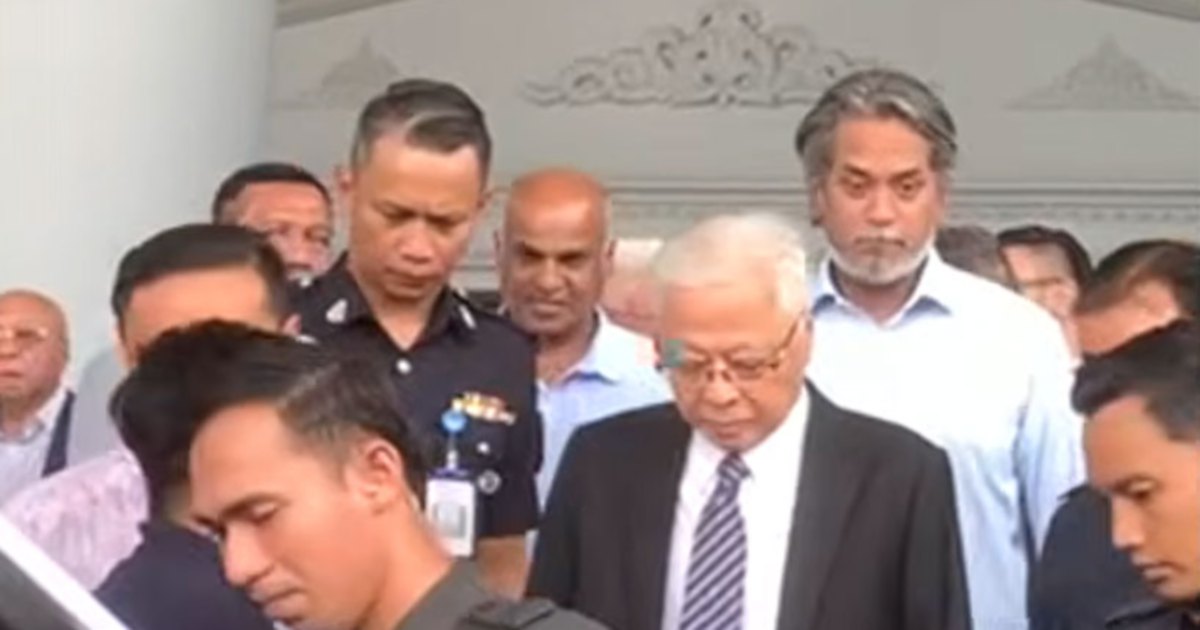
Khairy Jamaluddin's conspicuous presence at the courthouse as Ismail Sabri Yaakob faced formal charges has become a focal point for observers tracking shifting alignments within Malaysia's dominant Malay-Muslim party. The former Umno Youth chief's decision to attend the proceedings at the Kuala Lumpur Court Complex drew considerable interest from political analysts and media commentators, as his appearance carries symbolic weight within intra-party politics at a time when the Umno leadership is navigating internal tensions.
The significance of such high-profile courtroom attendance lies in its public messaging function within party hierarchies. When senior figures deliberately position themselves alongside colleagues facing legal jeopardy, the gesture transcends mere solidarity, functioning as a statement about factional loyalty and perceived legitimacy. Khairy's presence thus communicates something beyond simple fellowship—it represents a deliberate choice to associate with Ismail Sabri during a politically vulnerable moment, a decision unlikely made without careful consideration of its implications for his own standing.
Ismail Sabri's legal difficulties represent a critical juncture for Umno's internal coherence. As a former prime minister who led the coalition government between 2021 and 2022, his prosecution touches on governance issues that remain contested within the party itself. The legal proceedings therefore transcend individual accountability, acquiring broader significance as they potentially implicate broader questions about state authority, political transitions, and the mechanisms through which power disputes are resolved in Malaysia's complex political ecosystem.
Khairy's attendance must be contextualised against his own trajectory within Umno. Once positioned as a modernising force within the party and a potential future leader, his political fortunes have fluctuated significantly. His presence at Ismail Sabri's court appearance may reflect either a deliberate positioning against the current party establishment or a calculation that supporting a fellow former minister strengthens his own relevance within party deliberations. Such courtroom appearances function as political theatre where alignments become visible to party members and the broader public.
Umno remains fundamentally divided along multiple fault lines—generational, ideological, and factional. The party has struggled to maintain cohesion while navigating successive leadership contests, coalition recalibrations, and legal challenges confronting various senior members. Displays of solidarity like Khairy's courtroom appearance contribute to the broader narrative of how these internal divisions are being managed, contested, and potentially reconciled or hardened.
The implications for Malaysian politics extend beyond Umno itself. As the lynchpin party within the governing Barisan Nasional coalition, Umno's internal stability directly affects coalition durability and therefore government stability. When former senior figures face prosecution, and when responses to those prosecutions become dramatised through visible support networks, such episodes potentially destabilise the broader political apparatus. The attention devoted to Khairy's attendance reflects anxieties about whether Malaysia's political system remains capable of managing internal party conflicts without threatening coalition functionality.
Courthouse appearances by political figures increasingly serve as media events where subtle signals carry considerable interpretive weight. Khairy's decision to be present at this particular proceeding, rather than absent or publicly distanced, inevitably generates speculation about his positioning on questions of party leadership, governance legitimacy, and the appropriateness of legal action against former office holders. The visual presence becomes political communication directed simultaneously at party colleagues, potential supporters, and rival factions.
The broader context of prosecutions affecting former Malaysian leaders adds additional layers to these dynamics. Over recent years, various senior figures from different parties have faced legal proceedings, generating intense political debate about whether such cases reflect genuine accountability mechanisms or function as tools of political advantage. Public displays of solidarity, such as Khairy's attendance, implicitly stake positions within these debates, suggesting that regardless of legal merit, party loyalty remains operative and visible.
For Southeast Asian observers monitoring Malaysian politics, such episodes illuminate how power operates within dominant parties in regional democracies. The region encompasses numerous systems where single parties exercise hegemonic control, and understanding intra-party dynamics becomes essential for grasping broader political trajectories. Khairy's courtroom appearance exemplifies how senior figures navigate the delicate balance between party loyalty, personal positioning, and the publicly acknowledged rule of law.
The coming weeks will reveal whether this appearance signals a broader shift in Umno's factional configuration or represents an isolated gesture of personal solidarity. Either way, Khairy's visible presence at the charge proceedings demonstrates that Malaysian politics continues to operate partly through such symbolic performances, where courtroom appearances function simultaneously as legal proceedings and political statement.

