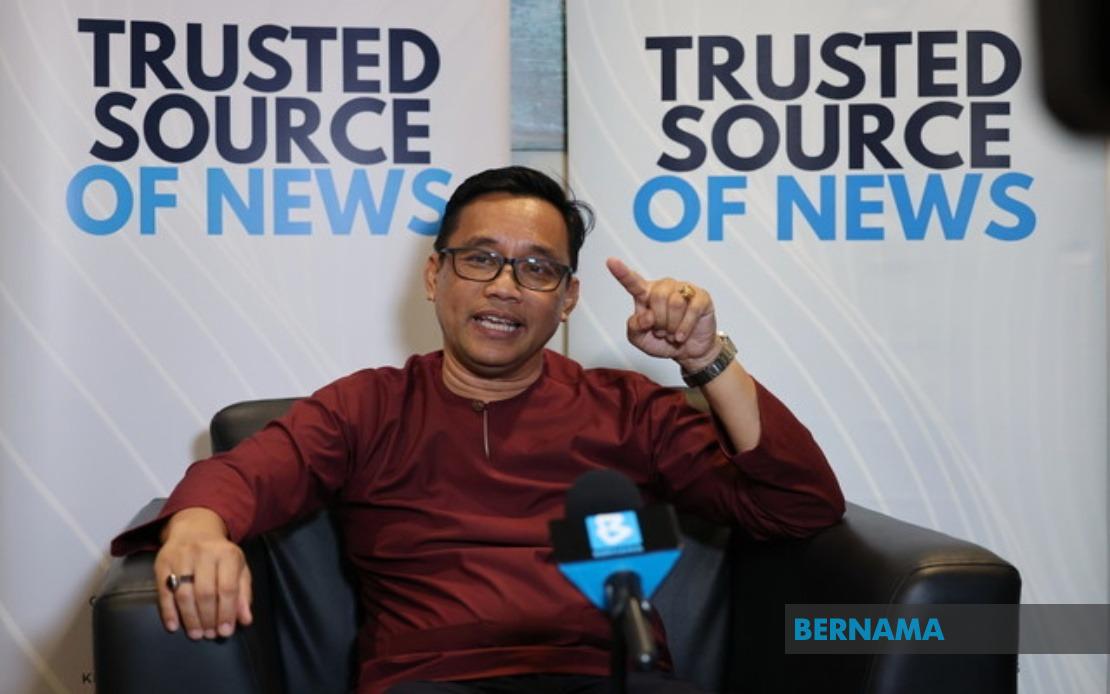
Mohd Khuzzan Abu Bakar, the Pakatan Harapan candidate for Semerah in the 16th Johor state election, frames his return to electoral politics not as a quest to reverse his previous defeat but as an unfinished conversation with constituents about development left incomplete. The 58-year-old former Johor Youth, Sports, Culture and Heritage Committee chairman is banking on a narrative of continuity—pledging to resurrect infrastructure initiatives that stalled when PH lost control of Johor's state administration in 2020, after holding it from 2018.
The centrepiece of Khuzzan's campaign platform centres on restoring critical public works that remain in limbo. Among his stated priorities is the revival of the Taman Sri Sulong Youth Mini Complex, a leisure facility whose construction or completion was disrupted by the change in government. Beyond this marquee project, he has identified long-standing grievances that affect his constituents' daily lives: water supply deficiencies plaguing Semerah residents and flash flooding that threatens the low-lying areas of Batu Pahat and Tanjung Laboh. These are not abstract policy commitments but concrete service failures that persist in voter memory, making them potent campaign anchors.
Khuzzan's personal connection to the constituency runs deeper than typical political calculations. Born in Jalan Mesjid, Batu Pahat, and married to a woman from Semerah, he positions himself as a son of the community rather than a parachute candidate seeking office. This biographical overlap with the electorate—coupled with his professional pedigree as a former banking officer—appears designed to counter any perception that he is opportunistically recycling a lost cause. His willingness to contest despite the 2022 outcome, when the BN-UMNO incumbent Mohd Fared Mohd Khalid prevailed with a majority of 4,041 votes, signals either resilience or calculation that electoral conditions have shifted in PH's favour.
Economic revitalisation forms the second pillar of Khuzzan's electoral appeal. He advocates for strengthening the community economy through targeted support for small and medium enterprises, arguing that SME owners require more than access to government financing schemes. Programmes like TEKUN Nasional and Amanah Ikhtiar Malaysia (AIM) should be accompanied by structured financial management training, he contends, enabling entrepreneurs to deploy capital more effectively and scale their operations sustainably. This diagnosis speaks to a persistent challenge in Malaysia's development model—the gap between access to credit and the capacity to manage it wisely.
Youth employment and economic transition constitute his third strategic area. Recognising that Johor's economy is increasingly anchored in investment and technology sectors rather than traditional industries, Khuzzan emphasises job creation for younger workers. He has introduced unconventional campaigning methods to reach this demographic, deploying social media platforms—TikTok, Instagram, and Threads—to showcase community initiatives and explain PH policy positions. His observation that senior citizens now follow his TikTok account underscores a broader democratisation of digital space in Malaysia, where generational boundaries around technology adoption are collapsing faster than political elites anticipated.
Campaign strategy has evolved markedly since PH's previous Johor contests, with ground operations now interwoven with digital engagement. Youth-focused activities—esports tournaments, sepak takraw competitions, and carrom championships—function as both community engagement and voter mobilisation. Alongside recreation, Khuzzan's team offers exposure programmes on artificial intelligence and digital technology, framing educational content as preparation for economic participation in an AI-driven labour market. This dual approach attempts to address both immediate community concerns and the underlying economic anxieties driving voter sentiment.
The electoral battlefield itself has become more crowded. Across Johor's 56 constituencies, 172 candidates are contesting, fragmenting the vote in ways that benefit challengers seeking to dethrone incumbents. The Semerah constituency registers 47,431 voters, with youth voters (aged 18-39) comprising a significant 37.4 per cent of the electorate. This demographic composition means that Khuzzan's technology-focused messaging and youth-oriented ground activities are not peripheral flourishes but central to a plausible path to victory. Young voters, more volatile in their electoral choices and more receptive to digital campaigning, could prove decisive in a tight three-way contest between PH, BN, and potentially other coalition candidates.
Khuzzan's confidence appears buoyed by encouragement encountered during on-ground campaigning, particularly among the B40 income group and e-Kasih welfare recipients. These segments, which bear disproportionate exposure to infrastructure deficiencies and economic insecurity, constitute the natural constituency for PH's promises of resumed public investment and SME support. His feedback loop suggests that development stagnation—the inability to complete projects initiated during PH's tenure—has created a latent demand for the coalition's return, though whether this translates into sufficient votes remains uncertain.
The broader political context has shifted since the 2022 Johor election, which unfolded during the country's post-pandemic recovery when political sentiment remained volatile and transitional. Khuzzan anticipates that 2024 conditions differ materially, with stronger voter mobilisation expected and increased participation from Johoreans employed in Singapore. Cross-border commuters, who often hold distinct interests in state governance, could constitute a swing factor. The election machinery itself—polling on July 11 with early voting on July 7—provides multiple opportunities for campaign organisation to matter, favouring candidates with ground infrastructure and messaging discipline.
Khuzzan's comeback attempt ultimately hinges on whether voters prioritise the resumption of delayed development and economic initiatives over incumbency and alternative coalition offerings. His argument rests on a straightforward proposition: that unfinished work matters more than past electoral outcomes, and that continuity in public goods delivery should supersede partisan turnover for its own sake. Whether Semerah constituents embrace this narrative, or whether they reward the incumbent BN-UMNO candidate for administrative stability during the interim period, will reveal much about how Malaysian voters weigh development accountability against political loyalty in this electoral cycle.

