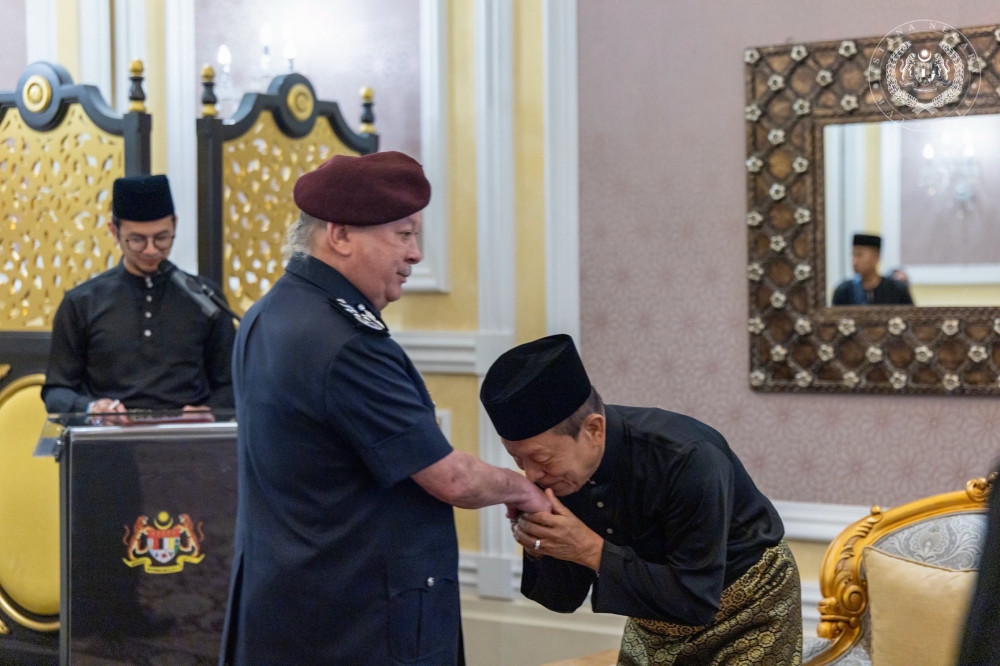
His Majesty Sultan Ibrahim, King of Malaysia, granted an audience to Malaysian Anti-Corruption Commission Chief Abdul Halim Mohd Said on July 14, marking a significant engagement between Malaysia's constitutional head of state and the nation's premier anti-graft watchdog. The meeting, held at the royal palace, provided Abdul Halim with an opportunity to apprise the King on the commission's recent operational developments and strategic priorities in combating corruption across the country.
The audience underscores the crucial role that Malaysia's monarchy plays in overseeing institutional governance and maintaining oversight of key constitutional bodies. As Commander-in-Chief and constitutional figurehead, the King regularly receives briefings from senior officials across various government agencies to ensure that mechanisms designed to safeguard public integrity remain robust and effective. These routine consultations reflect a system of checks and balances embedded within Malaysia's parliamentary democracy, where the throne serves as a guardian of constitutional principles.
The MACC, established under the Malaysian Anti-Corruption Commission Act 2009, operates as an independent body reporting directly to Parliament and accountable to the people through the King as head of state. Abdul Halim Mohd Said's tenure as Chief has been marked by efforts to enhance the commission's investigative capabilities and public engagement strategies. The briefing likely covered recent high-profile cases, organizational improvements, resource allocation, and the commission's approach to addressing systemic corruption vulnerabilities across public institutions and the private sector.
Institutional anti-corruption agencies across Southeast Asia have come under increasing pressure to demonstrate effectiveness and independence, particularly amid global concerns about governance standards and rule of law. Malaysia's MACC faces the dual challenge of investigating complex financial crimes while maintaining public confidence in its impartiality. Regular consultations with the royal institution help reinforce the commission's constitutional standing and underscore the government's commitment to institutional integrity at the highest level.
The timing of this audience reflects ongoing efforts to strengthen public sector accountability mechanisms. Malaysia has in recent years implemented several governance reforms aimed at enhancing transparency and preventing malfeasance among public officials. These initiatives include enhanced disclosure requirements, strengthened internal audit mechanisms, and greater coordination between anti-corruption agencies and law enforcement authorities. The MACC plays a central coordinating role in these efforts, working alongside the police, Attorney General's Chambers, and other regulatory bodies.
For Malaysian readers and observers of regional governance dynamics, such high-level engagement signals the institutional seriousness with which the country's leadership approaches corruption prevention. In a region where governance challenges frequently dominate political discourse, Malaysia's demonstrated commitment to operational independence of its anti-corruption apparatus provides a framework that other ASEAN nations continue to study and adapt. The regular interaction between constitutional authorities and investigative agencies reflects a governance model that balances executive efficiency with institutional accountability.
The MACC's current operational landscape encompasses investigations into alleged misconduct spanning multiple sectors, from local government administration to federal agency management. The commission has in recent years intensified scrutiny of procurement processes, land-related transactions, and financial irregularities within state-owned enterprises. Abdul Halim's briefing to the King would naturally encompass progress in these areas, challenges encountered, and resource requirements for sustaining investigative momentum throughout the financial year.
Regional anti-corruption cooperation has also become increasingly important as transnational financial crime becomes more sophisticated. Malaysia's MACC maintains partnerships with regional and international counterparts, facilitating intelligence sharing and coordinated investigations. The briefing may have included updates on cross-border cases and the commission's participation in regional frameworks such as the ASEAN framework on mutual legal assistance in criminal matters, positioning Malaysia as an active participant in the broader Southeast Asian governance ecosystem.
Public perception of anti-corruption institutions fundamentally affects their effectiveness, as citizen trust directly influences willingness to report suspected misconduct and cooperate with investigations. The MACC continues to invest in public outreach programs, media engagement, and educational initiatives designed to reinforce the perception of institutional independence and competence. Audiences with the King serve as powerful signals to the broader population that anti-corruption work enjoys high-level institutional support and remains a priority for the nation's leadership.
Moving forward, the commission faces the ongoing challenge of maintaining investigative pace while navigating complex political and institutional relationships. The briefing with the King provides an opportunity for Abdul Halim to communicate directly about operational constraints, emerging threats to institutional integrity, and strategic priorities that may require heightened attention or resource reallocation. Such consultations help ensure that Malaysia's anti-corruption framework remains adaptive and responsive to evolving governance challenges within the domestic context and broader regional environment.

