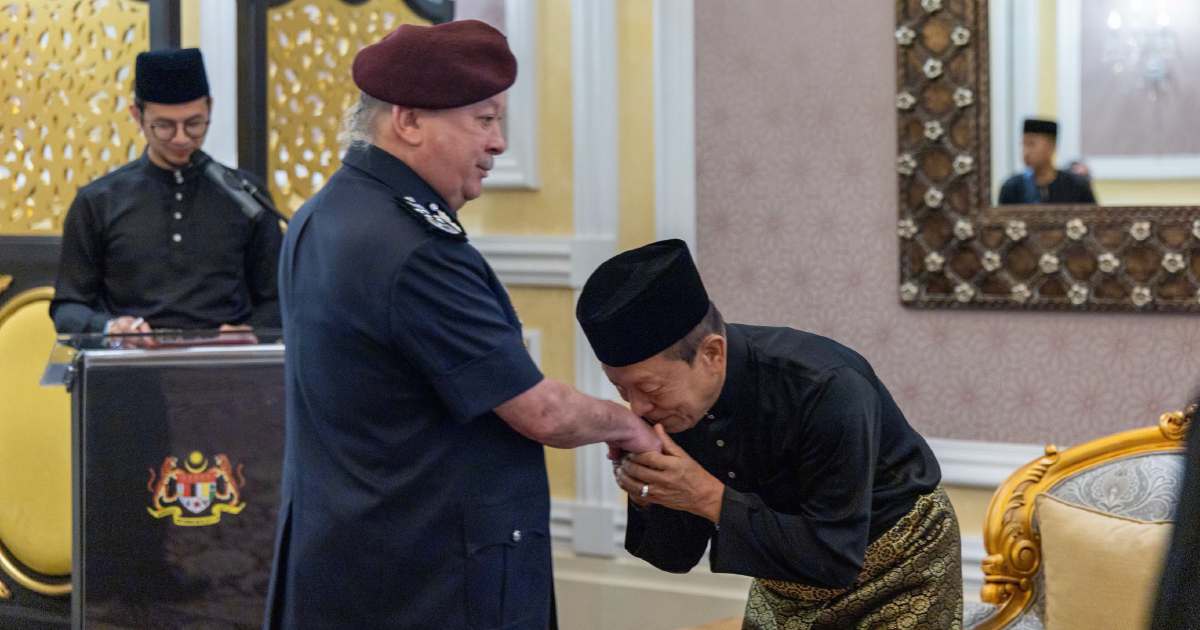
His Majesty Sultan Ibrahim, King of Malaysia, welcomed Malaysian Anti-Corruption Commission chief commissioner Datuk Seri Abdul Halim Aman during a formal audience held at Istana Negara in Kuala Lumpur today. The meeting between the nation's paramount ruler and the head of the country's primary anti-corruption body represents the established protocol through which Malaysia's institutions maintain direct engagement with the monarch.
Such audiences serve an important constitutional function within Malaysia's system of governance, enabling leaders of key national institutions to present matters directly to the King and receive guidance on pressing concerns. For the MACC in particular, maintaining this channel of communication with the Palace underscores the independence and institutional standing that the anti-corruption agency requires to discharge its duties effectively across the country.
The MACC has emerged as a central pillar in Malaysia's broader governance framework, particularly following heightened public scrutiny of corruption-related issues in recent years. As the nation's dedicated anti-corruption authority, the commission undertakes investigations spanning the public and private sectors, with powers to examine financial records, conduct surveillance operations, and compel witness testimony. The agency's work directly impacts public confidence in institutions and shapes the business environment that investors, both domestic and foreign, assess when considering Malaysia as a destination.
Datuk Seri Abdul Halim Aman's tenure as chief commissioner carries particular significance given the strategic position the MACC occupies within Malaysia's institutional ecosystem. The commissioner's office coordinates with enforcement agencies, government ministries, and statutory bodies across multiple sectors. Audience with the King affords such leaders the opportunity to apprise His Majesty of operational challenges, policy developments, and institutional accomplishments that merit the sovereign's awareness.
From a governance perspective, regular engagement between institutional heads and the monarchy reinforces the constitutional framework through which Malaysia operates. The King, as head of state and keeper of the Constitution, maintains a symbolic and substantive role in ensuring that governmental processes respect constitutional safeguards and serve the national interest. Audiences such as this one reflect the interplay between different branches and institutions of governance that together constitute Malaysia's system.
The timing and frequency of such audiences also signal the level of priority accorded to particular institutions. The MACC's continued access to the Palace indicates that anti-corruption efforts remain a matter of royal concern and institutional focus. This carries practical implications for the agency's operational latitude and resource allocation, as well as symbolic weight in terms of the importance the nation's highest office accords to transparent governance.
Regional observers often point to the strength of Malaysia's institutional checks and balances as a distinctive feature of governance in Southeast Asia. The existence of an independent anti-corruption body with statutory authority, coupled with constitutional mechanisms for oversight, reflects democratic design principles that have been tested across various political transitions. The MACC's establishment and continued operation represent commitments to institutionalised anti-corruption effort rather than ad-hoc enforcement.
For Malaysia's corporate sector and foreign investors, the institutional vigour of bodies like the MACC carries material consequences. Multinational corporations and local enterprises alike operate within the regulatory framework that the commission helps enforce. International investors increasingly conduct due diligence not only on individual companies but on the broader institutional environment, including the independence and effectiveness of anti-corruption agencies. Malaysia's MACC functions as a visible marker of governmental commitment to addressing corporate malfeasance and financial impropriety.
The audience also reflects Malaysia's constitutional monarchy system, wherein the Yang di-Pertuan Agong exercises considerable ceremonial and constitutional functions while working within a framework of governance shared with elected representatives and appointed officials. Unlike purely ceremonial monarchies, Malaysia's system vests substantive constitutional powers in the King, including the capacity to grant pardons, approve certain legislation, and serve as a final constitutional arbiter in matters of state. Through audiences with institutional leaders, the King remains informed and engaged with the nation's administrative and enforcement apparatus.
The MACC's operational track record encompasses investigations into high-profile cases spanning government officials, corporate executives, and public servants across multiple sectors. The agency's caseload reflects the breadth of corruption risks that Malaysia confronts—from procurement irregularities and asset misappropriation in the public service to financial impropriety in private enterprise. The commission's work thus intersects with economic governance, administrative integrity, and public sector accountability simultaneously.
Looking forward, the commission faces evolving challenges including the sophistication of financial crime mechanisms, transnational corruption networks, and the complexity of investigating digital transactions. These operational realities inform the dialogue between institutional leaders and the monarchy. The audience today, while ceremonial in character, serves the practical function of ensuring Malaysia's highest constitutional office remains conversant with the challenges facing key enforcement institutions.
The relationship between the Palace and the MACC also carries implications for Malaysia's international standing. Countries that demonstrate institutional capacity to investigate and prosecute corruption-related offences send important signals to the international business community. This capacity rests not only on legislative frameworks and prosecutorial resources but also on the perceived independence and constitutional legitimacy of anti-corruption institutions. The MACC's direct access to the monarch exemplifies the institutional arrangements through which Malaysia projects its commitment to governance standards that international partners and investors monitor closely.

