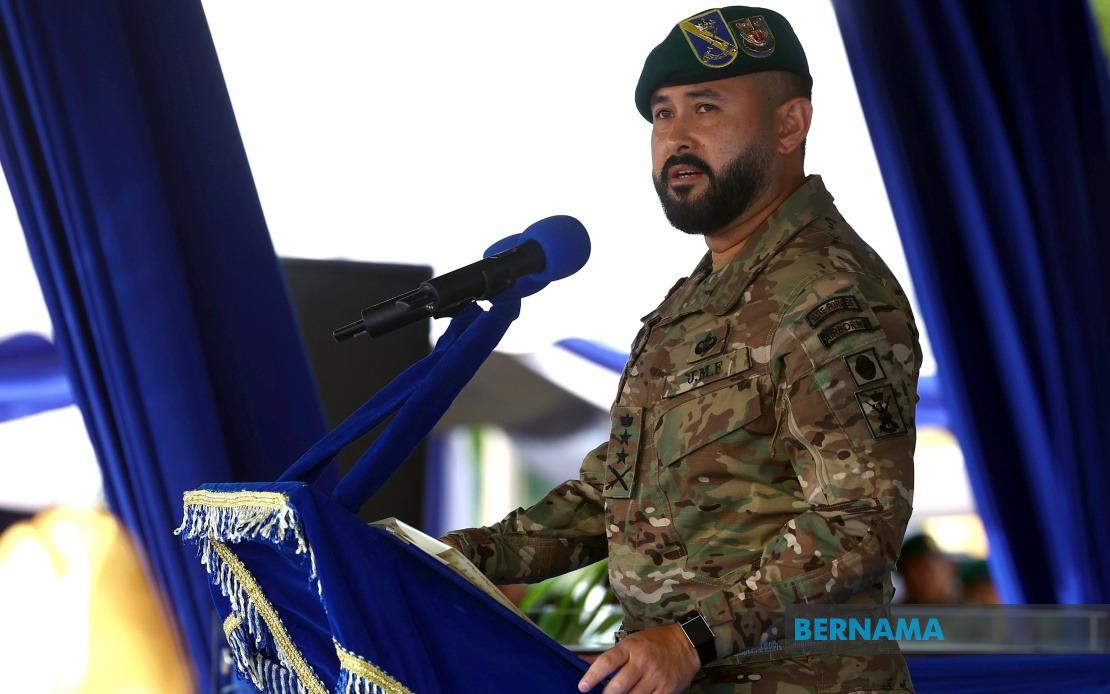
Johor's Regent Tunku Mahkota Ismail issued a forceful warning during the Regimen Gerak Khas 61st anniversary parade in Mersing, demanding that all parties respect royal directives governing the elite commando unit's development and procurement. Speaking at the military ceremony, he stressed that any modifications to plans already sanctioned by His Majesty Sultan Ibrahim, King of Malaysia, in his role as Colonel Commandant of the unit, represent a betrayal of trust and must cease immediately.
The Regent's intervention underscores deepening concerns about interference in the RGK's strategic planning. His language was particularly pointed, invoking the Malay proverb "harapkan pagar, pagar makan padi," suggesting that those entrusted with guardianship have been compromised by self-interest. This metaphor carries particular weight when applied to defence matters, implying that individuals within the military hierarchy or civilian administration may be exploiting their positions for personal gain at the expense of the unit's operational integrity.
Tunku Mahkota Ismail's remarks extended beyond the RGK itself, encompassing broader critiques of Defence Ministry management. He alluded to knowledge of who controls the Permanent Secretary position at the Ministry of Defence, promising imminent meetings to address what he termed a "cancer" within the Malaysian Armed Forces. This language suggests systemic corruption or mismanagement that extends beyond procurement decisions, touching on leadership appointments and administrative practices that could undermine institutional effectiveness.
The operational demands facing the RGK have become substantially more demanding in recent years. The unit operates within an increasingly complex security environment shaped by geopolitical shifts throughout the Indo-Pacific region, ongoing tensions in the South China Sea, and strategic competition among major powers. These developments necessitate that the RGK maintain cutting-edge capabilities, including advanced equipment, modern weaponry, enhanced mobility, sophisticated technology, robust support systems, and state-of-the-art operational assets. Complacency regarding existing capabilities would expose Malaysia to strategic vulnerability.
The Regent explicitly called for prioritisation of all RGK development and procurement initiatives outlined in the 13th Malaysia Plan. These projects must be evaluated rigorously across multiple dimensions: procurement should reflect the latest technological advances, maintain cost-effectiveness relative to capabilities delivered, ensure operational suitability for anticipated threats, and address long-term strategic requirements. This framework represents best practice in defence planning, prioritizing capability over cost-cutting measures that could compromise effectiveness.
Personnel management constitutes another critical dimension requiring immediate reform. Tunku Mahkota Ismail emphasised that career advancement, welfare arrangements, and professional development must operate according to merit-based criteria rather than patronage networks. Systems tainted by favouritism, personal interest, or non-transparent processes create organisational dysfunction that extends far beyond individual cases. When personnel perceive advancement depends on connections rather than performance, institutional morale deteriorates, retention of capable individuals becomes problematic, and decision-making quality suffers across all levels.
The Defence Ministry's leadership bears specific responsibility for ensuring that development and procurement processes meet rigorous standards. Capability must drive acquisition decisions rather than political convenience, budgetary shortcuts, or relationships with preferred suppliers. Quality standards should never be compromised for reasons of expediency or cost reduction, particularly when operational effectiveness hangs in balance. The Regent's insistence on "best value" reflects sophisticated defence procurement thinking that resists simplistic lowest-cost bidding in favour of genuine value assessment.
The RGK's designation as Malaysia's "tip of the spear" in confronting national security threats places extraordinary demands on its personnel. These soldiers require exceptional levels of physical conditioning, mental resilience, technical competence, and unwavering integrity. The Commando Soldier's Oath commits them to standards that transcend ordinary military service, demanding absolute loyalty to the King and nation alongside mastery of specialised operational skills. Such demands justify the Regent's concern that these elite personnel receive optimal equipment, training, and support rather than resources diverted through inefficient or corrupt channels.
The Regent's intervention carries significance beyond military affairs, signalling that Malaysia's royal institution remains willing to exercise oversight authority over defence and security matters. This represents a constitutional check against potential administrative or ministerial overreach. For Malaysian readers, the statement reinforces that accountability mechanisms exist within the military structure, though their effectiveness depends upon determined implementation. The commitment to transparency and merit-based advancement within defence institutions has direct implications for national security resilience.
For Southeast Asian observers, the address highlights defence governance challenges that extend beyond Malaysia. Regional militaries across the Association of Southeast Asian Nations face similar pressures: limited budgets competing against modernisation requirements, geopolitical uncertainties demanding rapid capability adaptation, and internal pressures toward bureaucratic inefficiency or corrupt practices. Malaysia's attempt to maintain standards despite these pressures offers lessons regarding institutional safeguards and leadership accountability.
The practical implementation of the Regent's directives will prove more consequential than the rhetoric. Whether the promised Defence Ministry meetings produce substantive reforms, whether procurement processes genuinely prioritise capability over patronage, and whether personnel advancement truly reflects merit rather than connections will determine whether the RGK emerges stronger or continues operating with compromised effectiveness. The Regent's willingness to name specific concerns publicly suggests frustration with previous attempts at quiet reform.
Moving forward, defence policymakers must balance the Regent's legitimate concerns regarding integrity with pragmatic recognition of fiscal constraints. The 13th Malaysia Plan's RGK initiatives require sustained political will and budget allocation. More importantly, the culture within defence institutions must shift decisively against acceptance of practices that prioritise individual interest over operational capability. Only through such systemic reform can Malaysia ensure that its most elite military unit genuinely functions as intended.

