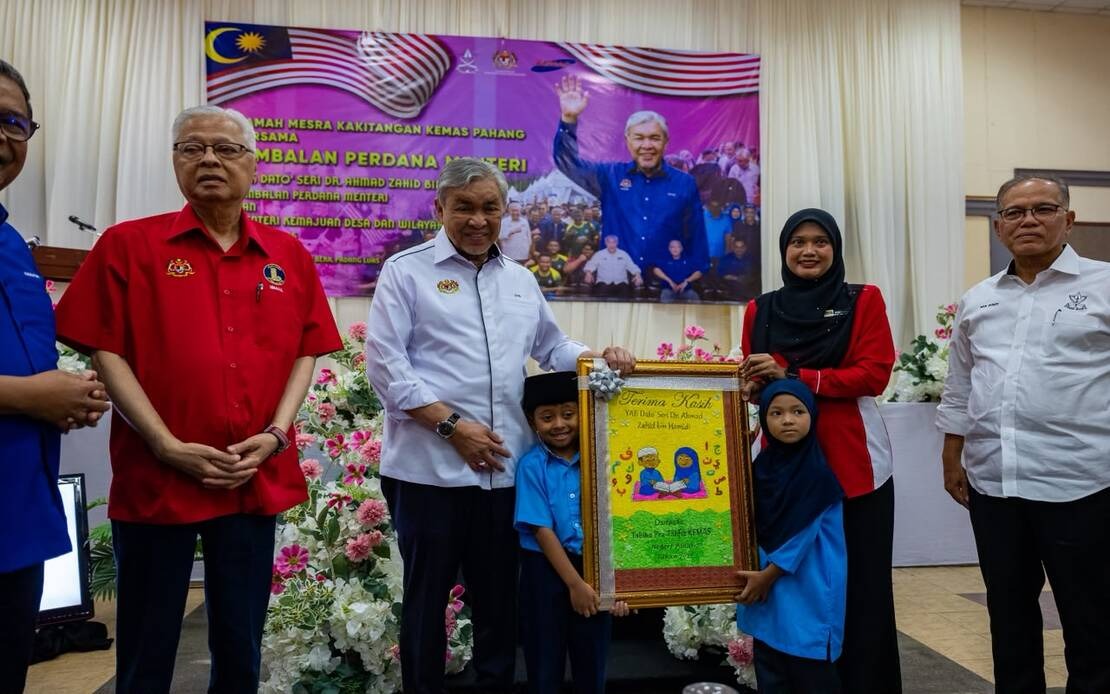
The Rural and Regional Development Ministry will pursue an integrated approach to early childhood education that merges Islamic instruction with technological innovation, Deputy Prime Minister Datuk Seri Dr Ahmad Zahid Hamidi announced during a community engagement programme in Pahang's Bera district. The strategy reflects growing recognition that KEMAS kindergartens and childcare centres must evolve to prepare children for a digitally-connected future while grounding them in religious and moral values—a balancing act increasingly relevant as Malaysia navigates rapid societal transformation.
The initiative gains urgency following the government's recent adjustment to lower the school starting age from seven to six years old, a move that substantially elevates the role of pre-primary education providers. With this shift in place, KEMAS facilities have become frontline institutions for early childhood development across rural and urban communities, serving as crucial first touchpoints in Malaysia's educational pipeline. The ministry's emphasis on strengthening these programmes reflects an understanding that the quality of early intervention directly influences long-term academic achievement and social development.
Technological advancement forms a cornerstone of the modernisation agenda. KEMAS will expand implementation of Smart Class initiatives and smartboard integration across its kindergarten network, bringing digital learning tools to children in communities that might otherwise lack access to such resources. This technological infrastructure represents more than mere equipment installation; it signals an institutional commitment to equipping children from disadvantaged backgrounds with exposure to contemporary learning methods, helping bridge digital divides that could otherwise disadvantage them as they progress through formal schooling.
The religious education component introduces structured memorisation of Quranic passages beyond the current curriculum. Beginning next year, KEMAS students will undertake guided memorisation of Surah Yasin, Al-Waqiah, Al-Mulk, and As-Sajdah alongside existing programmes covering portions of Juzuk 30. This expansion recognises Islam's importance within Malaysia's multicultural framework while acknowledging the Ministry's particular focus on values-based education. However, successful implementation hinges on teacher competency; Ahmad Zahid stressed that KEMAS educators must themselves master these memorisation techniques before introducing them to students, underscoring that educational quality depends fundamentally on instructor preparation.
The convergence of technology and religious learning within early education reflects a broader philosophical position: that modernisation and tradition need not conflict, and that children can simultaneously develop technological literacy and moral grounding. This approach may resonate across Southeast Asia more broadly, where many nations balance religious and cultural preservation with economic imperatives for technological advancement. For Malaysia specifically, it offers a model for integrating Islam into developmental frameworks without marginalising children of other faiths, provided implementation respects pluralistic contexts.
Coordination across governmental levels emerges as essential to realising these objectives. Ahmad Zahid called for strengthened collaboration between federal and state authorities, individual MPs, and state assembly members to secure technological infrastructure and necessary facilities. The statement implicitly acknowledges that KEMAS operates within a fragmented administrative landscape where resource allocation depends on political relationships and willingness to cooperate. Pahang's contributions—including assistance with land titling, facility grants, and renovation funding—demonstrate how state-level commitment can accelerate implementation, yet such variable support patterns highlight structural vulnerabilities in programme rollout across Malaysia's diverse jurisdictions.
The scale of KEMAS's historical reach provides perspective on the stakes involved. Since establishment, the department's kindergartens and childcare centres have served approximately 8.4 million children, establishing the institution as a foundational element in Malaysia's educational infrastructure. This extensive reach means that upgrades and policy shifts potentially influence millions of family trajectories across multiple generations. Decisions regarding curriculum, teacher training, and facility investment at KEMAS therefore extend far beyond technical educational matters into questions of national development strategy and social equity.
Political stability and institutional reform capacity feature prominently in Ahmad Zahid's framing. He positioned early education advancement as dependent on sustained governmental cooperation and demonstrated willingness to embrace systemic change. This emphasis suggests recognition that educational transformation requires not merely policy pronouncements but sustained resource commitment and bureaucratic flexibility—qualities historically inconsistent across Malaysian government agencies. The six-decade legacy of KEMAS provides foundation for continued work, yet genuine evolution requires moving beyond incremental adjustments toward substantive reimagining of teaching methods, curriculum design, and institutional capacity.
For Malaysian educators and parents, these developments signal an intention to modernise childhood learning environments while preserving cultural identity markers. Implementation will likely unfold unevenly across the country, reflecting disparities in state capacity and resource availability. Rural communities, despite theoretically being KEMAS's primary constituency, may face obstacles in accessing promised technological infrastructure if coordination mechanisms prove inadequate. Urban KEMAS facilities, by contrast, could emerge as models for integrated technology-plus-values education, potentially informing broader national educational discourse.
The initiative also carries implications for Malaysia's regional position. As an upper-middle-income developing economy competing for talent and investment, Malaysia faces pressure to produce graduates with robust technical skills. Early exposure to technological learning through KEMAS could help normalise digital literacy among younger cohorts, particularly those from backgrounds where home access to technology remains limited. Simultaneously, embedding religious and moral instruction signals Malaysia's commitment to values-based development—an approach increasingly central to discussions about education's purpose beyond economic productivity.
Looking ahead, success metrics will matter considerably. Whether KEMAS can effectively train teachers in both Quranic memorisation and smart classroom pedagogy remains uncertain. Whether technological facilities reach geographically isolated centres or concentrate in accessible urban locations will reveal actual implementation patterns beneath policy rhetoric. And whether this dual-focus approach genuinely enriches child development or overloads young learners with competing expectations requires genuine evaluation rather than assumption. The coming years will demonstrate whether this vision of integrated early education transforms institutional practice or remains aspirational.

