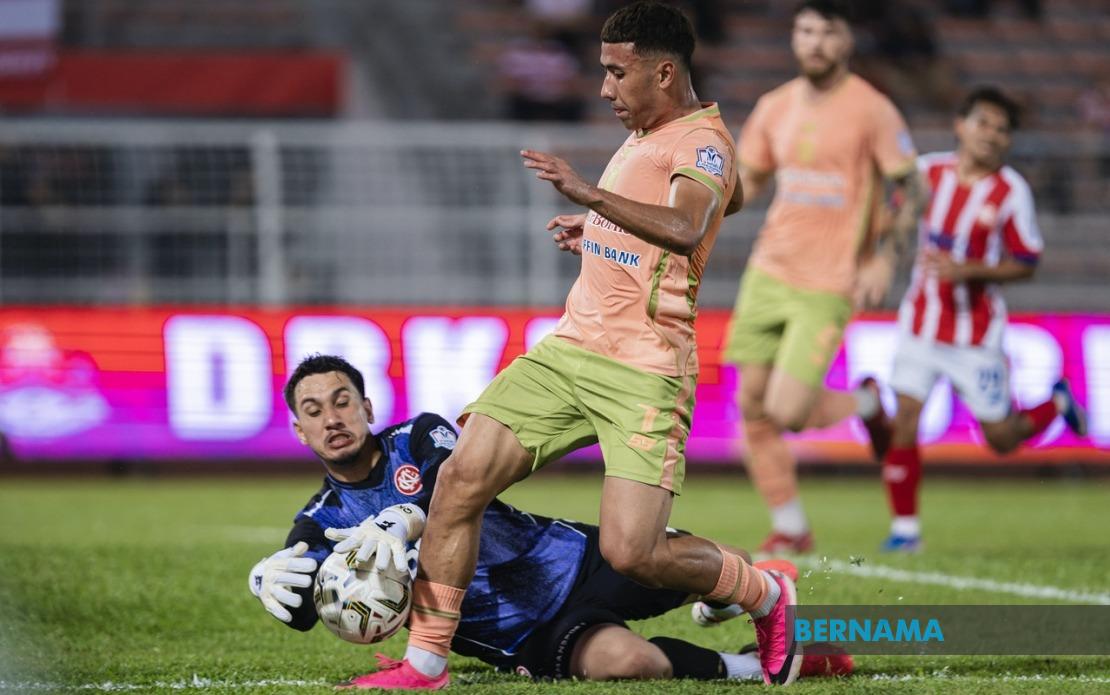
Kuala Lumpur City FC's bid to launch their 2026-2027 Super League season ended in humiliation when they took the field against Kuching City FC at the Kuala Lumpur Football Stadium in Cheras with barely a functional squad, ultimately surrendering to a crushing 0-6 defeat. The circumstances surrounding the match represented an extraordinary challenge that head coach Datuk Dollah Salleh, drawing on nearly a quarter-century of coaching experience in Malaysian football, admitted he had never encountered before in his professional career. The collision of administrative failures and health emergencies created a perfect storm that left the club scrambling to fulfil its opening fixture.
The catastrophic shortfall in available players stemmed from multiple compounding problems that exposed systemic vulnerabilities within the club's management structure. A breakdown in player registration processes, coupled with a contagious illness that swept through the squad, rendered 13 players and two coaching staff members unable to participate. The influenza outbreak particularly devastated the team's numerical capacity at a moment when administrative complications were already limiting the pool of eligible participants. Rather than postpone what was intended to be a marquee event for Malaysian football's premier domestic competition, club officials determined they had no alternative but to proceed with whatever complement of healthy, properly registered players could be assembled.
Dollah's strategic dilemma during the match highlighted the impossible position into which the crisis had thrust him. Recognising that his ten outfield players faced an exhausting workload from the opening whistle, he constructed his tactical approach around defensive solidity and preservation rather than any realistic ambition to compete for a result. When Kuching City captain James Okwuosa received a red card in the 44th minute, the numerical balance temporarily shifted to ten versus ten. Yet the reprieve proved fleeting, as Dollah's players, already drained from their exertions in the opening half against superior numbers, capitulated entirely in the second period. The coach lamented not the effort his depleted contingent had expended but the physical impossibility of sustaining the intensity required when facing a fully equipped opponent.
The profound toll on Dollah's psychological state emerged clearly during his post-match observations, where he acknowledged feeling sustained anxiety throughout the preceding days. A coach accustomed to analysing tactical setups and managing player performance found himself confronting a scenario that transcended conventional football management. His three-paragraph response to questioning about the crisis underscored the genuine shock of the experience. Having navigated the complexities of managing Malaysia's national team, he believed his experience had equipped him for most scenarios football could present. Yet nothing in his professional repertoire had prepared him for fielding a team that lacked sufficient personnel to field even a basic tactical shape.
The decision to proceed with the match, despite the grim realities, reflected broader institutional considerations that extended beyond the immediate contest. Dollah made explicit that withdrawing from the fixture entirely would have triggered consequences far more damaging to KL City's long-term position within the Super League structure. The Malaysian Football League maintains strict protocols regarding teams that fail to fulfil their fixtures, and the sanctions imposed on defaulting clubs can significantly impact their competitive standing. This reality confronted KL City's leadership with a Hobson's choice: suffer a heavy defeat on the pitch or face potentially more severe administrative punishment that could undermine their entire season.
The situation represented merely the culmination of a cascade of difficulties that had begun unfolding before the Super League campaign officially commenced. KL City's scheduled opening match against Negeri Sembilan FC at Stadium Tuanku Abdul Rahman in Paroi the previous Saturday could not proceed when the visiting team, similarly hamstrung by player registration complications, failed to field a squad at all. The Malaysian Football League responded by awarding Negeri Sembilan a 3-0 victory and full points while simultaneously imposing a RM50,000 fine against KL City for their inability to field a team. This earlier setback, though it ultimately resulted in zero points rather than the zero-point result they received against Kuching City, illustrated that the registration difficulties extended beyond a single club and suggested systemic issues within Malaysia's football administration.
The FIFA transfer ban that had previously restricted KL City's ability to register new players represented another layer of complexity in their circumstance. However, Dollah received assurance that this prohibition had been formally lifted, clearing the path for the club to augment their squad ahead of their scheduled fixture against DPMM FC the following Saturday. The lifting of the international federation's restriction offered a glimmer of relief and suggested that at least one significant impediment to the club's operational functioning had been resolved. Yet the temporary reprieve could not ameliorate the damage already sustained through the chaotic opening to their campaign.
For Malaysian football observers, the episode crystallised ongoing anxieties about governance and organisation within the domestic game. That a club in the premier division could find itself unable to fulfil its fixture without fielding a dangerously undermanned squad pointed to gaps in administrative oversight and contingency planning. The collision of registration failures and health emergencies, while individually manageable, created a cascading crisis that exposed the fragility of institutional structures intended to ensure regular competition. Club officials, league administrators, and governing bodies will likely face scrutiny regarding what preventive measures might have mitigated the circumstances that unfolded.
Dollah's determination to maintain perspective despite the humiliation spoke to his professionalism and his empathy for players who bore no responsibility for the administrative and health emergencies that rendered them unable to contribute. Rather than lambast his squad for the 0-6 scoreline, he recognised that his players had deployed whatever physical and psychological resources remained available after operating under impossible constraints. His primary concern shifted immediately to recovery and regrouping, with emphasis on ensuring that the registration issues that triggered the crisis would not persist into subsequent fixtures. The challenge facing KL City extended beyond merely competing effectively in their next encounter; they required restoration of basic operational capacity that most professional clubs take entirely for granted.

