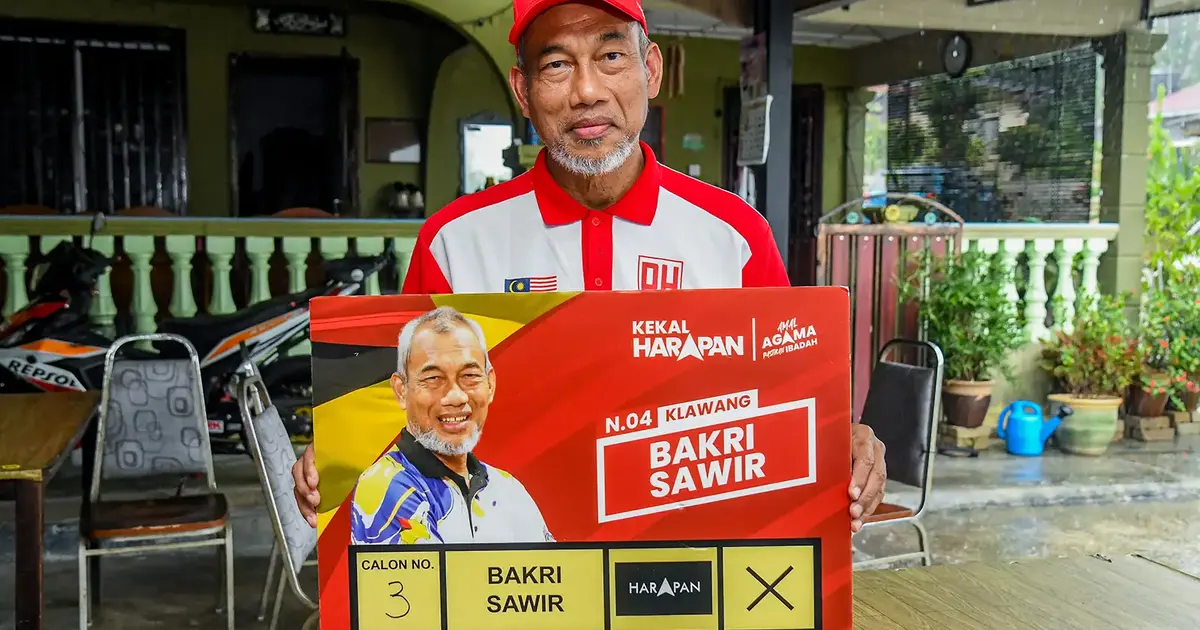
Pakatan Harapan's two-term Klawang assemblyman Bakri Sawir has dismissed concerns about the strategic alignment between Barisan Nasional and Perikatan Nasional, asserting that his previous electoral triumph demonstrates his capacity to secure victory independent of Umno's organisational machinery and voter mobilisation networks.
Sawir's confidence stems from his performance during the 2023 Selangor state elections, when he successfully retained his seat despite what he characterises as abandonment by his former coalition partner. The Klawang constituency, located in Selangor, has become a significant battleground in Malaysia's evolving political landscape, where traditional power structures have fractured and realigned in unexpected ways. His assertion that he conquered the seat without Umno's assistance suggests a strong personal mandate and grassroots support base that transcends conventional party machinery.
The formation of the BN-PN pact represents a substantial shift in Malaysia's political configuration, consolidating substantial portions of the conservative and Islamist voting constituencies under a single electoral banner. This development has prompted significant anxiety among opposition-aligned parties regarding their electoral prospects in mixed demographics and rural-leaning constituencies. However, Sawir's historical performance indicates that Pakatan Harapan retains the capacity to mobilise voters through alternative channels and localised political narratives.
Klawang's electorate composition merits consideration when evaluating Sawir's electoral prospects. The constituency encompasses diverse demographics, including urban professionals, agricultural workers, and mixed communities that may not vote predominantly along the BN-PN axis despite their formal alignment. Sawir's decade-long presence as an elected representative has likely fostered personal relationships and constituent service networks that function independently of broader coalition dynamics. These individual connections frequently prove decisive in determining electoral outcomes at the state assembly level.
The 2023 state election experience holds particular significance for understanding Sawir's political trajectory. Rather than interpreting the absence of Umno support as a liability, he has reframed this circumstance as evidence of personal political viability and voter confidence rooted in legislative performance rather than party affiliation. This reframing carries psychological and strategic importance, as it positions him as a candidate transcending partisan calculations and instead relying upon demonstrated governance capacity.
Packatan Harapan's overall position in Selangor remains comparatively robust relative to other Malaysian states, given the state's urban concentration, younger demographic profile, and higher literacy rates—characteristics historically correlated with support for reform-oriented political movements. Sawir's success in such an environment provides a template for other opposition candidates facing similar coalition challenges elsewhere in the state. The party's retention of substantial legislative representation in Selangor despite the BN-PN consolidation suggests that meaningful voter segments continue viewing Pakatan Harapan as a credible governing alternative.
Sawir's public confidence also serves a tactical purpose beyond simple expression of optimism. By projecting electoral strength despite external pressure, he may deter potential opponents and reinforce support among uncommitted voters hesitant about supporting candidates perceived as electorally vulnerable. Political psychology research consistently demonstrates that voter perception of candidate viability substantially influences electoral outcomes, particularly in constituencies where party loyalty remains fluid.
The broader implications for Malaysian politics centre on whether traditional party machinery and coalition arrangements continue determining electoral outcomes, or whether incumbent performance and personal political brands increasingly shape voter behaviour. Sawir's assertion suggests increasing space for the latter interpretation, particularly at state assembly levels where local governance records and community relationships possess heightened salience. This potential shift would fundamentally alter the political calculus underlying state-level politics across Malaysia.
For Southeast Asian observers monitoring Malaysian political developments, Sawir's positioning reflects broader regional trends toward volatile political alignments, weakening party institutionalisation, and increasing importance of personalised political brands. Malaysia's trajectory during this phase may offer instructive lessons regarding opposition resilience and adaptation to rapid coalition restructuring across Southeast Asia's electoral democracies.
Moving forward, Sawir's electoral performance will constitute an important data point regarding whether Pakatan Harapan possesses the capacity to maintain legislative representation in metropolitan Selangor constituencies despite more organised conservative coalition formations. His confidence, rooted in documented electoral success, positions him as a test case for opposition resilience in an increasingly polarised political environment where coalition consolidation and grassroots mobilisation capacity continue evolving.

