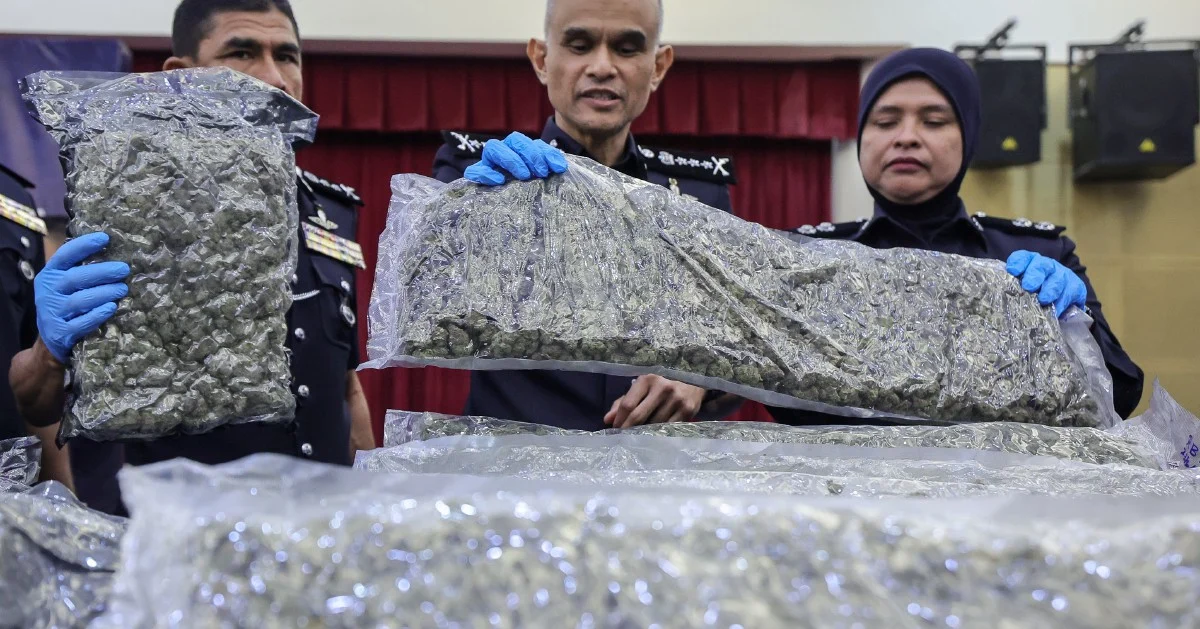
Malaysia's airport security and enforcement agencies have dismantled a significant drug trafficking operation, confiscating more than 650 kilogrammes of cannabis buds that entered through Kuala Lumpur International Airport since the start of the year. The coordinated crackdown has resulted in the detention of 38 suspects, a mix of Malaysian and foreign nationals whose involvement in the narcotics network has triggered extensive investigation by federal police in Shah Alam.
The scale of the cannabis interception underscores KLIA's continued role as a critical checkpoint in Malaysia's borders against international drug smuggling attempts. As the nation's primary international aviation hub, the airport processes hundreds of thousands of passengers and cargo shipments daily, making it both a key vulnerability and a strategic enforcement location. The amount seized—exceeding half a tonne—demonstrates that traffickers are attempting to move substantial quantities through established commercial channels rather than relying solely on smaller, incremental shipments.
The involvement of foreign nationals in the drug network reflects the increasingly transnational character of organised trafficking in Southeast Asia. Malaysian ports and airports have become focal points where regional and international drug routes converge, attracting criminal syndicates from across Asia and beyond. The presence of foreign suspects suggests either that international organisations are using Malaysian territory as a transit point or that they are directly supplying domestic markets, both scenarios that carry serious implications for regional security.
Efforts to prevent drug smuggling at KLIA have intensified in recent years, with enhanced screening protocols, intelligence-led operations, and cooperation between customs, border agencies, and the police narcotics division. The January-to-present timeline indicates sustained enforcement activity rather than isolated seizures. This methodical approach reflects recognition that trafficking is an ongoing threat requiring constant vigilance rather than episodic enforcement bursts. Each interdiction provides investigators with evidence chains that lead to higher-level suppliers and distribution networks.
The cannabis market in Malaysia and the broader Southeast Asian region has been shaped by global drug trends, with increased sophistication in cultivation, processing, and transportation methods. Traffickers are adapting to law enforcement by using concealment techniques and routing shipments through trusted logistics channels. The successful interceptions at KLIA suggest that Malaysian agencies have developed effective detection capabilities, though the continuing volume of attempts indicates the high profitability of the trade.
Arrest figures accompanying major seizures typically represent only the visible tier of trafficking organisations. The 38 detainees likely include couriers, baggage handlers, logistics coordinators, and lower-level distributors rather than the financial architects or primary suppliers behind the operation. Law enforcement investigators use apprehended individuals to develop intelligence about upstream suppliers and downstream customers, gradually mapping the networks that enable large-scale drug movement.
The financial dimensions of cannabis trafficking are substantial. Street-level pricing in Malaysian markets, combined with wholesale volumes, suggests that a 650kg seizure represents millions of ringgit in disrupted drug sales. This loss creates internal tensions within trafficking organisations, prompts disputes over accountability, and potentially destabilises networks by forcing them to rebuild supply chains. Such disruptions are an important though imperfect counter-narcotics strategy, alongside criminal prosecution.
International cooperation has become essential for addressing drug trafficking at major hubs like KLIA. Intelligence sharing with regional partners through ASEAN mechanisms and bilateral agreements helps Malaysian authorities intercept shipments originating from or destined for neighbouring countries. The arrest of foreign nationals suggests that these cooperation frameworks are functioning, though barriers of jurisdiction, extradition treaties, and varying legal standards across nations remain persistent challenges.
The public health context matters as well. Cannabis consumption, while sometimes underestimated compared to heroin or methamphetamine epidemics in the region, contributes to substance abuse problems in Malaysia. Supply-side enforcement, though necessary, addresses only part of the challenge; demand reduction through education, treatment access, and community interventions requires parallel investment. The existence of sufficient market demand to justify trafficking half-tonne shipments indicates that consumption is significant enough to sustain organised criminal supply networks.
Looking ahead, the KLIA seizure and arrests serve as both a success indicator for Malaysian enforcement agencies and a reminder of trafficking's persistence. Traffickers continuously probe border security for vulnerabilities, adapt routes and methods, and invest in corrupting officials or exploiting procedural gaps. The fact that such large quantities are still being intercepted suggests detection is working; conversely, unknown quantities that successfully pass through airports pose a disturbing unknown element in the threat assessment.
For Malaysian security and law enforcement, these operations justify continued investment in airport security infrastructure, intelligence capabilities, and international partnerships. For regional neighbours and the wider Southeast Asian community, the KLIA findings illustrate how interconnected drug challenges have become. Addressing trafficking effectively requires sustained, coordinated action across borders, comprehensive prosecution strategies, and parallel efforts to reduce drug demand through public health initiatives. The 38 arrests and 650kg seizure represent important tactical victories, yet the broader strategic challenge of dismantling trafficking organisations and reducing drug availability remains a long-term undertaking.