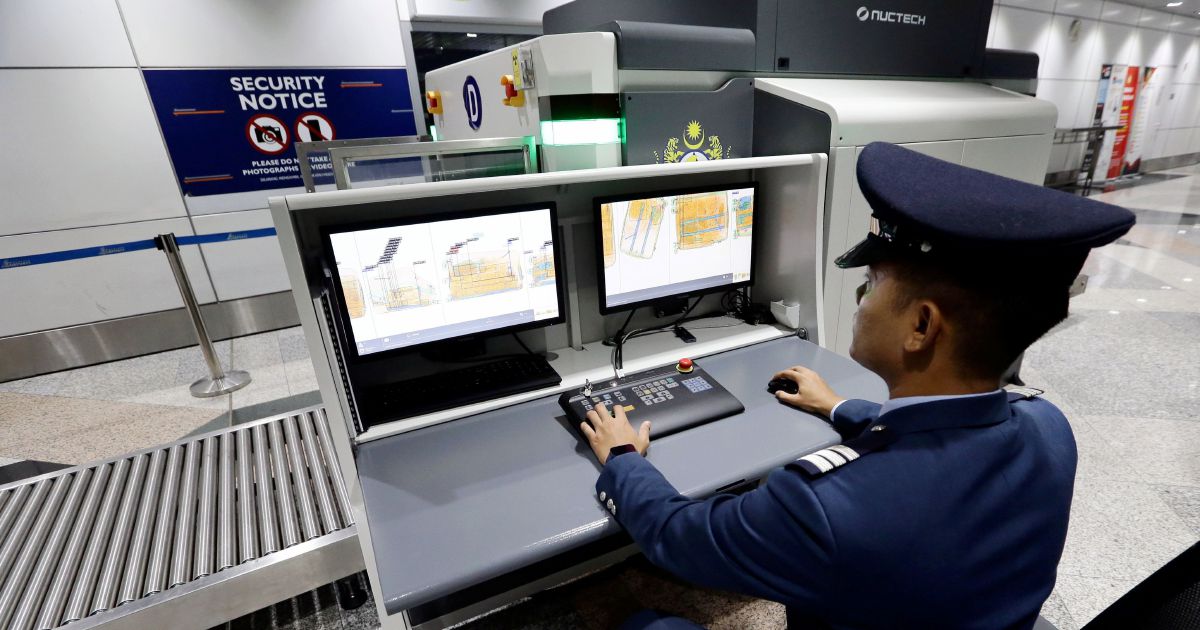
Malaysia's Home Minister Datuk Seri Saifuddin Nasution Ismail has shifted focus away from equipment deficiencies at Kuala Lumpur International Airport, instead pinpointing procedural shortcomings as the root cause of inadequate drug detection at the nation's primary aviation gateway. The minister's assessment addresses growing concerns about contraband slipping through KLIA's security checkpoints, a matter that has intensified scrutiny of the airport's screening effectiveness.
The distinction between technological capacity and operational practice represents a critical administrative issue facing KLIA. Saifuddin clarified that the airport's scanning apparatus possesses the technical specifications necessary to identify illicit substances, including narcotics. This revelation suggests that any gaps in drug interdiction stem not from deficient hardware, but rather from how screening procedures have been calibrated and sequenced by airport authorities.
The minister's statement illuminates a fundamental priority ordering within KLIA's security apparatus. Screening standard operating procedures have historically emphasised the detection of weapons and explosive materials, reflecting post-9/11 global aviation security frameworks that universally prioritise threats to aircraft and passenger safety. This weapons-centric approach, while justified from a catastrophic risk perspective, has inadvertently deprioritised contraband detection protocols that might flag narcotics moving through the terminal.
This operational architecture reflects broader international security paradigms, where aviation facilities worldwide have organised their scanning and inspection regimes around preventing hijackings and bombings. However, the distinction between potential terrorism threats and organised drug trafficking has become increasingly blurred in Southeast Asia, where narcotics networks often intersect with militant financing and transnational organised crime. For Malaysian authorities overseeing KLIA, this creates a complex balancing act between competing security imperatives.
The Home Minister's acknowledgement carries significant implications for Malaysian aviation security management. By framing the issue as procedural rather than technical, Saifuddin has essentially identified an area where administrative recalibration could yield measurable improvements without requiring capital expenditure on new equipment. This positions the problem within the realm of policy adjustment, training enhancement, and protocol modification—interventions that could theoretically be implemented relatively swiftly compared to infrastructure upgrades.
Kuala Lumpur International Airport processes hundreds of thousands of passengers monthly, handling both domestic and international flights across multiple terminals. The volume and complexity of this operation demand screening protocols that are both rigorous and efficient. When detection priorities are misaligned with actual threat patterns, the consequences ripple across Malaysia's entire aviation security posture, potentially creating vulnerabilities that criminal networks can exploit.
The gap between capability and deployment that Saifuddin identified reflects a common challenge in security management across developing and middle-income nations. Technologies are often acquired based on specific threat assessments or international standards compliance, but their integration into daily operational procedures may not maximally utilise their full potential. Staff training, equipment maintenance schedules, and decision-making protocols can all influence whether sophisticated scanning equipment actually functions as a comprehensive detection mechanism.
For Malaysian travellers, business people, and transit passengers, the revelation that KLIA's scanning hardware can detect drugs but current procedures may not optimally deploy these capabilities raises questions about the adequacy of current security measures. Neighbouring airports in Singapore, Thailand, and Indonesia operate under different screening regimes, and comparative effectiveness becomes a matter of both national security and regional competitiveness. KLIA's reputation as a major Southeast Asian hub depends partially on perceptions of its security effectiveness.
The minister's statement also suggests that Malaysia's airport security leadership recognises the need for procedural modernisation. Implementing enhanced drug detection protocols alongside existing weapons screening requires recalibrating staff priorities, potentially increasing inspection timelines, and possibly retraining personnel to recognise narcotics-related indicators. These measures demand coordination between multiple agencies, including the Malaysian customs service, police narcotics divisions, and KLIA's own security personnel.
Beyond KLIA's immediate operations, this issue touches on broader questions about Malaysia's border security infrastructure and narcotics trafficking containment. Drug smuggling through aviation channels represents one vector among many through which illicit substances enter Malaysia and transit toward Australia and other regional destinations. A comprehensive approach would examine not only screening procedures at KLIA but also intelligence sharing protocols, risk profiling of passengers and cargo, and coordination with international aviation security networks.
Saifuddin's clarification, while technical in nature, carries political dimensions as well. Public disclosures about security gaps can affect public confidence in government institutions and may invite questions about resource allocation and administrative competence. By identifying the problem as one of procedure rather than capability, the minister effectively frames the path forward as a matter of management improvement rather than systemic failure, a distinction that influences both public perception and policy response planning.
Moving forward, the responsibility falls on airport authorities and the Home Ministry to translate Saifuddin's assessment into concrete operational changes. Whether KLIA's screening protocols are revised to balance drug detection more prominently alongside weapons interdiction will determine whether current scanning technology achieves its full potential. The coming months will reveal whether this acknowledgement of procedural gaps translates into substantive reform or remains an administrative observation without operational consequences.

