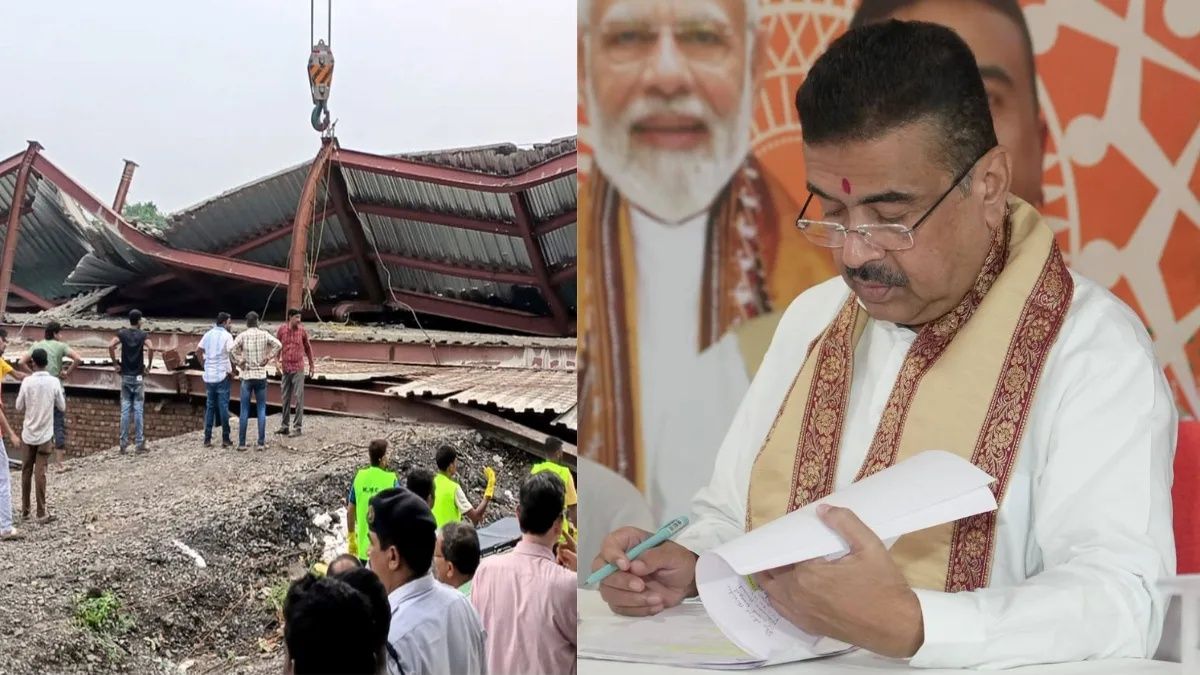
The humanitarian crisis unfolding at the Taratala warehouse site in Kolkata deepened on Thursday as the confirmed death toll from the structural collapse reached 11, with rescue teams warning that additional bodies may still remain buried beneath the rubble. The grim discovery came as coordinated rescue efforts spanning multiple government agencies entered their second day of intensive operations, reflecting the scale and complexity of the disaster that has shaken West Bengal's capital city.
The latest victim was recovered and transported to SSKM Hospital's Trauma Care Centre at approximately 1.15pm on Thursday afternoon, though authorities have not yet completed formal identification procedures. The extended timeline for casualty confirmation underscores the challenging conditions facing rescue personnel operating across the collapsed structure. These operations have brought together personnel from the Indian Army, the National Disaster Response Force, and various state agencies in what officials have characterised as a demonstration of seamless coordination between federal and state authorities. However, the prevailing concern among rescue coordinators remains the possibility that additional workers remain trapped under the debris, prompting continued intensive search and excavation efforts at the site.
The political ramifications of the disaster erupted swiftly within the West Bengal Assembly, where Chief Minister Suvendu Adhikari launched a forceful critique of his predecessors' municipal governance. Adhikari specifically targeted the previous Kolkata Municipal Corporation administration, which operated under Trinamool Congress stewardship, alleging systematic lapses in building approval processes that directly contributed to the structural failure. His accusations extended beyond simple administrative negligence, encompassing claims of deliberate approval of architectural designs containing acknowledged structural deficiencies. By presenting assembly documents allegedly bearing the signatures of former Mayor Firhad Hakim, Adhikari suggested that flawed designs had proceeded through official channels despite glaring engineering concerns, implying either gross incompetence or willful compromise of safety standards.
Adhikari's statements introduced allegations of systemic corruption within the previous municipal administration, characterising the pattern of irregular approvals as reflective of a broader institutional culture centred on extracting unofficial payments and commissions. He employed stark language in describing Kolkata as a "city of death," attributing this characterisation to the corrosive effects of what he termed "cut money"—the colloquial Bengali reference to bribery and illegal payments extracted during development approval processes. This framing positioned the Taratala collapse not as an isolated structural accident but as symptomatic of deeper governance failures accumulated under the prior regime's stewardship of municipal affairs.
Law enforcement agencies have responded with considerable speed, arresting five individuals connected to the disaster in various capacities. The detainees include the construction supervisor responsible for on-site operations, the vendor who fabricated the warehouse's iron structural components, the individual leasing the land on which the warehouse operated, a labour contractor associated with workforce provisioning and Trimex construction arrangements, and a broker implicated in facilitating the original building plan approval from the municipal corporation. However, authorities acknowledged that Azgar, identified as the primary accused in the case, remains at large and the subject of an ongoing manhunt. The breadth of arrests spanning multiple stakeholder categories—encompassing construction contractors, labour suppliers, property leaseholders, and approval facilitators—suggests investigative attention to identifying structural corruption within both the building industry and municipal approval mechanisms.
In direct acknowledgment of the rescue workforce's efforts, Adhikari publicly commended both the Indian Army and the National Disaster Response Force for their professionalism and dedication during the ongoing recovery operations. This recognition, while ceremonial in nature, carries significance as it reinforces the state government's characterisation of the response as a coordinated federal-state partnership, potentially important for demonstrating governance competence as the administration navigates the political aftermath of the disaster.
The most consequential announcement emerging from the Chief Minister's assembly statements was his declaration of a comprehensive four-week moratorium on construction activities across multiple jurisdictions, excluding only projects classified as essential services. This suspension extends beyond the Kolkata Municipal Corporation boundaries to encompass surrounding municipal areas including Rajarhat-New Town, Maheshtala, Budge Budge, Pujali, Bishnupur, Sonarpur, and Baruipur—a geographical scope reflecting official concern about the systemic nature of the construction safety crisis. During this enforcement period, all building plans previously approved within these jurisdictions will undergo systematic auditing, representing an unprecedented intervention into the region's construction approval and oversight mechanisms.
Implementation of this massive audit initiative falls to a newly constituted high-level committee chaired by Additional Chief Secretary Rajesh Pandey, suggesting governmental determination to ensure technical rigor in the review process. The committee's composition reflects a deliberate strategy to introduce external expertise and institutional independence into the audit process. Membership encompasses senior government officials alongside specialists from IIT Kharagpur, the Rail India Technical and Economic Service, Indian Railway Construction Limited, and relevant state departments including the Fire Services and Public Works divisions, alongside the Kolkata Municipal Corporation itself. This inter-institutional approach attempts to bypass potential conflicts of interest that might compromise a review conducted solely through municipal administrative channels, addressing underlying credibility issues surrounding the original approval processes.
Adhikari articulated an uncompromising stance regarding accountability, stating that convicted individuals would face not only imprisonment but potential property confiscation, with seized assets directed toward victim compensation. This assertion of punitive authority signals the government's attempt to position itself as responsibly protecting citizen welfare while simultaneously extracting maximum restitution for affected families. The invocation of asset forfeiture represents an escalation beyond standard criminal penalties, framing the matter within a framework of comprehensive remediation rather than limited judicial punishment. However, this rhetorical positioning must be evaluated against the practical capacity of the criminal justice system to execute such penalties and the likelihood that substantial victim compensation will materialise through confiscated property sales.
For Malaysian observers, the Kolkata disaster and its institutional aftermath offer sobering lessons regarding the vulnerabilities present in municipal building approval systems across South Asia. The collapse exposes how systematic corruption within regulatory frameworks—manifested through informal payment extraction and compromised safety certifications—can infiltrate construction sectors, potentially affecting multiple jurisdictions beyond West Bengal. The circumstances mirror periodic concerns raised regarding building safety oversight in Malaysian municipal contexts, particularly in older urban centres where development oversight may have accumulated procedural inconsistencies or institutional capacity constraints. The scale of the audit initiative launched by the West Bengal government, while procedurally intensive, represents an acknowledgment that spot-checking and routine compliance inspections have proven insufficient to maintain structural safety standards.
The incident underscores the necessity for robust, transparent, and independently verified building approval processes across the region. Malaysian authorities overseeing urban development in federal territories and state jurisdictions might draw analytical value from the circumstances surrounding the Taratala collapse, particularly regarding how informal payment systems can corrode technical decision-making within municipal corporations. The composition and scope of West Bengal's audit committee, while not necessarily a model for direct replication, demonstrates recognition that institutional separation and external expert involvement strengthen the credibility and technical rigour of post-disaster assessments. As urbanisation accelerates across Southeast Asia and construction activity intensifies, maintaining architectural and structural integrity through non-compromised regulatory oversight represents an essential governance priority with direct implications for public safety and economic resilience.

