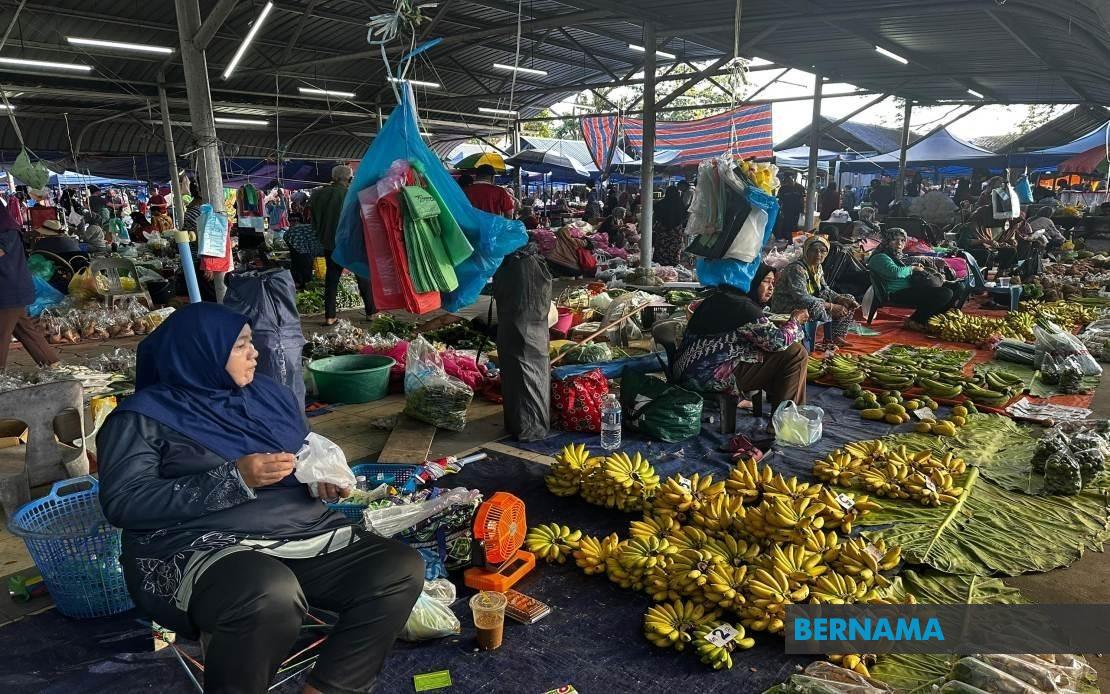
The Sabah State Legislative Assembly heard on July 21 that converting Kota Belud Tamu into a UNESCO World Heritage Site is a complex undertaking demanding substantial groundwork before formal consideration can proceed. Assistant Minister of Tourism, Culture and Environment Dr Andi Md. Shamsureezal briefed the chamber on the multifaceted requirements governing such nominations, signalling that aspirations for international recognition must be matched by rigorous preparatory work. The confirmation came in response to questions from Datuk Mohd Arsad Bistari (GRS-Tempasuk) regarding the state's strategy for securing both World Heritage and Geopark designations for the historic market.
The nomination pathway outlined by Dr Andi encompasses far more than symbolic recognition. Successful candidates must undergo comprehensive evaluations addressing both the physical and immaterial dimensions of cultural heritage. For Kota Belud Tamu specifically, this means investigators would need to catalogue everything from architectural features and potential archaeological artefacts to the living traditions, knowledge systems, and social practices embedded within the marketplace's functioning. This dual-heritage approach reflects modern UNESCO methodology, which recognises that traditional institutions like weekly markets preserve knowledge and practices as surely as buildings or monuments do.
Documentation forms the foundation upon which UNESCO assessments rest. Applicant sites require meticulous records substantiating their historical significance, cultural meaning, and contemporary relevance. In Kota Belud's case, such documentation would necessarily cover the market's origins and evolution, its role within Sabah's economic and social fabric, and the communities whose livelihoods and identities remain intertwined with its operations. Archival materials, academic research, photographic records, and community testimonies would all contribute to building the evidentiary base required by international evaluators.
Crucially, any nomination must demonstrate what UNESCO terms "Outstanding Universal Value"—evidence that the site transcends local or national significance to possess meaning and relevance for humanity as a whole. This represents perhaps the highest hurdle in the designation process. Dr Andi emphasised that historical and scientific evidence must substantiate such claims; aspiration alone cannot substitute for documented proof. For a traditional market, this might involve demonstrating how Kota Belud exemplifies unique cultural practices, represents significant architectural or urban planning approaches, or preserves knowledge systems of global importance.
The procedural timeline should not be underestimated. UNESCO's assessment mechanisms move deliberately, reflecting the gravity attached to World Heritage status. Between initial preparation and final designation, years typically elapse. This extended horizon means that Sabah's government and relevant agencies must commit sustained attention and resources to the Kota Belud proposal. The process cannot be rushed without compromising the quality of documentation and analysis that international reviewers will scrutinise.
Notably, Kota Belud has already achieved a form of UNESCO recognition through its inclusion within the Kinabalu UNESCO Global Geopark (KUGGp), designated in May 2023. This status, while distinct from World Heritage classification, provides a foundation upon which broader heritage recognition might eventually build. The geopark designation acknowledges the district's geological and natural heritage significance, positioning Kota Belud within a framework that already enjoys international UNESCO endorsement. This prior recognition could potentially facilitate future World Heritage applications by establishing the region's credibility as a heritage destination.
Sabah Parks, functioning as the lead management agency for the geopark, has already initiated programming that highlights Kota Belud's cultural dimensions. The "Tamu Geopark" initiative transforms the weekly market into a deliberate showcase for local gastronomy, traditional clothing, handicrafts, artistic expressions, and community-produced goods. This programming serves dual purposes: it generates economic activity and livelihood opportunities for residents whilst simultaneously creating the kind of organised cultural presentation that UNESCO assessors expect to encounter. The initiative demonstrates how heritage conservation can function not as a static preservation exercise but as a living, economically productive endeavour.
For Malaysian readers, particularly those in East Malaysia, the Kota Belud case study illustrates broader questions about heritage designation in Southeast Asia. As countries throughout the region pursue UNESCO recognition for cultural sites, understanding the rigorous requirements becomes essential. Tourism ministers and state governments across Malaysia increasingly view World Heritage status as a development tool, yet the path to such recognition demands investments in research infrastructure, historical documentation, and community engagement that often exceed initial expectations. Kota Belud's trajectory offers lessons about realistic planning and resource allocation for heritage aspirants.
The economic implications for Kota Belud's community merit consideration. World Heritage designation typically drives tourism increases, which can generate substantial revenue for local merchants and service providers. However, such growth also risks commodifying cultural practices and overwhelming traditional institutions with visitor flows. The phased approach outlined by Dr Andi—beginning with geopark status and building toward potential World Heritage recognition—permits communities time to develop sustainable tourism frameworks that balance economic benefits against cultural preservation concerns. This deliberate progression reflects maturation in how Malaysian regions approach heritage designation.
The requirement for "strong historical and scientific evidence" points toward an important institutional gap in Malaysian heritage documentation. Many traditional practices and cultural institutions lack formal scholarly attention or archival preservation. Creating the evidentiary foundation for UNESCO nominations often necessitates commissioning historical research, archaeological surveys, and cultural studies that might not otherwise occur. For Kota Belud, this means potential opportunities for Malaysian and international researchers to contribute to the knowledge base while simultaneously advancing the nomination cause.
Regional competition for UNESCO designations has intensified across Southeast Asia, with multiple countries and localities pursuing World Heritage status. Within this competitive landscape, Sabah's dual strategy—leveraging existing geopark recognition whilst building toward World Heritage potential—positions the state strategically. Other Malaysian regions watching Kota Belud's progress will calibrate their own heritage promotion strategies accordingly. The transparency with which Dr Andi outlined requirements may also encourage more realistic expectations among communities and stakeholders regarding what UNESCO designation entails and what preparation it demands.

