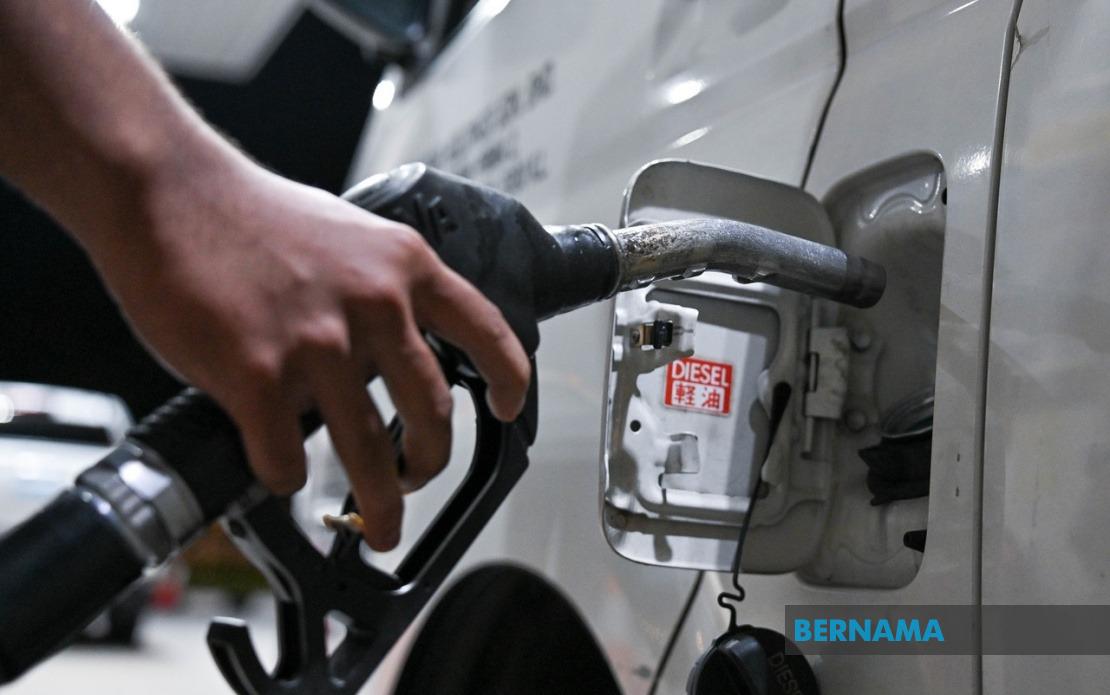
The Ministry of Domestic Trade and Cost of Living (KPDN) has terminated its directive controlling diesel sales to commercial vehicles across Sabah, Sarawak, and the Federal Territory of Labuan, removing all associated volume caps that previously limited purchases to 50, 100, or 150 litres. The measure takes effect on July 1, marking a significant shift in how the government manages fuel subsidies in these geographically dispersed regions, which together represent a substantial portion of Malaysia's transport sector and industrial economy.
The cancellation follows Prime Minister Datuk Seri Anwar Ibrahim's announcement on June 21, which unveiled plans to unify subsidised diesel pricing across the nation at RM2.10 per litre under the BUDI Diesel Programme. This standardisation represents an attempt to harmonise fuel costs regardless of location, addressing long-standing regional disparities that have created pricing differentials between peninsular Malaysia and the eastern states. By establishing a uniform rate, the government aims to simplify subsidy administration and reduce incentives for cross-border fuel smuggling or arbitrage that the previous tiered pricing structure had inadvertently encouraged.
KPDN Director-General of Enforcement Datuk Azman Adam explained that the lifting of restrictions forms part of a broader regulatory overhaul designed to modernise fuel subsidy delivery. The directive that governed these restrictions, originally issued on March 27, 2026, had been in place to manage demand and prevent fuel hoarding in regions where supply chains are longer and distribution networks more complex than in Peninsular Malaysia. Its revocation signals confidence that new verification mechanisms can adequately prevent misuse without relying on blunt purchasing caps.
Central to the government's strategy is the introduction of a MyKad-based verification system at petrol stations, which also commences on July 1. This digital authentication framework represents a technological approach to ensuring that subsidised diesel reaches only eligible consumers—primarily commercial vehicle operators, public transport services, and registered fisheries vessels. Rather than relying on physical restrictions at the pump, the system uses national identification cards to verify eligibility in real time, allowing authorised users to purchase fuel without volume limitations while maintaining administrative control.
The shift toward technology-enabled subsidy targeting reflects global trends in fuel subsidy reform, where many governments have transitioned from quantity controls to means-tested access mechanisms. Malaysia's approach using MyKad offers several advantages: it reduces operational friction for legitimate users, eliminates the need for retailers to police purchase limits, and creates a digital audit trail that can help authorities detect unusual consumption patterns or potential fraud. For transport operators in Sabah and Sarawak, where fuel costs significantly impact operating margins, the removal of caps could enable more flexible purchasing aligned with actual business needs rather than administrative quotas.
Retailers holding scheduled controlled goods licenses for petrol and diesel sales in the three affected jurisdictions must immediately cease enforcing the previous purchase restrictions. KPDN's statement explicitly instructs these dealers that the old directive no longer applies, requiring swift operational adjustments to point-of-sale systems and staff training. This transition period, though brief, necessitates coordination between the ministry, retailers, and subsidy management agencies to ensure system readiness and public awareness of the new authentication requirements.
The ministry has expressed confidence that the combined effect of unified pricing and digital verification will produce more efficient subsidy distribution while improving consumer convenience. Officials argue that the targeted mechanism eliminates the deadweight loss associated with artificial purchase limits, which sometimes forced legitimate buyers to make multiple transactions or travel across boundaries to secure adequate fuel. By removing these friction points while maintaining eligibility controls, the government believes it can reduce administrative burden on businesses while preserving the subsidy programme's fiscal sustainability.
For Malaysia's broader subsidy framework, this development signals a willingness to experiment with digital governance tools in a politically sensitive policy area. Fuel subsidies consume substantial government resources and generate heated debate about their economic efficiency and equity. The shift toward technology-enabled targeting represents an implicit acknowledgment that blanket subsidies distort markets and encourage overconsumption, while blanket restrictions create inefficiencies and economic hardship for legitimate users. MyKad-based verification attempts to thread that needle.
In East Malaysia particularly, the policy implications are substantial. Sabah and Sarawak, where manufacturing, agriculture, and resource extraction depend heavily on transportation, have long advocated for subsidy arrangements reflecting their higher distribution costs and geographic isolation. Previous tiered restrictions disadvantaged commercial operators in these states relative to peninsular counterparts, indirectly imposing a locational penalty on businesses. Standardised pricing combined with unrestricted access for eligible users addresses this structural inequity, potentially supporting economic development in these regions.
The implementation timeline remains tight, with retailers and subsidy administrators having roughly one week to operationalise the MyKad system across thousands of petrol stations. Any technical failures or inadequate public communication could generate consumer frustration and accusations of government incompetence. KPDN's emphasis on compliance from all stakeholders reflects awareness of these implementation risks. Success depends not merely on policy design but on coordinated execution across multiple agencies and private retailers.
Compliance monitoring will be critical moving forward. The ministry must track whether the system functions as intended, whether eligible users can access sufficient fuel, and whether unauthorised access attempts occur. Should the new mechanism fail to prevent subsidy leakage or creates unexpected bottlenecks, political pressure could mount to reintroduce quantitative restrictions or expand eligibility categories, potentially undermining the subsidy programme's fiscal objectives. Conversely, successful implementation could provide a template for subsidy modernisation across other sectors and jurisdictions, including potentially more ambitious initiatives in future budget cycles.
The broader context involves Malaysia's ongoing efforts to balance fiscal prudence with social protection in an environment of volatile global commodity prices. Fuel subsidies represent a long-standing political commitment to affordability but create fiscal pressures and market distortions. The government's incremental transition toward digital, technology-enabled subsidy targeting suggests recognition that sustaining these programmes long-term requires making them more efficient and defensible. This policy adjustment, though administrative in character, reflects deeper questions about how states can maintain social support systems without sacrificing economic efficiency—questions resonating far beyond Malaysia's shores.

