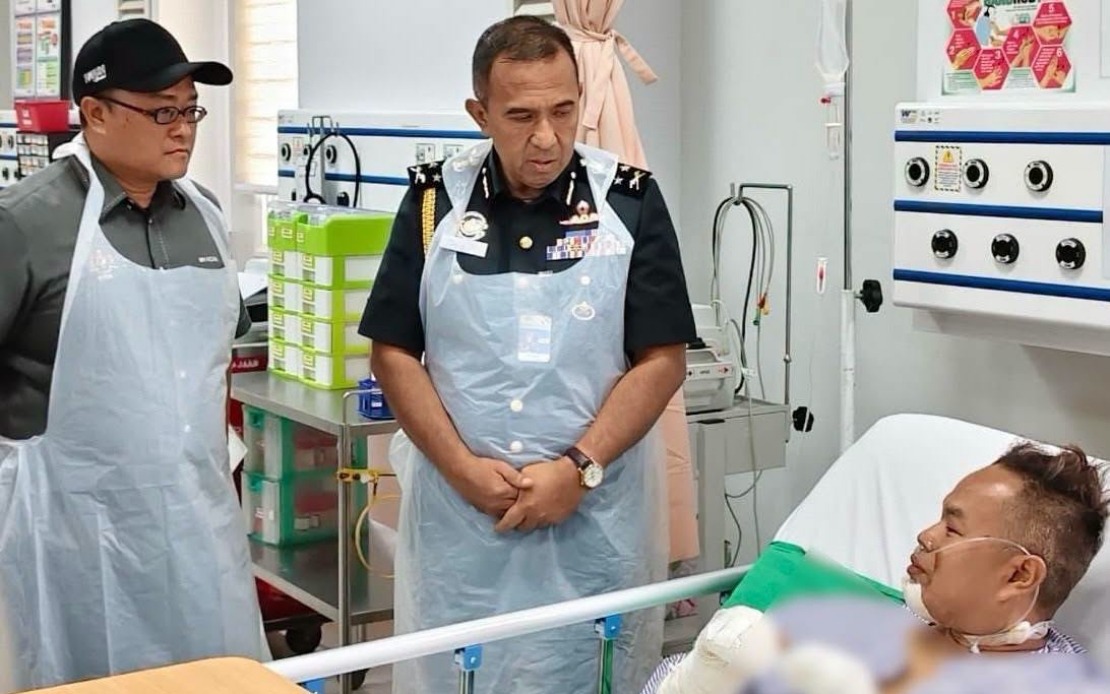
Two enforcement officers from the Domestic Trade and Cost of Living Ministry (KPDN) sustained injuries while conducting operational duties in Selangor as part of Ops Tiris 4.0, a nationwide initiative designed to combat the unlawful siphoning of subsidised liquefied petroleum gas (LPG) through decanting activities. The incident has prompted the ministry's leadership to publicly acknowledge the hazards routinely encountered by field personnel and reflect on the broader implications of enforcement work in Malaysia.
Assistant Enforcement Officer Mohammad Fauzi Baharuddin received more severe injuries and remained hospitalised undergoing medical treatment at the time of the statement, while Enforcement Assistant R. Yoghanath experienced lighter injuries sufficient to permit his discharge following initial care. The varying severity of their conditions underscores the unpredictable nature of field operations and the potential for escalation during enforcement actions.
Domestic Trade and Cost of Living Minister Datuk Armizan Mohd Ali issued a public statement expressing concern for both officers and their families, emphasising the personal toll such incidents exact on those engaged in regulatory work. His remarks highlighted Mohammad Fauzi's battle ahead and extended compassion to his family members facing uncertainty and worry during the recovery process. The ministerial intervention signals the gravity with which the government views injuries sustained by enforcement personnel.
Ops Tiris 4.0 represents a sustained government effort to prevent the diversion of subsidised LPG, a critical commodity for Malaysian households and small businesses. The decanting of subsidised gas for resale at market rates constitutes a significant drain on public resources and undermines the government's commitment to maintaining affordable living costs for ordinary citizens. The operation targets networks engaged in this profitable but illegal practice, requiring enforcement teams to conduct unannounced raids and investigations across multiple locations.
The minister's public acknowledgment of workplace dangers serves a dual purpose: it demonstrates institutional solidarity with frontline staff while simultaneously drawing public attention to the sacrifices inherent in enforcement roles. Armizan's comments underscored that every enforcement action involves officers who separate from their families to face unpredictable circumstances in the field, often without certainty regarding personal safety outcomes.
For Malaysian readers, particularly those in Selangor, such incidents validate ongoing concerns about the effectiveness and sustainability of subsidy protection mechanisms. The willingness of certain actors to engage in confrontational conduct during raids indicates the financial stakes involved in LPG diversion schemes. These networks possess sufficient motivation and resources to resist regulatory intervention, creating genuine occupational hazards for government personnel tasked with enforcement responsibilities.
The statement also reflects broader tensions within Malaysia's regulatory environment. As subsidy schemes remain politically sensitive and economically significant, enforcement agencies face pressure to demonstrate measurable results whilst managing operational risks. KPDN personnel work within this constrained space, balancing the imperative to conduct thorough investigations against the reality of limited resources and potential resistance from those targeted.
Regional context further illuminates the significance of such operations. Across Southeast Asia, fuel and LPG subsidy systems face chronic challenges from diversion schemes, smuggling networks, and corruption. Malaysia's attempt to counteract these dynamics through targeted enforcement operations like Ops Tiris 4.0 positions the country within broader regional efforts to protect subsidised commodity schemes from exploitation. However, incidents involving officer injuries highlight the limitations of enforcement-centred approaches and underscore the need for complementary strategies addressing the underlying economic incentives driving diversion behaviour.
The minister's invocation of gratitude and recognition for KPDN personnel constitutes an important symbolic gesture, yet it also implicitly raises questions about occupational safety protocols, equipment provision, and training adequacy. If enforcement teams routinely encounter situations generating serious injuries, stakeholders might reasonably question whether current operational frameworks sufficiently prioritise officer welfare alongside enforcement objectives.
Moving forward, the incident may catalyse discussions regarding enhanced protective measures, improved intelligence gathering to reduce confrontational encounters, and additional resources for field teams. The government's capacity to protect both subsidies and its personnel depends partly on investing in systems that minimise dangerous operational scenarios whilst maintaining enforcement effectiveness.
For Malaysian consumers concerned about cost of living pressures, enforcement crackdowns against subsidy theft theoretically preserve the integrity of assistance programmes. However, the human costs of such operations warrant consideration alongside efficiency metrics. The balance between protecting resources and safeguarding the individuals charged with enforcement remains a critical dimension of policy implementation often overlooked in public discourse.

