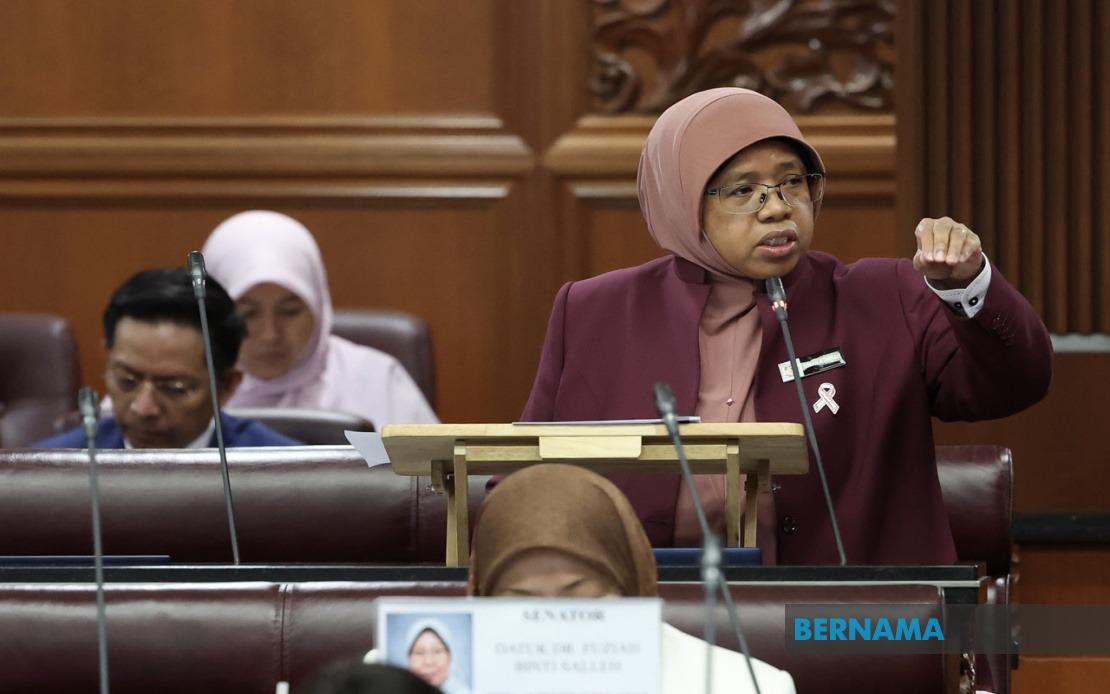
The Ministry of Housing and Local Government has adopted a strategic prioritisation framework aimed at addressing the deteriorating condition of Malaysia's older public housing stock. Deputy Housing and Local Government Minister Datuk Aiman Athirah Sabu outlined the approach during parliamentary questioning, revealing how KPKT is navigating severe resource constraints while managing thousands of ageing residential units across the country. The decision to focus on properties surpassing the 10-year threshold reflects an acknowledgment that Malaysia's People's Housing Programme portfolio requires urgent attention, with structural and systems-related failures posing genuine risks to occupant wellbeing.
Critical infrastructure components have emerged as the centrepiece of KPKT's maintenance strategy. Elevator systems, roof structures, water storage facilities and distribution networks, sanitary plumbing, and electrical installations now consume the bulk of allocated repair budgets. This targeted approach stems from recognition that failures in these categories directly compromise resident safety or habitability, distinguishing them from cosmetic or non-essential maintenance work. The ministry's logic operates on triage principles—addressing problems that could result in injuries, water contamination, or loss of essential utilities takes precedence over broader facility upgrades or aesthetic improvements. Common area repairs affecting shared spaces also feature prominently in the priority framework, reflecting understanding that deteriorating communal environments accelerate wider building decline and community disengagement.
The funding reality underlying these prioritisation decisions reveals significant structural challenges within Malaysia's public housing maintenance ecosystem. Under the 12th Malaysia Plan framework, KPKT channelled RM159.1 million across five rolling maintenance cycles specifically targeting high-rise strata PPR complexes nationwide. However, 2026 figures expose a widening gap between community needs and available resources. The ministry received 226 maintenance applications collectively valued at RM79.9 million, yet could only approve RM44.6 million—translating to a shortfall of RM35.3 million or 44 percent of requested funding. This represents more than a mathematical deficit; it signals that nearly half the identified maintenance work in Malaysia's ageing public housing will defer, allowing problems to compound and potentially escalate toward crisis interventions that prove more costly and disruptive than preventative maintenance.
The processing timeline that KPKT has established for maintenance applications demonstrates both structured governance and administrative delays inherent within the system. Joint Management Bodies and Management Corporations must first submit applications through the Commissioner of Buildings or relevant local authorities, introducing initial gatekeeping mechanisms. The subsequent approval cycle stretches across multiple months: applications open from August through October, followed by a Project Selection Working Committee evaluation in November, steering committee deliberation in December, and controlling officer consideration in January. Local authorities receive notification in January, with Letters of Acceptance issued by April before actual project commencement. This seven-to-nine-month approval window means urgent repairs identified in early 2025 would not commence until mid-2025, potentially leaving buildings exposed to deterioration and safety hazards for extended periods.
For Malaysian residents inhabiting PPR blocks, this maintenance framework carries direct implications for daily living standards and property values. Lift breakdowns in high-rise units trap elderly residents and those with mobility challenges, creating both safety and quality-of-life concerns. Roof leaks damage ceiling structures, create mould and health hazards, and render units uninhabitable during rainy seasons. Water system failures compromise sanitation and drinking water safety, particularly problematic in tropical climates where bacterial contamination risks escalate rapidly. Electrical system deterioration presents fire hazards and leaves residents without power for cooling and food preservation. When collective maintenance needs exceed available budgets, prioritisation inevitably means some communities experience extended deprivation in specific service categories, potentially entrenching inequality between better-resourced and more marginalised PPR locations.
The broader Southeast Asian context adds urgency to Malaysia's PPR maintenance challenge. Across the region, rapid urbanisation during preceding decades produced massive public housing inventories that now require systematic renewal. Indonesia, the Philippines, Thailand, and Vietnam all grapple with ageing apartment blocks facing similar deterioration patterns. Malaysia's experience navigating this maintenance crisis could establish precedent—either as a model of strategic resource allocation or as a cautionary example of deferred maintenance accumulation. Rising construction costs and labour shortages affecting the entire region mean that delaying maintenance today virtually guarantees exponentially higher remediation expenses tomorrow, a dynamic that applies equally across Southeast Asian nations.
The role of JMBs and MCs in this maintenance ecosystem merits particular attention, as these resident-led organisations function as critical intermediaries between community members and government agencies. These bodies must identify defects, coordinate among residents, compile documentation, and navigate bureaucratic submission processes before reaching KPKT. Many JMBs and MCs operate with limited administrative capacity, depending on volunteer residents who balance these responsibilities alongside employment and family obligations. Capacity constraints within these organisations mean maintenance problems may go unreported or documentation may prove inadequate, further depressing actual maintenance numbers relative to genuine need. Strengthening JMB and MC operational support could expand maintenance identification and applications, though potentially revealing even larger resource gaps.
The decision to emphasise safety-critical infrastructure over comprehensive building renewal reflects pragmatic acceptance that Malaysia cannot simultaneously maintain all PPR components at optimal standards. This approach resembles healthcare triage protocols where providers address life-threatening conditions before managing chronic complaints. Yet the comparison highlights a limitation: unlike acute healthcare needs that resolve through intervention, housing deterioration follows an unidirectional trajectory absent maintenance activity. A deferred electrical system repair simply accumulates risk; it does not spontaneously resolve. Over multiple budget cycles, this pattern generates cumulative deferred maintenance burdens that eventually demand emergency responses rather than planned interventions, typically at substantially greater cost and community disruption.
Looking forward, KPKT confronts fundamental questions about the sustainable economics of public housing maintenance. With 226 applications annually and approval capacity covering only 56 percent of value requested, the implicit maintenance backlog expands yearly. At current funding rates, clearing the 2026 application queue would require approximately four years of identical allocations—time during which new maintenance needs inevitably emerge. This trajectory suggests that absent significant budget increases, KPKT can only manage declining maintenance standards across the PPR portfolio, gradually accepting lower conditions as new equilibrium. For residents in affected complexes, this means accepting utility service degradation as inevitable rather than temporary, fundamentally altering housing adequacy and residents' actual enjoyment of their properties. The ministry's strategic prioritisation represents sophisticated management of structural scarcity, yet sophisticated triage cannot overcome fundamental resource insufficiency.

