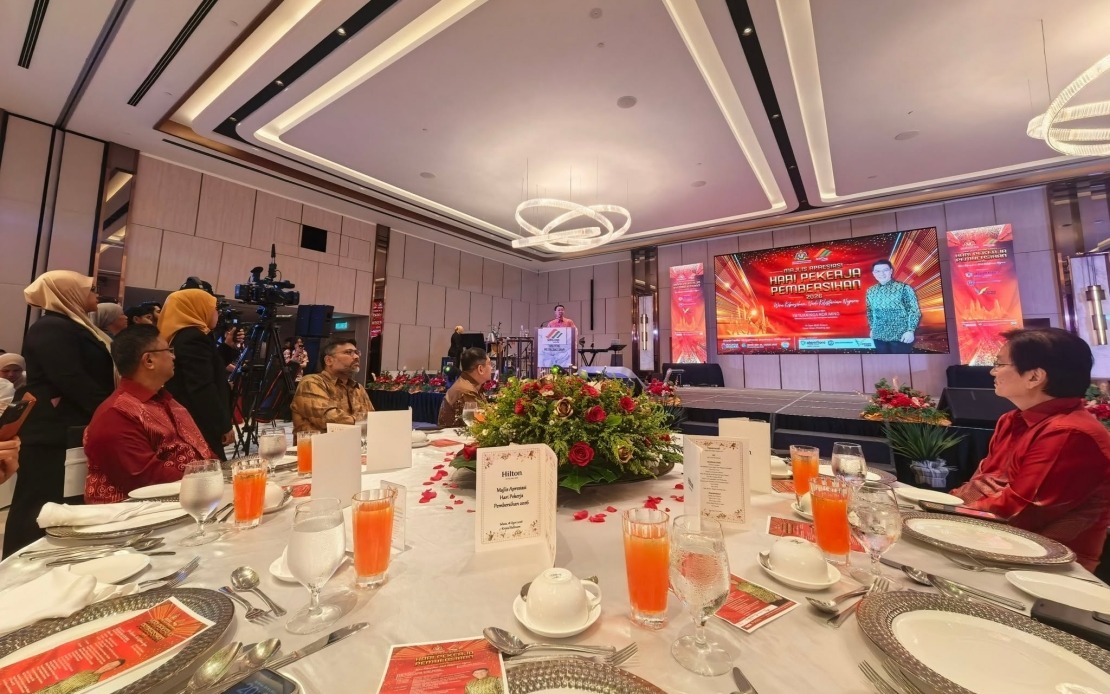
The Housing and Local Government Ministry is taking a significant step to recognise the often-overlooked contributions of Malaysia's sanitation workforce by nominating recipients of the 2026 Cleaning Workers Award for honours from their respective state rulers. Minister Nga Kor Ming announced the initiative at the 2026 Cleaning Workers Appreciation Day in Petaling Jaya, signalling a broader push to elevate the status and dignity of workers who form the backbone of the nation's public hygiene infrastructure.
Nga's proposal represents an important expansion of recognition practices that have operated quietly in at least one state. Penang's government has been honouring cleaning workers for nearly a decade, demonstrating the viability and value of formal acknowledgement. The minister's vision extends this model nationally, ensuring that dedicated workers across Malaysia receive public recognition from their state rulers for their service. This move reflects growing awareness that Malaysia's development and livability depend fundamentally on those who maintain public spaces, yet whose work frequently remains invisible to the general populace.
The initiative emerged from discussions between Nga and Housing and Local Government Ministry secretary-general Datuk Dr Wira M Noor Azman Taib, who collaborated to ensure the nomination process would be systematic and reach state palaces effectively. Deputy Housing and Local Government Minister Datuk Aiman Athirah Sabu was also present at the announcement, indicating organisational commitment to implementing the programme across government levels.
The scale of Malaysia's cleaning workforce underscores the urgency of recognising their contributions. The solid waste management and public cleansing sector currently employs 26,889 workers through various concessionaire companies. What distinguishes many of these individuals is their remarkable longevity and commitment—some have devoted more than a decade to sanitation work, whilst others have spent nearly three decades in the sector, often without prominent public acknowledgement. This extended service represents a significant sacrifice, frequently in demanding conditions and challenging environments.
Beyond honouring individuals, Nga's initiative reflects a fundamental shift in how Malaysia views sanitation work and workers' roles in society. Public cleanliness remains essential for urban livability, public health, and national image, yet cleaning workers operate largely outside public consciousness. By securing state-level recognition, the ministry signals that these roles merit the same formal respect accorded to other public servants, potentially improving workplace conditions and attracting younger generations to the sector.
The minister also emphasised that maintaining public cleanliness transcends the responsibility of sanitation workers alone. He articulated a vision of shared civic responsibility across Malaysian society, introducing the aspirational framework of "Malaysia Bersih, Rakyat Sejahtera"—Clean and Prosperous Malaysia—which positions environmental stewardship as a collective endeavour. This framing suggests that sustainable cleanliness requires cultural transformation alongside enforcement mechanisms.
Enforcement strategies complement the recognition initiative. The Solid Waste Management and Public Cleansing Corporation has been implementing the Community Service Order under Act 672, which transforms littering enforcement from purely punitive to educative. As of 17 August, authorities had issued 14,807 offence notices in 2026. Among individuals subjected to Community Service Orders in participating states, 419 have completed their orders whilst 129 remain in service. Nga emphasised that these orders function not merely as punishment but as disciplinary tools that instil civic awareness and responsibility.
The framework reflects a sophisticated understanding of behaviour change and social responsibility. By requiring offenders to participate in community service rather than simply imposing fines, the programme aims to develop intrinsic motivation for maintaining cleanliness. This educational component potentially creates lasting cultural shifts, particularly among younger offenders who may internalise environmental responsibility through direct participation.
During the Appreciation Day ceremony, seven workers received the 2026 Cleaning Workers Award, comprising two employees from Alam Flora Sdn Bhd and five from SWM Environment Sdn Bhd. Additionally, contributions were presented to three recipients as a welfare gesture, demonstrating tangible support alongside ceremonial recognition. These awards represent immediate validation of individual efforts whilst the broader honours initiative promises longer-term institutional recognition.
The timing of this initiative coincides with increasing global emphasis on environmental sustainability and worker rights. Malaysia's approach—combining formal state honours with enforcement mechanisms and community engagement—positions the nation as recognising sanitation work's critical infrastructure role. For Southeast Asia, where rapid urbanisation creates mounting waste management challenges, Malaysia's model of dignifying cleaning workers whilst implementing behaviour-change strategies offers a template that balances worker recognition with environmental responsibility.
The success of this initiative will depend on consistent implementation across states and sustained commitment to elevating sanitation workers' social status. Beyond ceremonial honours, meaningful recognition requires fair wages, safe working conditions, and career development pathways. Nga's initiative, if accompanied by such structural improvements, could reshape how Malaysians value and support the workers maintaining their living environments, creating a foundation for sustainable urban cleanliness rooted in mutual respect rather than mere compliance.

