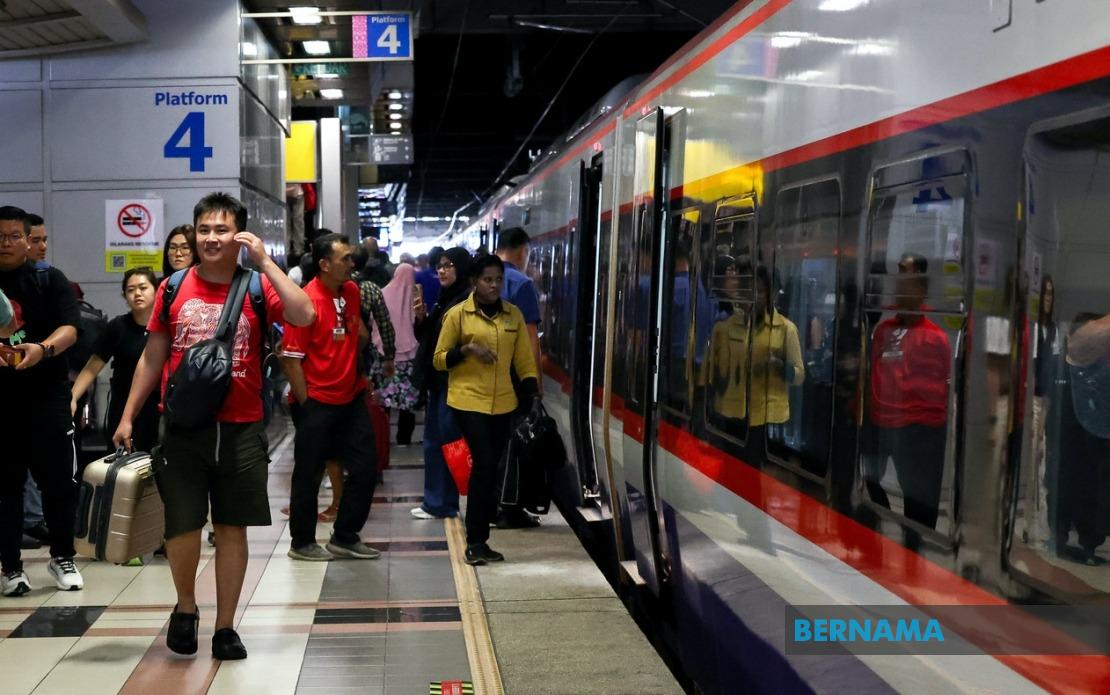
Malaysia's national railway operator Keretapi Tanah Melayu Berhad (KTMB) has announced an expanded train service offering 7,464 extra seats on its Electric Train Service network to accommodate the anticipated surge in passenger traffic during this weekend's Johor state election. The initiative reflects the critical role rail infrastructure plays in facilitating electoral participation across the country's southern corridor, where voter mobility becomes essential during polling periods.
The additional capacity will be deployed across two major routes connecting the state to the capital region: the JB Sentral to Gemas corridor and the crucial KL Sentral to JB Sentral link. By strategically adding services on these arteries, KTMB addresses the predictable pattern of voters and their families needing reliable transportation back to their constituencies. The railway operator has designed the expansion to maximise efficiency, with eight supplementary train services distributed evenly between the two routes over a concentrated three-day operational window from July 10 through July 12.
This second phase of expanded capacity comes after unprecedented demand exhausted the previous allocation of additional tickets that KTMB had released on June 19. The complete sellout of those earlier offerings signaled strong public appetite for rail-based travel to the southern state, prompting the operator to move quickly with this follow-up announcement. Each daily service run will accommodate 2,488 passengers, demonstrating KTMB's commitment to removing transportation barriers that might otherwise discourage voter participation, particularly among those living or working away from their registered constituencies.
Beyond simply adding seats, KTMB has layered an attractive commercial incentive into the arrangement by applying a blanket 20 percent discount across all additional ETS fares operating during the three-day period. This pricing strategy serves a dual purpose: it makes rail travel more economically attractive relative to alternative transport modes like private vehicles or intercity buses, while simultaneously promoting public transport usage at a moment when infrastructure capacity matters most. For families traveling together, the aggregate savings become substantial, potentially influencing modal choice for thousands of journeys.
The operational logistics reflect careful planning around the electoral calendar. Ticket sales for the JB Sentral to Gemas route commenced at 3 p.m. on July 7, giving southern-based passengers immediate access, while sales for the KL Sentral route opened the following morning at 9 a.m. This staggered release acknowledges the different geographical demand patterns, preventing system congestion while ensuring orderly ticket distribution. KTMB has explicitly encouraged cashless transactions through its KITS Style application, its official website, and self-service kiosk machines positioned at major stations, modernising the passenger experience while reducing queuing pressures at physical counters.
The railway operator has also issued practical advisories reflecting real-world operational constraints. Passengers have been advised to arrive thirty minutes before scheduled departures, with platform access closing just five minutes before trains depart. These guidelines, while standard procedure, carry particular weight during high-demand periods when station congestion and boarding delays become more likely. The guidance ensures that voters planning their election day journeys can do so with realistic timeframes and minimize the risk of missed departures that could prevent timely arrival at polling stations.
For Malaysian commuters accustomed to periodic transport capacity crises, the KTMB announcement represents a more proactive approach to anticipated demand management. Rather than allowing stations to become overwhelmed during peak election-related travel periods, the operator has front-loaded capacity planning, communicated clearly with the public, and bundled pricing incentives to encourage broader participation in the rail network. This contrasts with scenarios in other countries where critical infrastructure struggles to cope with sudden surges in civic participation-related travel.
The Johor state election context adds particular significance to this infrastructure response. As Malaysia's southernmost state and an economic powerhouse, Johor hosts a substantial transient workforce and student population whose primary residences lie elsewhere. The railway expansion directly addresses their need to return home for voting while maintaining their economic ties to work locations in the Klang Valley and elsewhere. The initiative thus interweaves electoral participation with the practical mobility realities of modern Malaysian demographics and labour patterns.
From a regional Southeast Asian perspective, Malaysia's approach to ensuring transport accessibility during elections reflects broader infrastructure development standards. Railway-based solutions offer capacity and environmental advantages over road-based alternatives during periods of concentrated demand. The coordination between electoral administration and transport operators, though not always seamless, demonstrates institutional recognition that democratic participation depends partly on logistical enablement.
Stakeholders requiring further information can contact KTMB's call centre at 03-9779 1200 or access updates through the operator's official social media channels. This multi-channel communication approach ensures that prospective passengers can verify schedules, confirm bookings, and clarify any operational queries regardless of their technological comfort level. As Malaysia's transport infrastructure continues evolving to meet electoral and everyday mobility demands, such coordinated capacity responses between state agencies and public transport operators will likely become increasingly routine.

