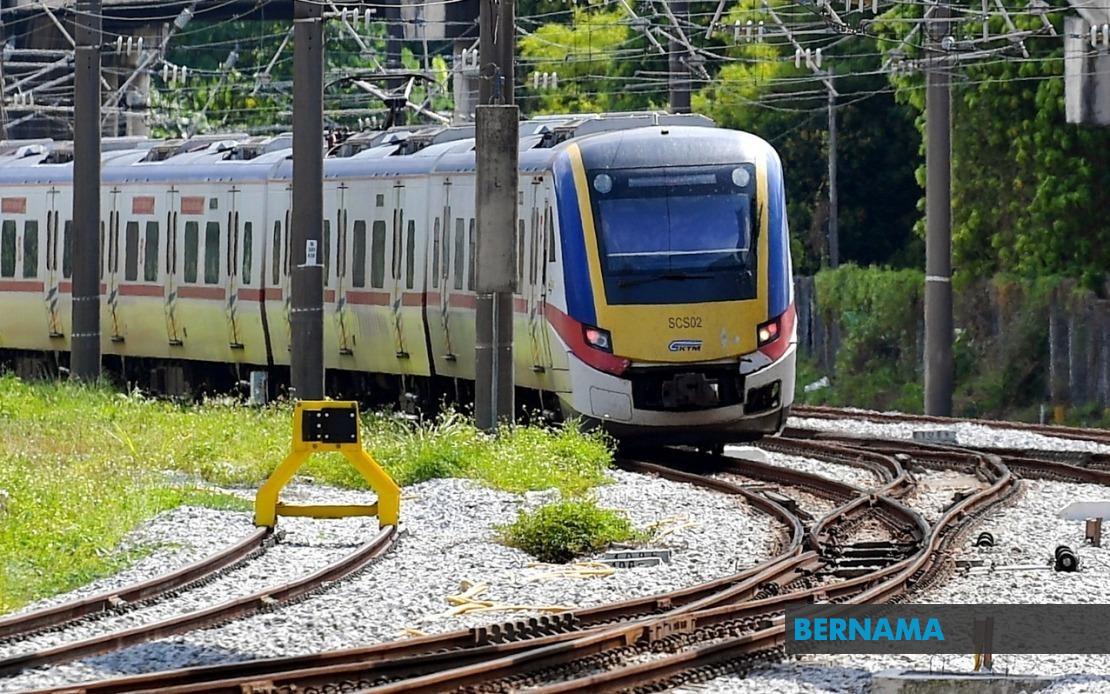
Keretapi Tanah Melayu Berhad (KTMB) is mobilising significant additional rail capacity to manage the anticipated travel surge during the National Day celebrations and concurrent school holidays. The state-owned rail operator has announced 124 new services, collectively providing 38,944 additional seats, across its premium Electric Train Service (ETS) and EMU Plus networks. Tickets for these supplementary journeys became available immediately, enabling travellers to plan their holiday movements well in advance.
The bulk of the expansion targets the flagship ETS network, which will see 100 additional services deployed across two separate operational windows. From August 21 to 23, and again from August 28 to 31, followed by a final push from September 4 to 6, the ETS will carry an extra 31,600 passengers. This strategic scheduling aligns with school holiday calendars and the Merdeka Day festivities on August 31, recognising that Malaysian families typically mobilise during these peak periods. The additional services represent a substantial commitment of rolling stock and operational resources, reflecting KTMB's determination to prevent the bottlenecks that historically characterise holiday travel.
Complementing the ETS expansion, KTMB is deploying 24 supplementary EMU Plus services, adding 7,344 seats to this premium commuter offering. These services will operate selectively throughout the August 21 to September 6 window, with a notable enhancement involving extended operations to Bandar Tasik Selatan. This southern expansion addresses growing residential and commercial development in the Klang Valley's expanding suburbs, signalling KTMB's responsiveness to evolving passenger geography. The EMU Plus brand caters to commuters seeking enhanced comfort above standard urban rail services, and this holiday augmentation underscores the diversity of travel demand across Malaysia's rail network.
Northern Peninsular Malaysia receives complementary attention through KTM Komuter's expansion on the crucial Padang Besar-Butterworth-Padang Besar route. Eight additional daily services operating from August 27 to 31 will elevate the route to 46 daily services, a significant uplift for communities in Kedah and Perlis dependent on cross-border and regional connectivity. This northern corridor enhancement reflects KTMB's network-wide philosophy of proportional capacity expansion, ensuring that holiday travel relief extends beyond the densely-trafficked Kuala Lumpur-Ipoh axis.
The timing of this deployment is strategically significant. Malaysia's August-September period sees convergence of multiple travel motivations: students returning to schools and universities after mid-year breaks, Merdeka Day pilgrimages to Kuala Lumpur, and extended family gatherings during the school holiday window. KTMB's capacity response, therefore, addresses a genuine operational challenge rather than merely reactive overcrowding management. By announcing services six weeks ahead and opening ticket sales immediately, the operator provides travellers with certainty and the opportunity to coordinate journeys, potentially smoothing demand distribution across multiple days rather than concentrating passenger numbers on specific peak dates.
The expansion occurs against a backdrop of impressive ETS performance metrics. Since launching on August 12, 2010, the Electric Train Service has evolved from a single Kuala Lumpur-Ipoh route into a comprehensive network spanning Butterworth in the north and Padang Besar on the Thai border, with southern expansion planned for late 2025. Accumulated ridership has reached 44.3 million passengers across its operational lifespan. More strikingly, the first seven months of 2024 recorded 3.67 million passengers, representing a 56 percent surge compared to 2.36 million in the corresponding 2023 period. This trajectory demonstrates that Malaysian intercity rail travel is experiencing genuine demand growth, not merely recovering from pandemic suppression.
KTMB group chief executive officer Datuk Azlan Shah Al Bakri contextualised the expansion as validation of customer confidence in rail transport reliability. The operator's confidence in deploying substantial capacity during peak periods reflects institutional maturation—not merely adding trains during holidays, but doing so strategically and transparently. His comments positioned rail expansion within broader national infrastructure development, suggesting that KTMB views itself as a strategic transport backbone rather than a legacy operator managing decline. The ETS's trajectory from experimental service to mass-market transport option represents a significant Malaysian transport policy success, vindicating investments in rail infrastructure over the past fifteen years.
Symbolically, KTMB's concurrent customer appreciation campaign—offering vouchers, promotional meals, discount tickets, and special fares marking the ETS's sixteenth anniversary—reinforced brand loyalty and acknowledged passenger support during its growth phase. These gestures, seemingly peripheral to operational expansion, signal management's recognition that customer confidence constitutes operational capital. In the competitive Southeast Asian transport environment, where budget airlines and private vehicle ownership offer alternatives to rail travel, maintaining passenger loyalty requires genuine service improvements coupled with tangible recognition of customer patronage.
For Malaysian and regional observers, KTMB's capacity expansion illustrates several broader transport sector dynamics. First, it demonstrates that public rail operators capable of investing in modern infrastructure and managing operational complexity can command significant market share in intercity transport, competing effectively against private alternatives. Second, it reveals that demand for premium rail services—whether ETS or EMU Plus—is sufficiently robust to justify dedicated fleet deployment, suggesting that Malaysian consumers value comfort, predictability, and environmental benefits when pricing permits. Third, the coordinated expansion across multiple network segments indicates strategic planning capabilities at KTMB, moving beyond ad-hoc responses toward systematic capacity management.
Looking forward, KTMB's ambitious planned expansion southward by late 2025 will extend ETS coverage toward Johor Bahru, potentially unlocking new travel patterns and economic integration across the southern Peninsula. The current holiday season augmentation, therefore, should be understood as a tactical component within broader network development strategy. Each additional service deployed during peak periods generates operational data, customer feedback, and revenue that inform subsequent investment decisions. KTMB's 2024 holiday expansion thus represents not merely holiday logistics, but incremental progress toward establishing Malaysian rail travel as the preferred intercity transport mode across a modernising network.

