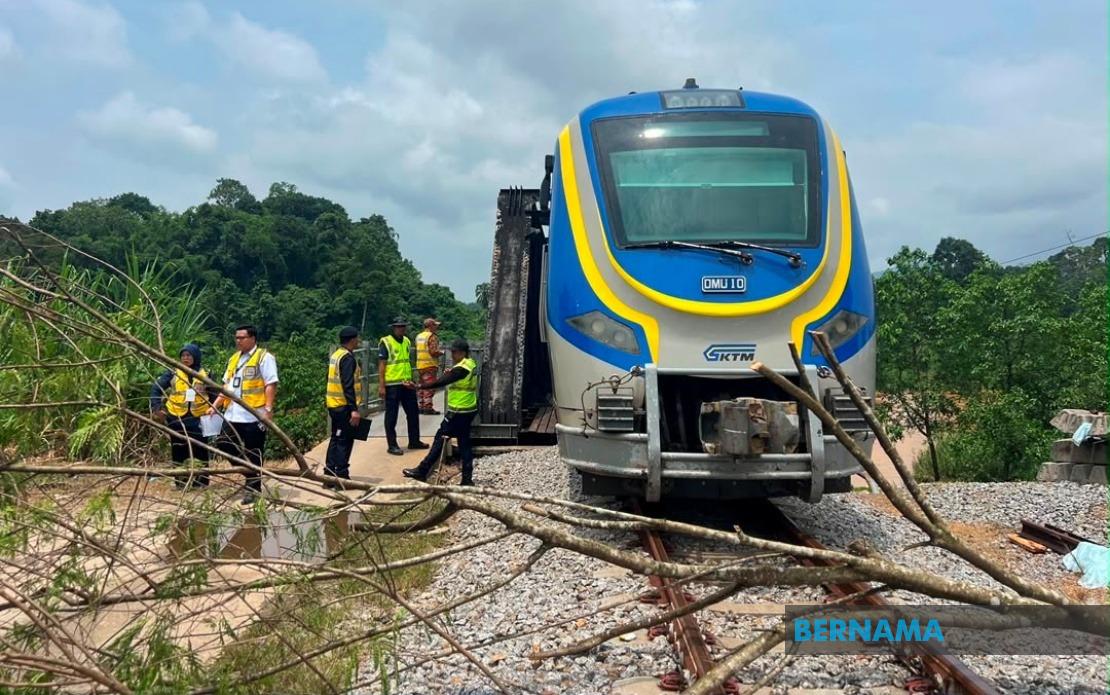
Keretapi Tanah Melayu Berhad (KTMB) has undertaken a comprehensive emergency response exercise on the EX-Kemubu railway route near Kuala Krai, with particular emphasis on three critical operational challenges: the logistical difficulties of reaching remote railway sections, the speed of rescue team mobilisation, and the effectiveness of crisis communication protocols. The training scenario reflects growing recognition within Malaysia's rail sector that geographical isolation poses distinctive risks that standard urban-based emergency procedures may not adequately address.
Khairul Naim Johdi, KTMB's general manager for occupational safety, health and environment, framed the drill as an essential diagnostic exercise given the line's unique vulnerabilities. The EX-Kemubu corridor, which includes the Dabong-Kemubu stretch, traverses terrain characterised by proximity to waterways and significant distance from major arterial roads. These geographic features mean that conventional emergency response timelines, calibrated for more accessible routes, require substantial adjustment. Rural railway incidents therefore demand anticipatory planning that accounts for extended access windows and the consequent need for enhanced on-site decision-making authority and passenger care protocols.
The training mobilised approximately 350 personnel representing eleven separate agencies, creating a complex coordination architecture that reflected real-world emergency response complexity. The Royal Malaysia Police, Malaysian Fire and Rescue Department, Ministry of Health, Malaysian Civil Defense Force, and Department of Social Welfare all fielded teams, underscoring the multi-jurisdictional nature of railway emergency management. This inter-agency structure, while comprehensive, also introduces coordination challenges that the training specifically aimed to surface and resolve through practical simulation.
KTMB's evaluation methodology emphasised systematic post-incident review, drawing feedback from all participating organisations regarding response sequence, bottlenecks, personnel actions during initial response phases, access route adequacy, and information flow accuracy and timeliness. This structured debriefing approach transforms each drill from a mere procedural checkbox into a genuine operational learning opportunity. The analysis will likely highlight specific friction points where communication delays accumulate or where multiple agencies' operational protocols create inefficiencies rather than synergy.
The selection of EX-Kemubu as the training location was deliberate and strategically sound. The route encompasses multiple risk categories simultaneously: elevated water hazard exposure, remote positioning, limited road accessibility, and sparse local emergency infrastructure. By stress-testing protocols in this environment, KTMB obtains data about system performance under worst-case conditions. Findings from such remote-area drills prove more transferable to other challenging sections than exercises conducted on well-serviced urban routes where assistance arrives rapidly regardless of procedural precision.
KTMB's institutional approach to emergency preparedness extends beyond individual annual large-scale drills. The organisation conducts smaller, targeted exercises throughout the calendar year, distributed across its four operational regions on a rotational basis. This layered training architecture reflects maturity in emergency management thinking—large-scale exercises test system integration and inter-agency coordination, while smaller targeted drills maintain staff proficiency and allow incremental protocol refinement without requiring massive resource mobilisation. The annual rotation across regions ensures equitable preparation and regional staff rotation opportunities.
Khairul Naim highlighted that rural accessibility remains the most stubborn operational challenge facing rail emergency response. Unlike urban incidents where multiple access points and abundant external resources converge quickly, remote railway incidents require pre-positioned capability and enhanced passenger care duration. He specifically identified the necessity for improved internal coordination mechanisms and notification procedures that compress the time interval between incident detection and agency notification. In practical terms, this translates to simplified incident reporting protocols, pre-authorised emergency contact cascades, and potentially enhanced on-site triage and stabilisation capability among train personnel.
The emergency preparedness framework extends into broader operational domains beyond reactive response. KTMB staff undergo sustained training in procedural execution, including passenger evacuation methodologies adapted to different train configurations and remote settings. Procedure documentation requires regular review and scenario-based testing to ensure instructions align with actual operational capabilities and staff training levels. This preventive dimension—ensuring staff possess the knowledge and confidence to implement emergency procedures effectively—proves as important as external rescue coordination.
The incident command structure positions KTMB's operations control centre as the critical information hub. Train staff encountering emergency situations initiate contact with the operations controller rather than directly contacting external agencies, a centralised approach that prevents conflicting or duplicative notifications and ensures consistency in information escalation. The operations controller then disseminates details to relevant rescue and medical agencies with appropriate urgency coding and logistical context. This protocol relies on operations centre staff possessing sufficient training and decision-making authority to correctly classify incidents and determine appropriate resource requirements.
For the Dabong-Kemubu route specifically, the training drill ensures that all personnel—both KTMB employees and external agency partners—understand their designated responsibilities within the coordinated response architecture. Real incidents demand rapid, organised action where multiple actors perform interdependent functions without confusion or redundancy. The drill methodology essentially creates a shared mental model of the incident response sequence, allowing diverse organisations with different standard procedures and communication protocols to function cohesively under pressure. This alignment proves particularly valuable in rural settings where communication may be intermittent and improvisation inevitable.
The implications extend beyond KTMB's immediate operational requirements to broader considerations within Malaysia's rail transport governance. As railway networks extend into less densely populated regions, and as existing routes age, railway operators increasingly confront the reality that emergency preparedness requires fundamentally different approaches in remote versus urban contexts. The systematic evaluation process Khairul Naim described—encompassing access analysis, response timing assessment, and inter-agency feedback integration—generates institutional knowledge that informs policy decisions about maintenance scheduling, personnel deployment, and infrastructure investment priorities.
For Malaysian commuters and freight users, the Kemubu route emergency drill signals that KTMB treats remote-area operational safety as requiring equivalent rigour to urban mainline management. The level of preparation evident in the 350-person exercise and the analytical depth applied to evaluation outcomes provides evidence that services operating in less accessible regions maintain comparable safety standards. This becomes particularly significant for rural communities that depend on KTMB connectivity, where reassurance about emergency preparedness may influence public confidence in rail transport reliability.

