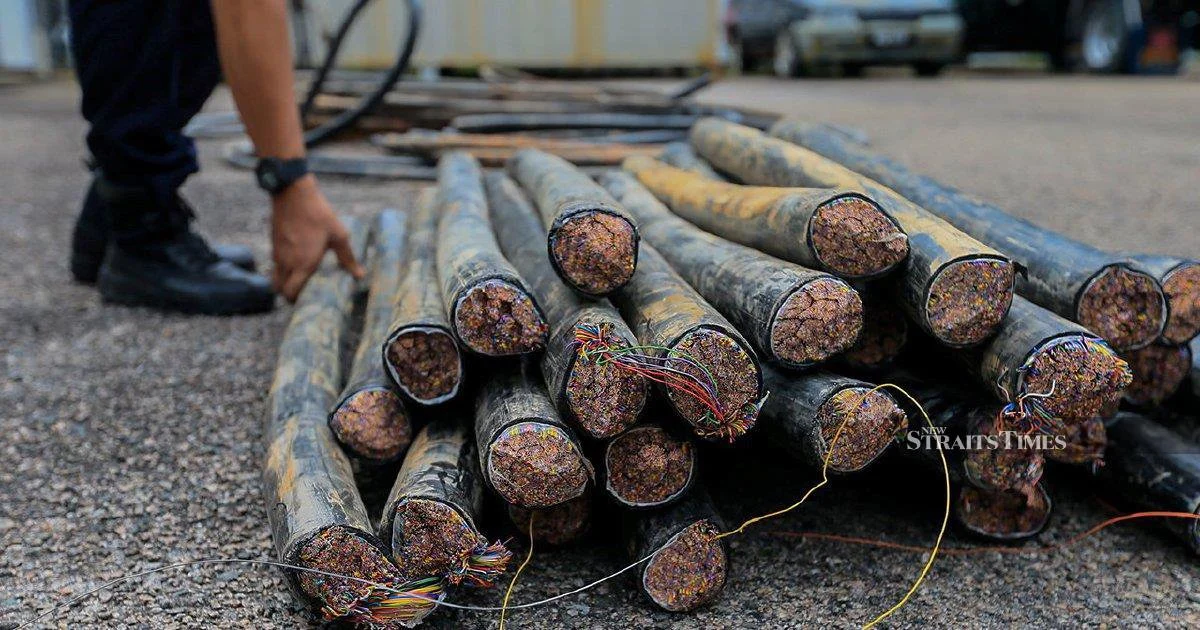
Kuala Lumpur's ongoing battle against copper and electrical cable theft is showing tangible progress, with police documenting a marked reduction in reported incidents during the opening months of 2025. The drop represents a significant departure from previous years when the lucrative black market for scrap metals drove criminals to systematically strip infrastructure across the city. This improvement, reflected in official figures, comes as authorities intensify their crackdown on organised theft rings that have historically targeted telecommunications networks, power distribution systems, and construction sites throughout the federal territory.
The statistics paint an encouraging picture for residents and businesses. Between January and May this year, police recorded 71 cable theft reports—a dramatic decrease from the 205 cases documented throughout the entirety of 2025. This represents approximately a 65 per cent reduction compared to the full-year figure, suggesting that targeted enforcement operations and preventive measures are beginning to disrupt criminal networks that have operated with relative impunity. The improvement is particularly significant given that cable theft has plagued urban centres across Malaysia, frequently disrupting telecommunications and electricity services that citizens depend on daily.
Police have also made progress in apprehending suspects involved in these crimes. So far this year, authorities have arrested 85 individuals suspected of involvement in cable theft operations. These arrests span various roles within the criminal hierarchy, from street-level thieves who physically remove cables to intermediaries who facilitate sales to scrap metal dealers. The enforcement effort reflects a more comprehensive approach than simply reacting to individual incidents—authorities appear to be targeting the entire supply chain that enables the theft-to-resale pipeline.
The reduction in cable theft incidents carries practical implications for ordinary Malaysians. When theft of telecommunications infrastructure occurs, it can leave entire residential neighbourhoods without internet connectivity for extended periods, disrupting work-from-home arrangements, online education, and emergency communications. Similarly, power cable theft creates safety hazards and forces utility companies to undertake expensive emergency repairs that ultimately increase operational costs passed to consumers. The decline therefore suggests measurable improvements in service reliability for residents.
Understanding the mechanics of this black market reveals why the police effort matters. Copper and aluminium cables contain valuable metals that scrap dealers purchase at premium prices, creating financial incentives for criminals despite the significant risks involved. Organised theft rings typically operate during nighttime hours, targeting accessible infrastructure in less-populated areas where they can work without immediate detection. The coordination required to identify targets, execute thefts, and move stolen materials to dealers suggests these are often sophisticated operations rather than opportunistic crimes.
The 85 arrests already made this year demonstrate police commitment to disrupting supply chains rather than merely investigating individual thefts. By pursuing dealers and intermediaries alongside street-level perpetrators, authorities are attacking the demand side of the equation. When criminals cannot easily convert stolen cables into cash, the economic incentive diminishes. This approach has proven effective in other jurisdictions that have targeted metal recycling operations and implemented stricter documentation requirements for scrap metal sales.
However, the figures warrant careful interpretation. The comparison between 71 cases in five months and 205 for an entire year requires context. If the January-May figure represents a true underlying rate, it would extrapolate to approximately 170 cases annually—still lower than the 2025 total but suggesting the improvement may reflect seasonal variations or concentrated enforcement during specific periods rather than permanent transformation. Maintaining momentum will require sustained police resources and continued pressure on criminal networks.
Community participation has likely contributed to the improved statistics. Public awareness campaigns encouraging residents to report suspicious activity near utility infrastructure, combined with neighbourhood watch initiatives, provide police with intelligence that enables proactive intervention. When communities recognise cable theft as a problem affecting service reliability and safety, citizens become force multipliers for law enforcement. This cooperative approach distinguishes effective crime reduction from purely reactive policing.
The progress in Kuala Lumpur offers a template potentially applicable across Malaysia's major urban centres. Cities including Selangor, Penang, and Johor have experienced similar cable theft epidemics that disrupt development and service provision. The strategies deployed in the federal territory—targeted arrests, supply chain disruption, and community engagement—could be adapted and applied elsewhere. Regional coordination would amplify effectiveness, as criminals can relocate operations to jurisdictions perceived as less aggressively policed.
Looking forward, sustaining this improvement depends on several factors. Continued police dedication is essential, as is legislative support for penalties that genuinely deter offenders. Utility companies must invest in theft-prevention measures including surveillance systems, protective caging, and rapid response protocols. Additionally, stricter regulation of scrap metal dealers—requiring verification of material origin and maintaining detailed transaction records—further constrains the black market that drives cable theft. When multiple actors across the enforcement and commercial ecosystem align efforts, the combined effect becomes substantially greater than any single intervention.
The decline in cable theft cases demonstrates that organised crime affecting infrastructure, while persistent, is not immutable. With focused enforcement, community support, and comprehensive supply chain management, police can materially improve public safety and service reliability. As Kuala Lumpur continues this trajectory, the lessons learned provide valuable guidance for maintaining security across Malaysia's critical infrastructure.