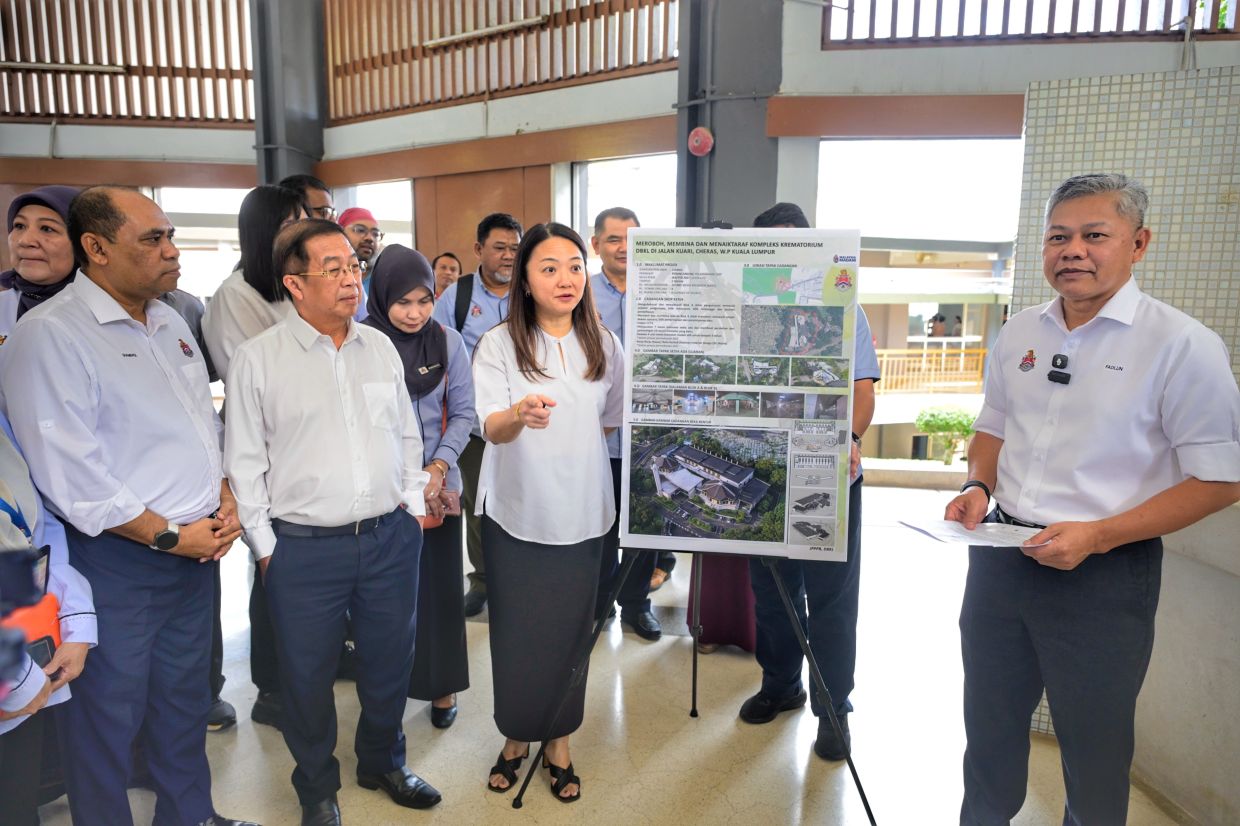
Kuala Lumpur's only municipally-operated crematorium will undergo a major transformation to accommodate the religious needs of the capital's expanding non-Muslim communities. The Jalan Kuari facility in Cheras is poised for a RM45 million upgrade that will significantly expand its capacity, with construction set to commence in February next year and continue for approximately two years. According to Datuk Seri Fadlun Mak Ujud, the mayor of Kuala Lumpur, this initiative represents a critical response to the changing requirements of residents in Malaysia's federal capital.
The enhancement scheme centres on the addition of three new cremation units to complement the seven currently operational at the complex. To ensure continuity of services throughout the renovation period, the facility will maintain four active cremation units even as construction proceeds. This careful scheduling reflects City Hall's recognition of the essential nature of these services to the communities that depend on them. The decision to stagger operations during the upgrade phase demonstrates a commitment to minimising disruption to grieving families who rely on the crematorium during difficult times.
City Hall's investment forms part of a broader strategic initiative to modernise the capital's essential infrastructure and public amenities. The project has received formal approval under the framework of the 13th Malaysia Plan, underscoring its status as a priority development within the national economic strategy. This alignment with national planning demonstrates that policymakers at both federal and municipal levels recognise the importance of maintaining diverse, well-functioning facilities that serve the multicultural populations of urban centres.
The Cheras crematorium has operated continuously since 1977, making it a half-century-old facility serving one of Southeast Asia's most diverse cities. Despite its age, the complex has maintained a substantial workload, processing more than 5,800 cremations annually according to official figures from Kuala Lumpur City Hall. These numbers illustrate not only the essential role the facility plays but also the demographic reality that non-Muslim communities represent a significant and growing segment of the capital's population.
Cheras Member of Parliament Tan Kok Wai emphasised the urgency of expediting the project during the recent site visit, highlighting that infrastructure built decades ago struggles to meet contemporary demands. He pointedly noted that the facility's age combined with Kuala Lumpur's expanding population creates a pressing need for expanded capacity. His intervention signals parliamentary awareness of and support for this infrastructure initiative, suggesting cross-party recognition of the importance of adequate funeral and cremation services regardless of religious affiliation.
The upgrade initiative reflects a broader pattern of municipal governance focused on inclusive public services. As Malaysia's capital continues to evolve, the presence of well-maintained facilities catering to different religious practices strengthens social cohesion and demonstrates respect for the nation's diversity. The crematorium exemplifies infrastructure that, while not politically prominent, carries significant weight in community welfare and dignified end-of-life services.
Minister in the Prime Minister's Department (Federal Territories) Hannah Yeoh, who attended the site visit, underscored the federal government's commitment to addressing associated infrastructure challenges throughout the federal territories. She revealed ongoing discussions between federal and Selangor state authorities to identify suitable locations in Semenyih for establishing Muslim cemeteries. This parallel initiative acknowledges that Kuala Lumpur faces a distinct spatial constraint limiting its capacity to expand burial grounds domestically, requiring creative cross-border solutions that involve neighbouring jurisdictions.
The crematorium expansion addresses one dimension of a broader capacity challenge affecting the capital's death-care infrastructure. As metropolitan Kuala Lumpur's population continues expanding and demographic changes alter the composition of residents, both cremation and burial facilities experience mounting pressure. The inability to expand cemeteries within Kuala Lumpur's boundaries reflects the highly urbanised, densely developed nature of the federal territory, where land availability for such purposes remains severely constrained.
For residents and religious organisations serving non-Muslim communities in Kuala Lumpur, this investment carries practical significance extending beyond mere numbers. Extended waiting times for cremation services create hardship for bereaved families navigating grief while managing logistical complexities. Enhanced capacity directly translates into reduced delays, more dignified handling of ceremonies, and smoother coordination between funeral service providers and the municipal facility. The upgrade therefore addresses not only demographic necessity but also service quality considerations.
The RM45 million expenditure positions this upgrade within a hierarchy of public spending priorities, reflecting City Hall's judgment that modernising this facility warrants substantial resource allocation. The two-year timeline suggests a carefully planned construction sequence designed to minimise operational disruption whilst achieving comprehensive improvements. During this period, the facility will continue serving the capital's cremation needs whilst transitioning to enhanced capabilities.
From a policy perspective, this upgrade demonstrates how municipal authorities navigate the challenge of serving diverse populations with adequate infrastructure. Singapore, another multicultural Southeast Asian city-state, has similarly invested in modern cremation facilities to serve its Hindu, Buddhist, Sikh, and Christian populations. Kuala Lumpur's approach parallels such regional examples, suggesting that well-governed cities recognise funeral services as infrastructure worthy of strategic investment.
Looking ahead, the completed project will position Kuala Lumpur's cremation infrastructure more comfortably within the capacity range required by contemporary demographic patterns. The three additional units will collectively represent a 43 percent increase in cremation capacity, a significant expansion reflecting projected growth in the capital's population and evolving needs across its diverse communities. As the facility modernises, it will incorporate contemporary operational practices and likely improved environmental management standards.

