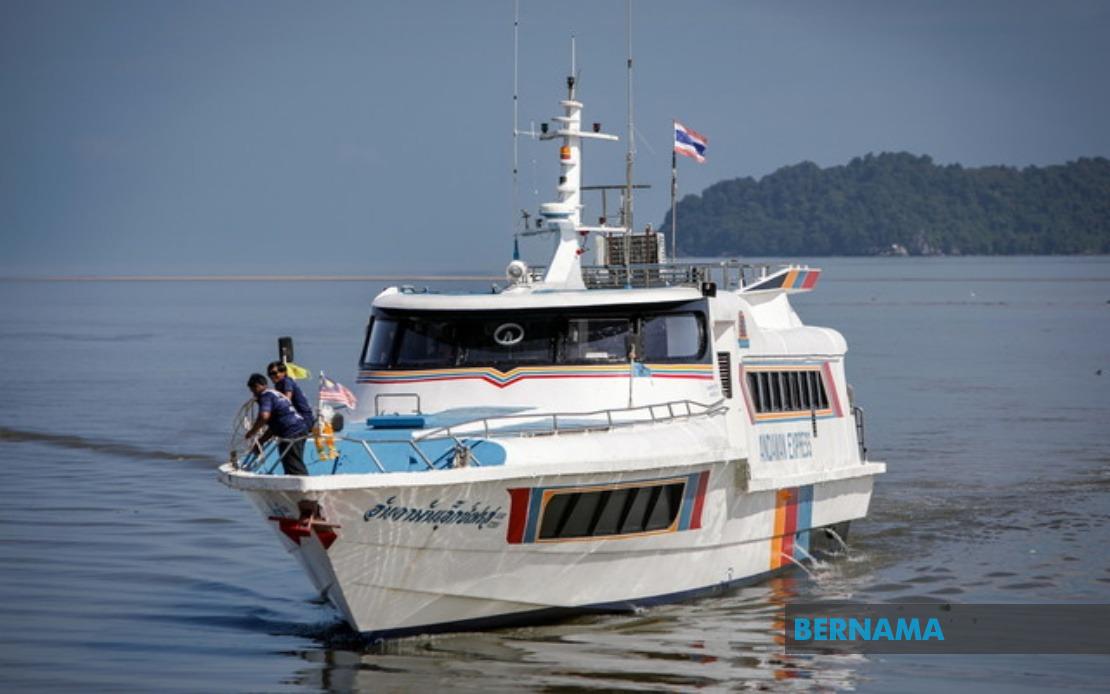
The Kuala Perlis-Satun ferry service will resume operations on Thursday, July 9, marking the end of a three-year hiatus caused by the coronavirus outbreak. The revival of this maritime link promises to unlock fresh opportunities for regional tourism development and economic growth across the Malaysia-Thailand border, with officials on both sides viewing the restart as a catalyst for deeper cooperation among key geopark destinations in the region.
Perlis Menteri Besar Abu Bakar Hamzah has positioned the ferry's return as the cornerstone of an expanded tourism framework linking three UNESCO-designated geoparks: Perlis Geopark on the Malaysian side and Satun UNESCO Global Geopark and Langkawi UNESCO Global Geopark. This tripartite arrangement reflects a strategic shift towards packaging the northern region as a cohesive geotourism destination, allowing visitors to experience geological and cultural heritage across three interconnected zones without the friction of lengthy border procedures. Abu Bakar outlined these ambitions during a simulation exercise conducted at Tammalang Jetty in Satun, where officials stress-tested operational procedures ahead of the formal launch.
The establishment of a joint coordinating committee drawing representatives from all three jurisdictions represents an institutional commitment to sustained cooperation. Rather than treating the ferry as a mere transport convenience, the authorities envision it as a platform for sharing best practices in sustainable tourism, heritage conservation, and visitor management. Such arrangements are critical in Southeast Asia, where uncoordinated tourism development often leads to environmental degradation and cultural commodification. The committee structure suggests the three areas are conscious of these pitfalls and intend to move deliberately rather than opportunistically.
Fare pricing and affordability emerge as central considerations in the reopening strategy. Abu Bakar revealed that the state government is actively engaging ferry operators to maintain competitive pricing while exploring promotional rates during the launch phase. These discussions underscore a recognition that high ticket prices could undermine adoption of the new route, particularly among regional travellers for whom cost sensitivity remains paramount. The initial approach of single daily sailings, with frequency increasing based on actual demand, reflects a cautious commercial strategy that avoids overcommitting infrastructure to untested passenger flows.
Infrastructure enhancements at the Malaysian terminus underscore the commitment to operationalising this corridor. Upgrading works at the Kuala Perlis Roll-on-Roll-off (Ro-Ro) Terminal, including a dedicated ferry operation route, signal investment aimed at improving facility quality and throughput. These improvements matter not merely for logistical efficiency but as symbolic gestures demonstrating that Malaysia is seriously bidding for transnational tourism traffic. Regional visitors, particularly those from Thailand and other neighbouring countries, often judge infrastructure quality as a proxy for professionalism and safety.
Safety and regulatory compliance have been thoroughly tested through simulation exercises. Abu Bakar confirmed that all operational aspects, including safety protocols and standard operating procedures, functioned smoothly during trial runs, with security agencies from both nations demonstrating readiness. This methodical approach contrasts with some hastily reopened routes that encountered teething problems. The involvement of the Royal Malaysian Customs Department, Malaysian Immigration Department, Marine Department, and allied security agencies indicates that neither government is cutting corners on border management or maritime safety, despite commercial incentives to fast-track operations.
The three-year dormancy caused by the pandemic provides instructive context for assessing the ferry's renewed prospects. The service's ability to remain dormant for such an extended period without permanent closure speaks to its fundamental importance as a cross-border link. Had it been economically marginal, closure might have been permanent. Its resurrection reflects genuine confidence among both Malaysian and Thai officials that pent-up demand exists for improved regional connectivity and that tourism markets in Southeast Asia have sufficiently recovered post-pandemic to sustain such services.
For Malaysian travellers and regional businesses, the ferry's reopening reduces reliance on longer overland routes through Perlis. Tourists seeking to combine visits to Satun's pristine islands and limestone formations with experiences at Langkawi or Perlis Geopark gain a more convenient transit option. The service also facilitates same-day or multi-day regional itineraries that would otherwise require extensive ground transportation, thereby opening commercial opportunities for tourism operators, guides, accommodation providers, and F&B establishments across the three zones.
The geopolitical dimension merits consideration. Cross-border ferry services represent visible affirmations of bilateral goodwill and functional cooperation. In an era when Malaysia-Thailand relations occasionally face friction over maritime boundaries and fisheries, a thriving civilian tourism corridor sends a countervailing message of neighbourliness and mutual benefit. Such projects, while ostensibly commercial, carry soft power value for both governments by demonstrating their ability to deliver tangible improvements in citizens' lives and facilitate people-to-people exchange.
The timing of this reopening also aligns with broader Southeast Asian tourism recovery trends. International visitor arrivals to the region have rebounded significantly post-pandemic, with travellers increasingly seeking experiential and adventure tourism rather than mass-market beach resort experiences. Geotourism—focused on geological heritage—is a fast-growing niche within this landscape, and the Perlis-Satun-Langkawi corridor is well-positioned to capitalise on this trend. The geopark branding adds educational and conservation dimensions that appeal to discerning visitors concerned with sustainable tourism practices.
Operational sustainability will depend on steady passenger uptake and willingness among regional residents and repeat visitors to adopt the ferry as a preferred mode of cross-border travel. Success metrics extend beyond raw passenger numbers to include foreign exchange earnings, employment creation in port services and tourism support sectors, and longer-term destination reputation. If the service operates reliably, maintains safety standards, and delivers competitive pricing, it could catalyse further regional integration projects and position northern Malaysia as a serious player in Southeast Asian geotourism markets.

