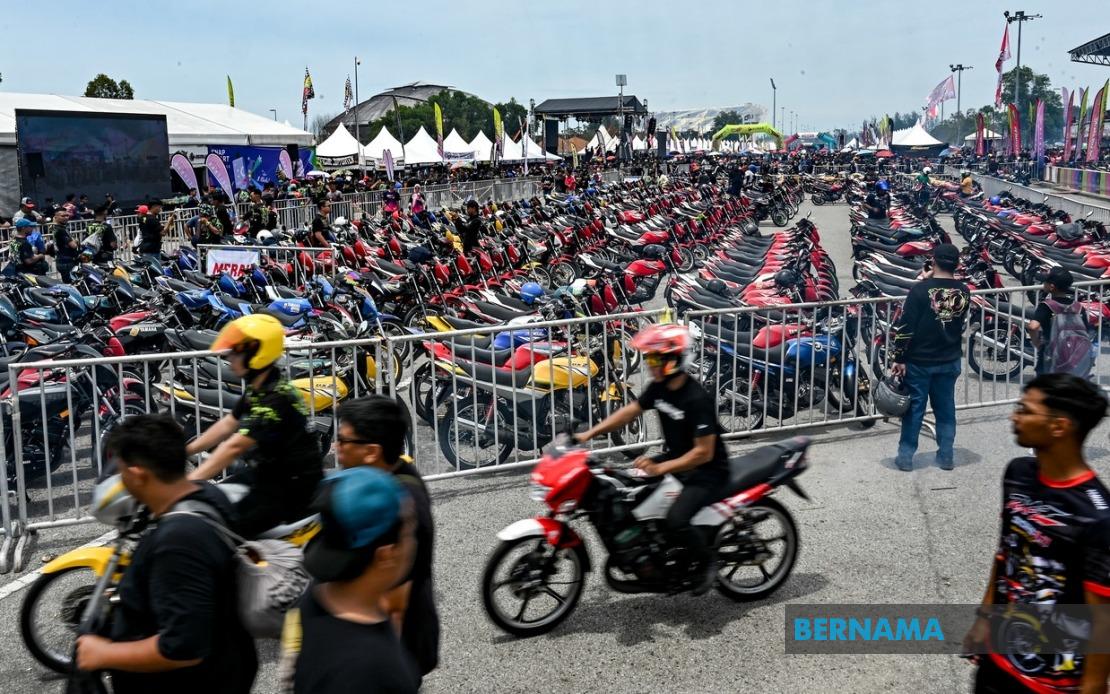
The Kuala Terengganu City Council (MBKT) has revealed substantial expenditure totalling RM40,000 on waste management operations following the RXZ Members 8.0 event held at Gong Badak Motor Racing Circuit near Kuala Nerus over the weekend. The cleanup effort, which concluded shortly after the programme wrapped up on Saturday, underscores the environmental challenges posed by large-scale public gatherings in the state capital, even when venues are equipped with waste collection infrastructure.
According to Kuala Terengganu Mayor Lizan Che Mamat, the financial outlay encompassed staff overtime compensation, supplementary waste transportation cycles, and extended operational hours at the Sungai Ikan landfill facility. Despite comprehensive rubbish bin placement throughout the venue, attendees persisted in depositing litter haphazardly across the racing circuit grounds. The council's expenditure reflects not merely the volume of waste generated, but the labour-intensive nature of remediation efforts required to restore public spaces following mass gatherings.
The cleanup operation retrieved approximately 130 tonnes of solid waste from the event site, with discarded food and beverage packaging constituting the predominant portion of collected material. This volume necessitated MBKT to deploy additional waste collection vehicles beyond its standard operational capacity and mandate its personnel to undertake extended shifts to maintain municipal cleanliness standards. The scale of debris recovery provides a tangible measure of the environmental footprint generated by events drawing triple-digit thousands of participants.
While acknowledging that attendance figures exceeded 100,000 people, the mayor pointed out that insufficient rubbish receptacles alone do not justify indiscriminate littering. Lizan emphasised that waste disposal protocols existed, and attendees should have utilised designated collection points rather than abandoning refuse throughout the premises. This statement reflects a tension inherent in municipal management: balancing the practical limitations of infrastructure provision against reasonable expectations regarding public environmental responsibility.
Conversely, Lizan recognised that event organisers may have underestimated attendance volumes when planning waste containment measures. The discrepancy between anticipated and actual participant numbers suggests that organisers, when projecting infrastructure needs, failed to anticipate the magnitude of public interest. Such planning shortfalls have cascading consequences, shifting unanticipated financial burdens onto local authorities already operating under budgetary constraints.
Moving forward, MBKT has signalled its intention to implement mandatory solid waste management protocols for large-scale event approvals. Organisers would be required to submit comprehensive waste management frameworks detailing collection strategies, receptacle placement, and post-event remediation procedures as prerequisite conditions for municipal approval. This regulatory tightening represents a proactive measure to prevent recurrence of costlier cleanup episodes and to distribute environmental stewardship responsibilities more equitably between private event managers and public authorities.
Additionally, the council is contemplating revisions to cleaning deposit schemes currently imposed on event organisers. By potentially restructuring these financial arrangements, MBKT aims to recover a greater proportion of cleanup expenses from those generating the waste, thereby alleviating the fiscal burden absorbed by taxpayers. Such deposit mechanisms serve dual purposes: they incentivise organisers to invest in superior waste management infrastructure, and they create financial disincentives against negligent planning that subordinates environmental considerations to attendance maximisation.
Lizan stressed the council's openness to hosting major events, recognising their potential to generate tourism revenue and stimulate local economic activity. Terengganu, positioning itself as a regional destination for motorsports, entertainment, and cultural gatherings, stands to benefit substantially from attracting high-attendance programmes. However, the mayor articulated a crucial caveat: economic benefits must be pursued without compromising environmental standards or imposing disproportionate costs on municipal infrastructure and workforce.
The cleanup episode illustrates a broader challenge confronting Malaysian municipalities as events grow increasingly ambitious in scale. Cities across the region—including Kuala Lumpur, Penang, and Johor Bahru—face similar dynamics whereby large-scale public gatherings generate substantial waste streams, demand surge in collection services, and test the resilience of established disposal infrastructure. The financial expenditure in Kuala Terengganu, while significant, represents merely one municipality's experience; aggregated costs across Malaysia's event venues would reveal a substantial hidden subsidy flowing from taxpayers to event organisers and attendees.
The incident also raises questions about civic consciousness and environmental stewardship among Malaysian event participants. The persistence of littering despite adequate bin provision suggests that awareness campaigns and behavioural change initiatives remain ineffective for certain population segments. This observation points toward the necessity for multi-pronged approaches combining regulatory enforcement, deposit mechanisms, public education, and design interventions that make littering more inconvenient than proper waste disposal.
For Terengganu specifically, the RM40,000 expenditure should catalyse conversations among stakeholders—local government, event organisers, corporate sponsors, and attendees—regarding shared responsibility for maintaining public spaces. The state's tourism aspirations depend partly on environmental quality and visitor perceptions of municipal cleanliness. Future events will likely incorporate more stringent waste management requirements and potentially higher participation costs to recoup environmental remediation expenses, representing a structural shift in how Malaysian cities approach large-scale entertainment and sporting gatherings.

