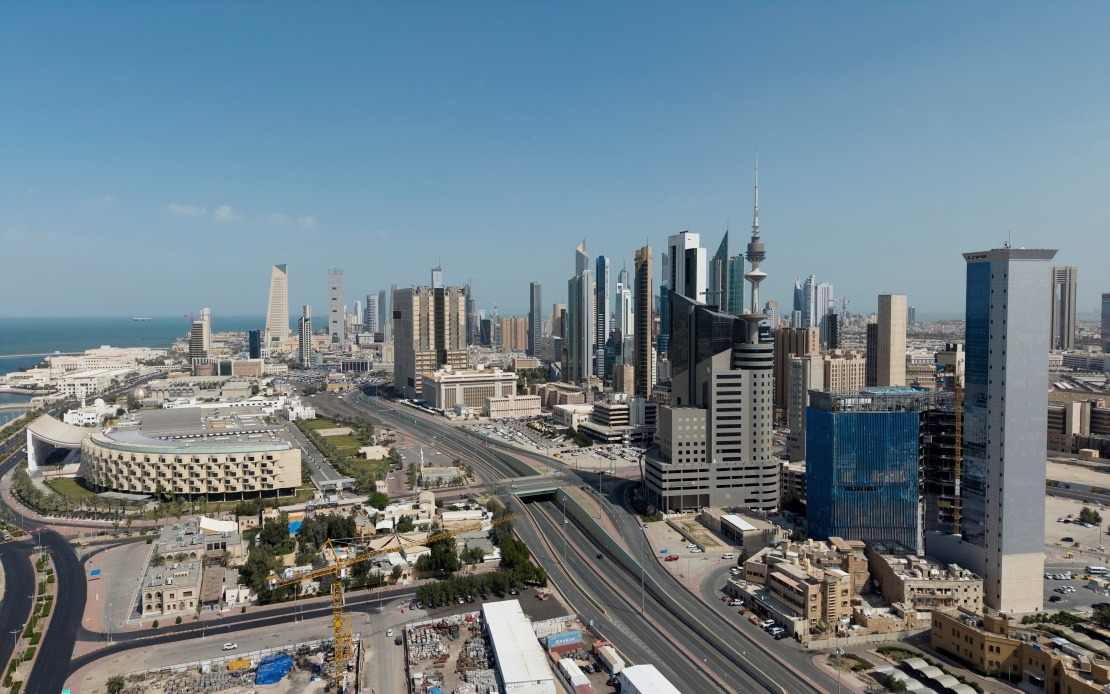
Kuwait has launched a dedicated emergency response fund capitalized at US$100 million to address the urgent reconstruction needs arising from infrastructure damage sustained during recent regional conflict. The initiative, announced on Sunday, represents a significant financial commitment by the Gulf state to stabilize its economy and rebuild critical facilities impacted by what Kuwaiti authorities characterize as external aggression.
The Kuwait Emergency Response Fund was formally established under the administration of the Kuwait Fund for Arab Economic Development (KFAED), an institution with a long track record of financing development projects across the Arab world. According to Foreign Minister Sheikh Jarrah Jaber Al-Ahmad Al-Sabah, the fund operates as a comprehensive emergency financing mechanism designed to strengthen Kuwait's institutional capacity for crisis response and recovery. The creation of this dedicated financial instrument reflects broader regional anxieties about economic disruption and the need for structured approaches to managing infrastructure damage.
Kuwait's experience with regional instability has made it acutely aware of the importance of rapid-response mechanisms for economic shocks. The emergency fund addresses this vulnerability by establishing a framework that allows swift assessment and prioritization of reconstruction projects. Rather than ad-hoc responses to infrastructure crises, the KFAED-administered fund provides predictability and systematic evaluation of financing needs across government agencies and the private sector.
The backdrop for this initiative involves escalating tensions that saw the United States and Israel conduct coordinated military strikes against Iran on February 28. These operations prompted a significant retaliation from Tehran, which launched waves of missile and drone attacks targeting Israeli locations and American military installations in the broader Middle Eastern region. Kuwait, located in this volatile geography, faces exposure to potential fallout from these exchanges, making emergency preparedness a practical concern.
Acting Director General Waleed Al-Bahar emphasized that establishment of the fund implements a cabinet-level decision, underscoring its status as a government priority rather than a peripheral initiative. The KFAED will assume responsibility for evaluating incoming financing requests from entities seeking support for reconstruction efforts. This administrative structure ensures that capital allocation follows transparent criteria and that resources flow toward projects offering the greatest benefit to Kuwait's economic recovery and resilience.
For Malaysian and Southeast Asian observers, Kuwait's proactive stance on emergency financing offers instructive lessons. Nations in this region face their own vulnerability to economic shocks stemming from geopolitical disruption, supply chain interruption, and infrastructure damage. Kuwait's model of pre-establishing dedicated financing mechanisms with clear governance structures provides a template that regional governments might adapt to their specific circumstances.
The fund's explicit invitation for government institutions and private sector organizations to contribute capital signals Kuwait's intention to build a broad financing coalition rather than relying solely on state resources. This approach recognizes that reconstruction demands often exceed what government treasuries can sustain independently. By creating an accessible framework for private capital participation, Kuwait positions the fund as a genuine partnership instrument capable of mobilizing resources across the economy.
The timing of the fund's launch reflects growing recognition within the Gulf Cooperation Council states that infrastructure resilience requires advance planning rather than reactive measures. Previous episodes of regional instability have demonstrated the economic costs of delayed reconstruction and the competitive disadvantages that emerge when critical facilities remain damaged or dysfunctional. Kuwait's initiative thus represents a shift toward more sophisticated economic governance.
For international investors and development partners, the fund provides a structured channel for supporting Kuwait's recovery efforts while maintaining rigorous project evaluation standards. The involvement of KFAED, which has extensive experience assessing development proposals across multiple countries, adds credibility to the fund's operational framework and suggests that capital will be deployed according to technical merit and economic impact rather than political favoritism.
The broader implications extend beyond immediate reconstruction needs. By establishing this financial mechanism during a period of heightened tension, Kuwait signals confidence in its long-term economic trajectory and commitment to maintaining functional infrastructure even amid regional turbulence. This positioning matters for Kuwait's ability to attract and retain business investment, particularly in sectors dependent on reliable power, water, and transportation systems.
Regional analysts note that Kuwait's approach differs from purely defensive measures by focusing on positive capital deployment for reconstruction. Rather than simply absorbing losses from conflict-related damage, the fund framework enables Kuwait to direct resources toward upgrading infrastructure while addressing immediate repair needs. This dual purpose potentially positions Kuwait to emerge from the current crisis period with modernized facilities.
The fund also reflects Kuwait's broader development strategy within the Gulf region. As oil-dependent economies face long-term pressure to diversify revenue sources, maintaining robust physical infrastructure becomes increasingly central to competitiveness in non-energy sectors. An emergency fund that keeps infrastructure functioning and enables rapid upgrades supports Kuwait's diversification objectives by ensuring that logistics, telecommunications, and other foundational systems remain competitive.
Looking forward, the success of Kuwait's emergency fund will likely influence how other Gulf states approach their own infrastructure resilience. As regional instability persists, the ability to rapidly mobilize capital for reconstruction while maintaining investment in ongoing development becomes a critical competitive advantage. Kuwait's decision to formalize this capacity through a dedicated institution may prove influential across the Gulf Cooperation Council.

