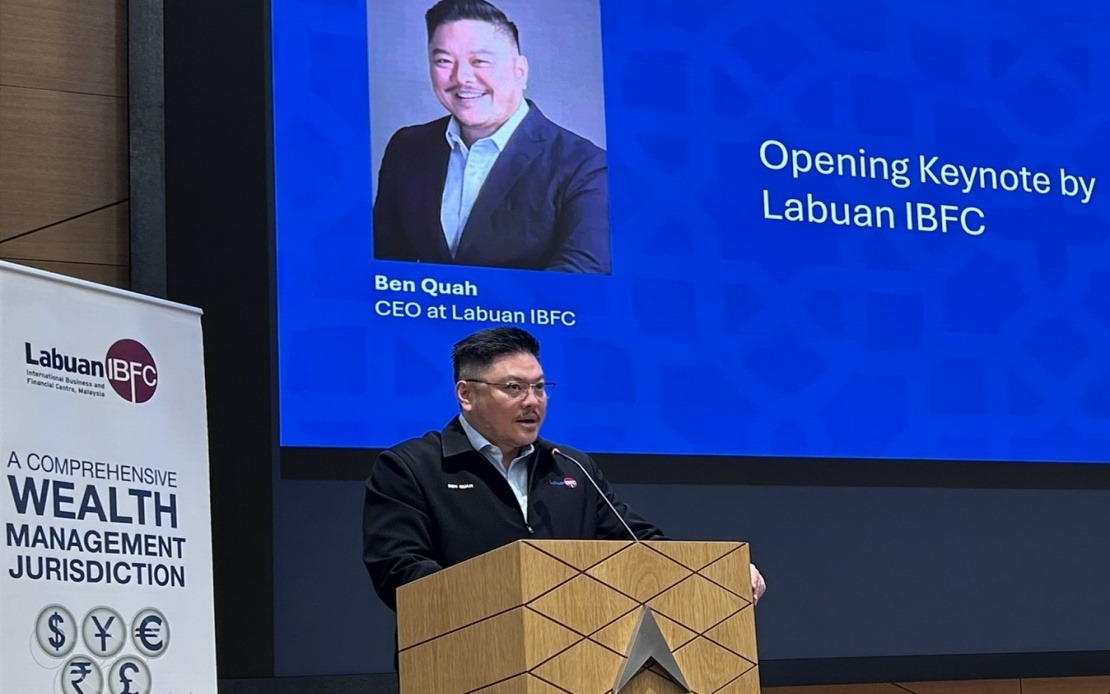
Three prominent industry bodies have partnered to elevate Islamic wealth planning practices across Southeast Asia, recognising the growing complexity of managing assets across international borders while adhering to Shariah principles. Labuan IBFC Incorporated Sdn Bhd, working alongside the Association of Shariah Advisors in Islamic Finance Malaysia (ASAS) and the Society of Trust and Estate Practitioners (STEP) Malaysia, organised the Islamic Wealth & Legacy Forum 2026 in Kuala Lumpur this month. The collaborative effort signals a coordinated regional response to what practitioners increasingly describe as a critical gap in professional standards governing how Muslim families structure, preserve and transfer wealth across generations.
The forum's central theme—"Beyond Faraid: Islamic Wealth Governance, Labuan Structures and Legacy Continuity"—reflects a fundamental reframing of how Islamic estate planning is understood in contemporary practice. Faraid, the traditional Islamic inheritance framework based on Quranic prescriptions, remains foundational to Muslim wealth transfer, yet practitioners now recognise it as one component within a much broader ecosystem of planning tools. The deliberate positioning of estate administration "beyond faraid" underscores how globalised Muslim families require sophisticated instruments including trusts, takaful products and structured entities to achieve outcomes consistent with both Shariah principles and modern wealth management realities. This conceptual shift has profound implications for how Malaysian professionals must now equip themselves with expertise spanning Islamic jurisprudence, trust law, tax optimisation and international governance frameworks.
Ben Quah, chief executive of Labuan IBFC Inc, positioned the centre as a strategic platform addressing what he characterised as an emerging tension in Islamic wealth management: the need for flexible, asset-protective structures operating across jurisdictions while maintaining fidelity to Shariah governance. Labuan's offshore financial centre status, combined with its regulatory framework accommodating Islamic finance, creates specific advantages for cross-border family wealth structures that would face complications under purely domestic arrangements. For Malaysian wealth creators with international exposure—whether through expatriate earnings, overseas investments or multi-national business interests—this positioning offers a structurally legitimate pathway to consolidate complex assets. The Labuan framework potentially serves as a neutral intermediary jurisdiction where wealth can be reorganised and managed without undermining either Islamic legal requirements or tax efficiency objectives.
Farah Deba, chairing the STEP Malaysia branch, articulated a nuanced understanding of how three distinct professional communities contribute complementary expertise to Islamic wealth planning. STEP practitioners bring generational experience advising families on succession structures and administrative mechanisms. Labuan IBFC contributes the international dimension, particularly relevant as Malaysia's Muslim population increasingly maintains assets and interests beyond national borders. ASAS, representing Shariah scholars and advisers, ensures that whatever structures professionals recommend remain grounded in authentic Islamic jurisprudence rather than merely appearing compliant. This tripartite structure acknowledges that rigorous Islamic wealth planning cannot be outsourced to any single discipline—it requires genuine interdisciplinary collaboration where financial, legal and religious expertise genuinely inform each other rather than operating in parallel tracks.
The forum's substantive sessions addressed the practical challenges that emerge when theoretical principles encounter real-world complexity. A dedicated segment on "Beyond Faraid—The Real Challenges in Muslim Estate Administration" confronted the gap between ideal Islamic succession arrangements and implementation challenges that commonly derail inheritance planning. These challenges typically include documenting intentions with sufficient legal clarity, navigating conflicts between Islamic principles and local probate law, managing situations where beneficiaries span multiple jurisdictions with different legal frameworks, and ensuring executors possess both Islamic knowledge and administrative competence. For Malaysian practitioners and families, these obstacles prove particularly acute given that Malaysia's legal system blends Islamic and common law principles, creating hybrid scenarios where inheritance law differs between Muslims governed by state Islamic law and non-Muslims under civil law. Resolving these tensions requires expertise that most traditional estate planners lack.
A central focus examined how governance structures and proper documentation ensure wealth arrangements align with Shariah requirements throughout implementation. This emphasis reflects recognition that many Islamic wealth plans fail not through faulty initial conception but through deficient execution where heirs lack clear understanding of arrangements, executors misinterpret instructions, or structures drift from their Shariah moorings as circumstances change. Comprehensive documentation serving both legal and religious purposes—covering not merely the disposition of assets but the Islamic reasoning underlying each arrangement—creates institutional memory that transcends individual decision-makers. Such documentation proves particularly valuable for family offices managing substantial wealth across multiple generations, where the original wealth creator's intentions might otherwise become obscured or distorted. Malaysian families establishing formal governance structures increasingly recognise that Shariah compliance is not a one-time certification but an ongoing institutional practice requiring documented policies, regular review and qualified oversight.
The forum's afternoon sessions concentrated on implementation mechanisms, exploring how liquidity planning, takaful insurance, trust structures and other vehicles can operationalise wealth preservation and intergenerational transfer objectives. Panellists outlined how different instruments address specific challenges—takaful products managing mortality and liability risks while maintaining Islamic compatibility, trusts enabling separation of beneficial interest from legal ownership, and specialist Labuan entities accommodating complex multi-jurisdictional family structures. For Malaysian wealth managers counselling high-net-worth clients, this expanded toolkit becomes essential. Traditional approaches focused on straightforward asset division often prove inadequate for families with significant property holdings, business interests, international investments and multiple branches. The forum's exploration of layered structures—potentially combining domestic assets held under Islamic law with offshore components managed through Labuan vehicles—suggests how sophisticated planners can achieve comprehensive wealth governance that Malaysian-only arrangements cannot accommodate.
Yusaini Yusof, representing ASAS, emphasised that Shariah governance serves not as an external compliance requirement but as the foundational principle ensuring Islamic wealth planning fulfils its ultimate purpose within Islamic jurisprudence—advancing Maqasid Shariah, or the higher objectives of Islamic law. This formulation reconceptualises what it means to plan within Islamic frameworks. Rather than viewing Shariah governance as a constraint limiting planning options, practitioners increasingly understand it as a positive framework directing planning toward outcomes that strengthen family bonds, preserve wealth for vulnerable dependents, support charitable objectives and maintain ethical business practices. This philosophical grounding matters considerably because it determines whether Islamic wealth planning becomes routine technical activity or remains animated by values-driven commitment. For Malaysian professionals and families, this distinction proves consequential—Islamic wealth planning undertaken with authentic understanding of its purposes generates greater stakeholder commitment and institutional resilience than arrangements pursued merely for tax or liability considerations.
The partnership between Labuan IBFC Inc and ASAS, formalised through a memorandum of understanding, represents structural institutionalisation of what previously remained episodic collaboration. By creating ongoing governance mechanisms for cooperation between the financial centre and Shariah advisory community, this partnership suggests that serious Islamic wealth planning cannot be improvised through ad-hoc consultations but requires institutional frameworks ensuring consistent standards. The engagement extends beyond formal MOU signatories to encompass STEP Malaysia and the wider professional community, recognising that excellence in Islamic wealth planning depends on ecosystem-wide elevation of practice. For Malaysia's financial services industry, this collaborative model offers a template for how competing organisational interests can align around shared commitment to professional excellence and client outcomes.
The forum's timing reflects broader shifts in how Muslim-majority societies approach Islamic finance and wealth management. As Islamic finance matures beyond its initial phase as an alternative banking option, practitioners confront increasingly sophisticated questions about how Islamic principles apply in complex multi-jurisdictional wealth scenarios. Malaysia, as a regional Islamic finance hub, faces particular responsibility for developing authoritative frameworks and professional standards that can be exported regionally as Southeast Asian wealth creators increasingly adopt Islamic structuring approaches. The collaboration between Labuan IBFC, ASAS and STEP Malaysia positions Malaysia not merely as a financial centre but as a thought leader developing and disseminating best practices in Islamic wealth governance.
For Malaysian wealth creators, financial advisers and legal professionals, the implications extend significantly beyond the specific forum discussions. The coordinated effort signals that Islamic wealth planning has transitioned from niche speciality to mainstream professional practice requiring integrated expertise. Practitioners who continue compartmentalising Islamic governance as separate from estate planning, tax optimisation and asset protection will increasingly find their advice inadequate for clients whose circumstances demand comprehensive approaches. The forum essentially ratifies a new standard of practice—one where Islamic wealth planning represents genuine integration of financial, legal and religious expertise rather than superficial compliance-focused overlays applied to conventional structures. Malaysian professionals and families engaging seriously with Islamic wealth planning going forward should expect practitioners to operate with this integrated framework rather than accepting less rigorous approaches.
The Association of Shariah Advisors' commitment to "continue supporting this journey for greater engagements and increased professionalism of the wider Shariah fraternity and practitioners" suggests ongoing evolution of professional standards. This evolution matters particularly for Malaysia, where Shariah governance frameworks continue developing through regulatory innovation and scholarly consensus. The forum likely represents one node in broader dialogue reshaping how Islamic finance regulation, professional standards and practice excellence interconnect across Southeast Asia's Muslim-majority jurisdictions. As Malaysian practitioners and wealth creators engage with these evolving standards, they position themselves advantageously both domestically and regionally for sophisticated wealth management arrangements that maintain rigorous Islamic compliance while achieving contemporary financial objectives.

