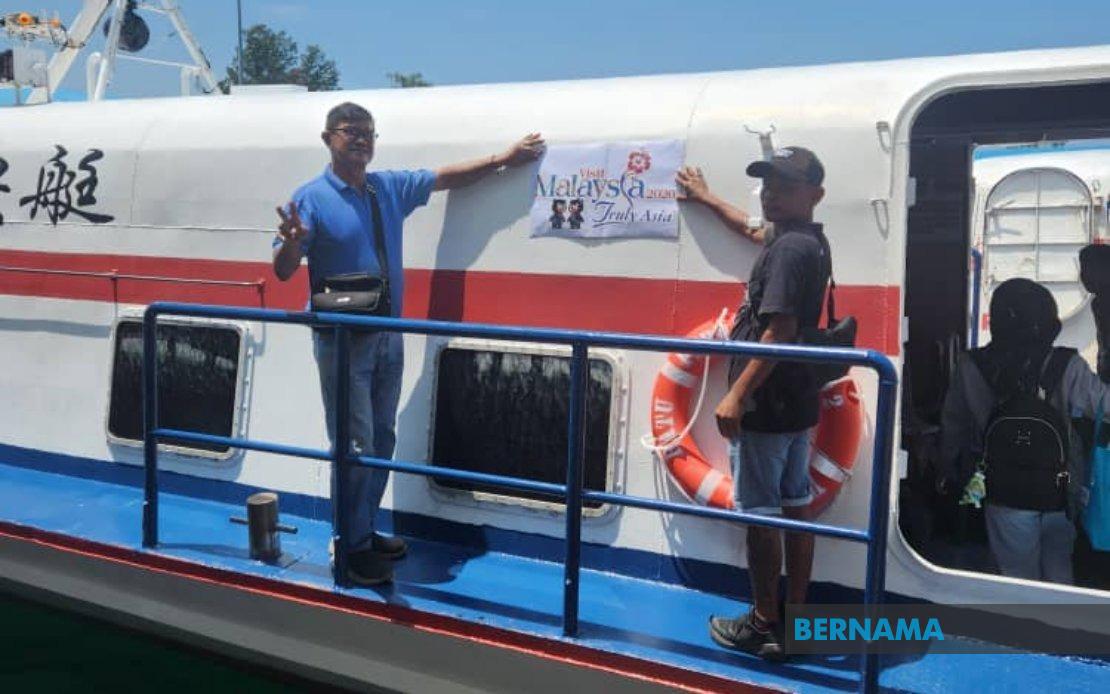
The decades-old passenger ferry service connecting Labuan and Lawas in Sarawak ceased operations on July 14, marking an unprecedented disruption to a maritime transport corridor that has served the region continuously for more than thirty years. RPL Shipyard Co, the service operator, announced a three-month suspension lasting until October 14, citing multiple operational and financial challenges that have rendered the service economically unviable under current conditions.
The suspension represents a significant disruption to regional connectivity, as the Labuan-Lawas route has long formed a critical artery for inter-state travel across Brunei and Sarawak's northern regions. LDA Holdings Sdn Bhd, which manages the Labuan International Ferry Terminal, officially acknowledged receipt of the suspension notice from the operator. The terminal's chief executive officer, Noor Halim Zaini, indicated that management intended to engage directly with RPL Shipyard to understand the underlying issues and chart a recovery pathway for the troubled service.
According to RPL Shipyard's formal notification, the suspension stems from an interlocking series of operational pressures. Persistent difficulties in securing reliable diesel supplies have undermined the company's ability to maintain consistent scheduling and service quality. Simultaneously, the operator confronts an escalating cost structure, particularly in labour and vessel maintenance expenses, which has eroded already thin profit margins. The company argues that existing passenger fares no longer generate sufficient revenue to offset these mounting expenditures, creating an unsustainable financial position that necessitates temporary withdrawal from the market.
The ferry service holds particular significance for Sarawak's student population pursuing higher education across the border in Labuan. Universiti Malaysia Sabah and Labuan Matriculation College have historically relied on the ferry as an affordable transport option for students from Lawas and surrounding districts. The suspension threatens to impose substantial additional costs and logistical complications for these students, potentially forcing them to explore alternative, more expensive transport modes such as road travel via longer routes or aviation services.
Beyond education, the service fulfills an essential healthcare function for residents across Lawas and neighbouring communities. Labuan Hospital has traditionally served as a regional medical centre, accessible via the ferry for patients requiring specialised treatment unavailable locally. The suspension creates immediate access challenges for vulnerable populations dependent on cross-border medical services, particularly those lacking means for alternative transport arrangements.
The economic fundamentals underlying this crisis reflect broader challenges confronting regional maritime transport operators across Southeast Asia. Fuel price volatility has particularly impacted small-scale ferry operators with limited ability to absorb cost fluctuations or negotiate favourable fuel supply contracts. The Labuan-Lawas operator's struggle mirrors similar pressures affecting ferry services throughout the region, where marginal routes struggle to reconcile rising input costs against fare structures constrained by competition from alternative transport modes and affordability expectations of lower-income users.
The diesel supply disruptions cited by RPL Shipyard warrant particular attention, as fuel logistics represent a chronic vulnerability for remote maritime services. Operating in the Sabah-Sarawak border region creates inherent supply chain complications, with limited infrastructure for efficient fuel distribution to smaller regional ports. These supply-side challenges interact with the macroeconomic pressures of operating cost inflation, creating a compounding crisis that temporary cost management cannot resolve.
RPL Shipyard's stated intention to restructure operations and stabilise its financial position during the suspension period suggests the company hopes to return once conditions improve. This recovery plan presumably involves negotiations with fuel suppliers, operational efficiency improvements, and possibly fare adjustments. However, the company's articulation of a three-month timeline indicates uncertainty about resolution timeframes, hinting that underlying structural issues may prove more intractable than temporary disruptions.
The suspension raises urgent questions about governmental support mechanisms for essential regional transport services that, while socially vital, operate on economically challenging routes. Both Malaysian and Sarawak authorities have potential roles in stabilising such services through subsidy arrangements, fuel supply guarantees, or regulatory frameworks that permit fare adjustments. The precedent of three decades of continuous operation suggests that prior operational models, however constrained, proved sufficiently viable to maintain service continuity until very recent circumstances shifted the balance.
For Labuan's role as a regional education and healthcare hub, the ferry suspension exposes vulnerabilities in cross-border accessibility infrastructure. Overdependence on single transport links, particularly maritime routes vulnerable to fuel supply disruptions, creates systemic risks for populations across Lawas and adjacent areas. The suspension underscores the interconnectedness of regional transport planning, with service interruptions in one jurisdiction cascading into consequences throughout Brunei and northern Sarawak.
Stakeholders including educational institutions, healthcare providers, and resident communities now confront immediate adaptation challenges. Students must arrange alternative transport at greater expense and inconvenience, healthcare access faces barriers particularly for patients with mobility constraints, and Lawas residents contemplating Labuan travel must evaluate costly detours. These individual disruptions aggregate into broader economic and social costs distributed across disadvantaged populations typically dependent on affordable public transport.
The three-month suspension window provides critical opportunity for stakeholders to engage proactively with RPL Shipyard and relevant authorities in developing sustainable recovery measures. Whether the service ultimately resumes depends on resolution of diesel supply vulnerabilities, achievement of cost stabilisation through operational restructuring, and potentially rate adjustments reflecting contemporary economic realities. The next three months will determine whether a thirty-year transport tradition can adapt to contemporary challenges or whether Labuan-Lawas connectivity must transition to alternative transport modalities.

