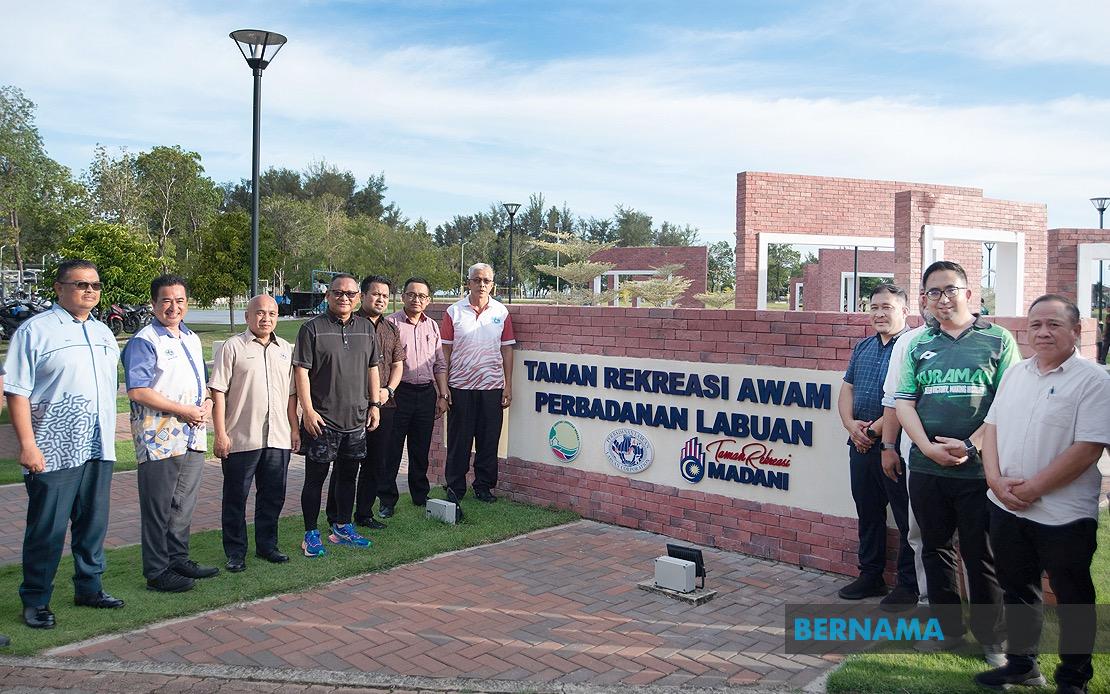
Labuan has taken a significant step toward fostering healthier and more socially connected communities with the inauguration of its revamped Public Recreation Park at Tanjung Purun, situated centrally within the Federal Territory. The transformation, which cost RM495,382 and falls under the broader Madani Recreation Park initiative, represents a deliberate effort to reclaim underused public space and convert it into a vibrant leisure destination for residents and visitors alike.
Rithuan Ismail, chief executive officer of Labuan Corporation, emphasised during the opening ceremony that the park epitomises the organisation's broader vision of creating inclusive public environments where residents of varying ages and fitness levels can engage in physical activity, unwind, and strengthen interpersonal bonds within their communities. The project, he explained, was not merely about adding recreational infrastructure but about cultivating a culture of wellness that permeates daily life in Labuan.
The funding originated from the National Landscape Department under the purview of the Ministry of Housing and Local Government (KPKT) in 2024. This backing allowed authorities to breathe new life into what had previously been the LDA Field—a prime downtown location that had deteriorated into relative obscurity despite its strategic positioning. The selection of this site was deliberate, reflecting considerations of accessibility, land availability, and the absence of complicated ownership disputes that often stall public development projects.
Prior to renovation, the site suffered from multiple deficiencies that discouraged public use. Inadequate illumination rendered evening visits unsafe and uninviting, while the range of recreational facilities fell short of meeting modern community expectations. Ageing casuarina trees dotted the landscape, creating hazards rather than aesthetic value. These cumulative shortcomings meant that despite occupying prime real estate in town, the area remained largely bypassed by the community.
The revamped facility now presents a markedly different character. A welcoming garden provides aesthetic appeal and a sense of arrival, while an 800-metre jogging track caters to fitness-minded residents seeking structured exercise spaces. Concrete seating throughout the grounds encourages rest and social gathering, and outdoor fitness equipment serves those preferring functional training to traditional gym environments. Taken together, these features have already positioned the park as an emerging focal point for evening leisure activities, particularly among those seeking outdoor alternatives to indoor recreation.
Expansion plans underscore Labuan Corporation's commitment to continuous improvement and responsiveness to community interests. Three additional courts designated for pickleball and sepak takraw are slated for completion by year's end, reflecting recognition that popular recreational pursuits deserve dedicated facilities. Pickleball's growing popularity across Southeast Asia, including Malaysia, indicates organisers are attuned to contemporary leisure preferences, while sepak takraw—a traditional Southeast Asian sport—ensures cultural relevance alongside modern offerings.
For Malaysian readers and regional observers, Labuan's initiative carries broader significance. As Federal Territories grapple with attracting and retaining residents amid competition from larger urban centres, investments in quality-of-life amenities become competitive differentiators. Recreation facilities that serve multiple demographics and purposes—from serious fitness pursuits to casual family outings—justify the public expenditure more convincingly than single-purpose infrastructure. The park's design reflects this understanding, with thoughtful provision for diverse user groups rather than narrow specialisation.
The emphasis on evening usage also acknowledges practical realities of work schedules and climate in tropical Malaysia. Daytime heat often relegates exercise and outdoor activity to early mornings or evenings; a well-lit, accessible park becomes genuinely valuable rather than merely ornamental infrastructure. This practical orientation suggests planners understood local context rather than importing generic recreation concepts.
Rithuan's appeal to the public to exercise stewardship over the facilities raises an important consideration often overlooked in development narratives. Infrastructure investment means little without community participation in its maintenance and preservation. His emphasis on collective responsibility reflects recognition that sustainability depends not solely on initial capital expenditure but on ongoing engagement and buy-in from those who benefit from improved amenities.
The broader Madani Recreation Park initiative, of which Labuan's project forms one component, indicates a coordinated national approach to addressing recreation deficits across urban areas. Multiple similar projects likely exist or are planned throughout Malaysia, suggesting systematic policy prioritisation of public health infrastructure rather than ad-hoc responses to community demands.
For Labuan specifically, the park addresses not only recreation needs but potential economic implications. Enhanced public amenities contribute to quality-of-life perceptions that influence residential choices and business investment decisions. Workers and entrepreneurs evaluating relocation to Federal Territories increasingly factor community infrastructure into deliberations; modern recreation facilities signal an administration attentive to resident wellbeing.
Looking forward, the success of this facility will likely hinge on whether community adoption meets projections and maintenance standards remain consistent. Parks that initially generate enthusiasm can deteriorate if governance lapses or user expectations exceed actual design capacity. Labuan Corporation's proactive stance on future enhancements suggests organisers understand this dynamic and remain committed to meeting evolving needs rather than treating the opening as project conclusion.