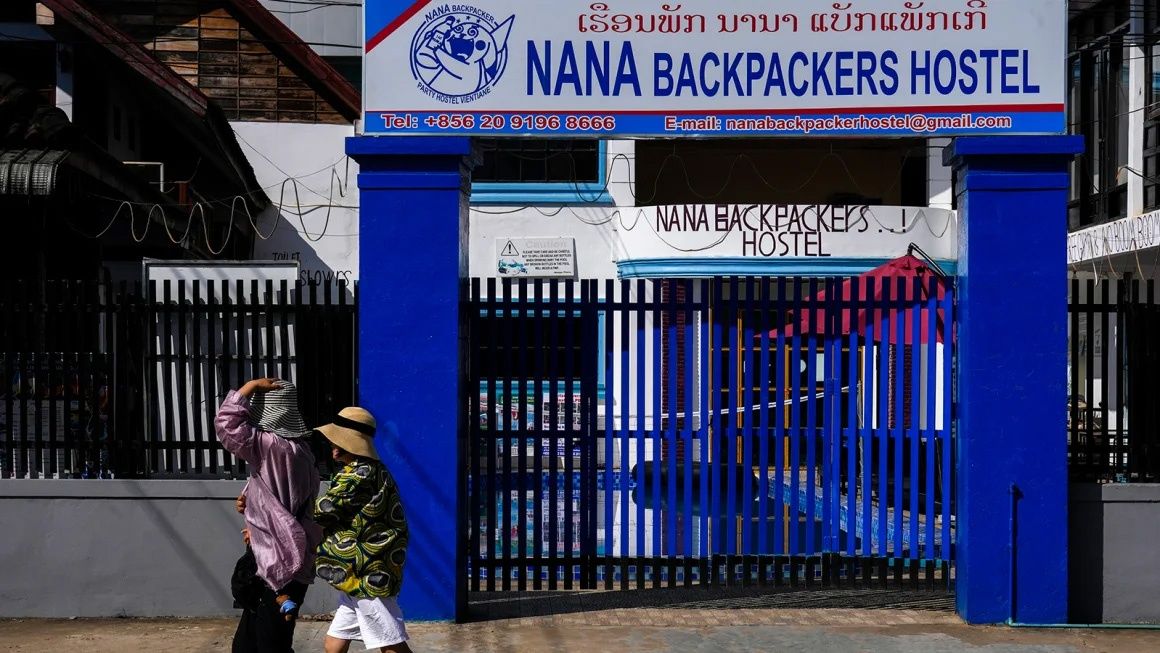
A Lao court has filed charges against a distillery owner linked to the deaths of six foreign tourists who consumed contaminated alcohol at a backpacker hostel in Vang Vieng last year. The charges, announced by Laos' Ministry of Public Security, carry potential penalties of three months to four years imprisonment and fines upon conviction, according to Denmark's foreign ministry on Friday. The development has triggered immediate backlash from affected nations and the victims' families, who view the prosecution as inadequate given the severity and scope of the tragedy.
The victims included two Danish women, Anne-Sofie Orkild Coyman, 20, and Freja Vennervald Sorensen, 21; Australian teenagers Bianca Jones and Holly Morton-Bowles, both 19; British lawyer Simone White, 28; and American citizen James Louis Hutson, 57. The six died after consuming what authorities have confirmed was methanol-contaminated alcohol served at the Nana Backpacker Hostel, a facility frequented by international visitors. The incident in November 2024 sent shockwaves through the backpacker community across Southeast Asia and raised urgent questions about safety standards in popular tourist destinations.
Laotian authorities have pursued charges of selling food harmful to health and operating an illegal business—offences that fall substantially short of more serious criminal categories. Significantly, the Lao government's statement indicated that the case will remain formally open for fifteen years, leaving scope for prosecutors to escalate to more grave charges such as negligent homicide if additional evidence emerges. However, this measured approach has done little to mollify international reaction, with multiple countries expressing dismay at what they perceive as a token response to mass deaths.
Denmark's Foreign Minister Lars Løkke Rasmussen articulated his nation's disappointment, stating that the indictment fails to capture the gravity and scale of the tragedy affecting numerous families across borders. While acknowledging the legal complexities inherent in establishing the burden of proof required for serious criminal charges, Rasmussen emphasised the difficulty of accepting such lenient prosecution given the circumstances. He committed to coordinating with affected families and other concerned governments to determine their next steps.
Australia's response has been particularly forceful. Prime Minister Anthony Albanese and Foreign Minister Penny Wong dispatched a senior envoy to Vientiane to formally lodge objections and underscore expectations for a comprehensive investigation yielding justice for the victims. Wong described herself as "deeply frustrated and bitterly disappointed" that authorities were not pursuing the most serious available charges. Australia's government also summoned Laos' ambassador to Canberra, signalling the diplomatic weight attached to the matter.
The families of the victims expressed profound anguish at the outcome. Michelle Jones, mother of Australian teenager Bianca Jones, spoke at a news conference ahead of the announcement: "It's like their lives didn't even matter. We're just really appalled by it all. You know, they were just going over to have a bit of fun and just doing the rite of passage that every, you know, child or teenager does. So for that outcome, it was just devastating." Shaun Bowles, father of Holly Morton-Bowles, warned that the Lao government's apparent indifference to tourist safety could deter visitors, particularly young Australians who form a significant portion of Vang Vieng's backpacker economy.
The Danish victims' parents revealed concerning gaps in investigation procedures. According to public broadcaster DR, they have received minimal information since their daughter's death in November. No autopsy was performed, and her death certificate attributed her death to the natural cause of cardiac arrest rather than methanol poisoning. The family emphasised that the young women had exercised caution throughout their travels and expressed determination to raise awareness about methanol poisoning risks, which many travellers remain ignorant about despite its global prevalence.
Methanol contamination in alcohol represents a widespread public health challenge across the developing world. Medical assistance group Doctors Without Borders reports that Indonesia, India and Russia record the highest incidence of suspected cases. The toxin enters the supply chain through multiple pathways: unscrupulous bar operators add it to mixed drinks as a cheaper substitute for ethanol, while it also emerges as a byproduct of poorly distilled home-brew liquor. In disreputable establishments, methanol can contaminate beverages either deliberately or through negligent production practices.
The Vang Vieng incident unfolded when the tourists consumed complimentary shots of Laotian vodka at the Nana Backpacker Hostel before proceeding to other venues. When the Australian teenagers failed to check out as scheduled, hostel staff discovered them incapacitated in their room. They were subsequently transferred across the border to hospitals in Thailand, where they died following treatment. The incident exposed vulnerabilities in Laos' regulatory oversight of establishments catering to international visitors and raised questions about whether local authorities adequately monitor alcohol production and distribution in popular tourist zones.
Laos occupies a complex position within Southeast Asia's geopolitical and economic landscape. As a landlocked, authoritarian one-party communist state and one of the region's poorest nations, it maintains tight information controls and limited transparency in judicial proceedings. Vang Vieng has cultivated a reputation among international backpackers as a premier destination for adventure sports and nightlife, attracting thousands of young travellers annually from Australia, Europe and North America. This economic dependence on tourism revenue may partly explain the cautious prosecutorial approach, though such considerations sit uneasily with international justice expectations.
The Lao government has restricted media coverage of proceedings, denying the Associated Press entry to official announcements. A request for comment from the Foreign Ministry resulted in notification that information would be disclosed only at a restricted news conference attended by local media and concerned foreign embassies—notably excluding international press. The limited accessibility reflects Laos' broader approach to information management and complicates international scrutiny of investigative and prosecutorial standards.
The charges filed represent merely the opening chapter in what promises to be an extended international dispute over accountability. With the case formally remaining open for fifteen years, possibilities exist for upgraded charges if investigators gather sufficient evidence. However, the initial prosecutorial decision signals troubling priorities that victims' families and their governments view as inconsistent with both the magnitude of loss and fundamental principles of justice. For Malaysia and other Southeast Asian nations attracting substantial backpacker tourism, the case underscores urgent needs for harmonised alcohol safety standards, rigorous enforcement, and mechanisms ensuring that tragic incidents receive proportionate legal responses.

