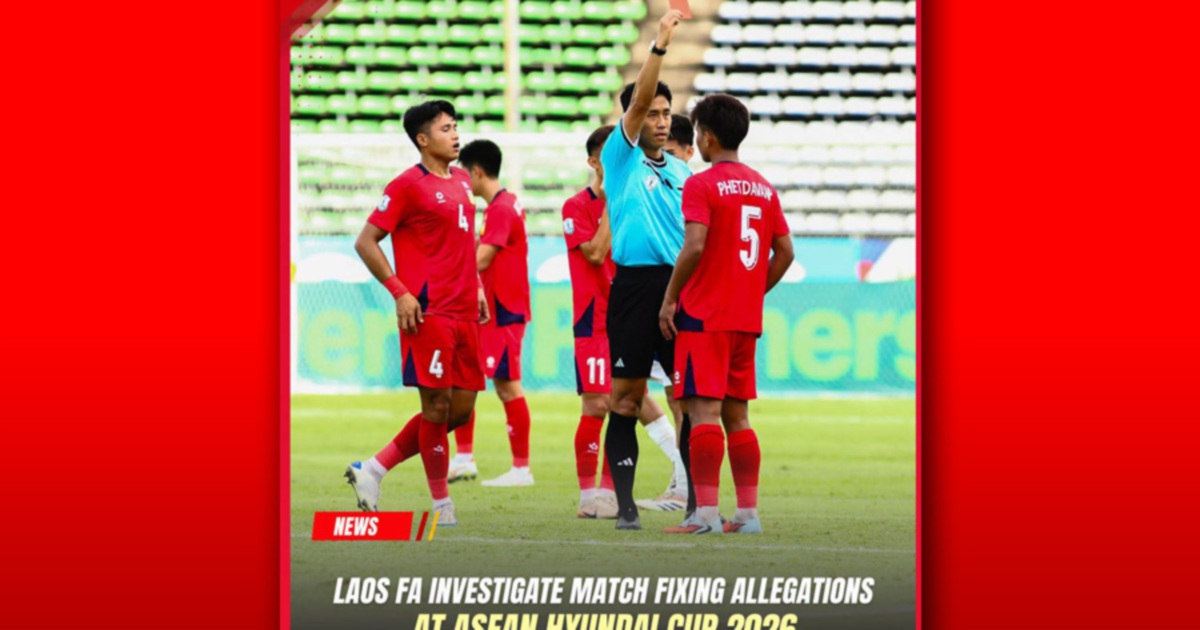
The integrity of Southeast Asian football faces a significant test following serious corruption allegations that have engulfed the Laos national team. The Lao Football Federation (LFF) has formally initiated a wide-ranging investigation into charges encompassing match-fixing, bribery schemes, and unlicensed gambling operations allegedly perpetrated by members of the national squad. The scandal arrives at a particularly sensitive moment for the region's football calendar, as the Asean Cup remains a focal point for competitive play across the association.
These allegations strike at the heart of football governance in Southeast Asia at a time when the sport is seeking to consolidate its reputation and expand its professional infrastructure. The involvement of national team players in such activities represents a breach of trust not only within the federation's own hierarchy but also among fans and commercial stakeholders who depend on competitive integrity. The LFF's decision to publicly call for a high-level investigation suggests internal officials recognise the severity of the situation and the necessity for transparent, decisive action to restore credibility.
Match-fixing in professional sports across Asia has become an increasingly documented phenomenon, with various investigative bodies identifying networks that span multiple countries and competitions. The Asean region, despite its growing football development initiatives, remains vulnerable to such schemes given the variable regulatory capacity across member nations. When corruption surfaces within a national team context, it carries particular weight because these players represent their countries on the continental stage and serve as role models for developing footballers throughout their respective nations.
The bribery element of these allegations introduces additional layers of concern regarding who might be attempting to influence match outcomes. Typically, such corruption involves individuals operating outside official structures—agents, betting syndicates, or interested parties with financial stakes in specific results. The involvement of illegal gambling operations further complicates the picture, suggesting an organised network rather than isolated incidents of misconduct. These factors collectively indicate a potential threat to multiple Asean competitions, not merely the immediate Asean Cup fixture.
For Malaysia and other nations competing in the tournament, the scandal raises immediate practical questions about competitive fairness. If Laos matches were manipulated, questions naturally arise about whether tournament standings, qualification outcomes, or advancement possibilities have been artificially affected. The LFF's investigation will need to establish the temporal scope of any wrongdoing—specifically whether specific matches already played require review or potential remediation through tournament officials.
The federation's approach to investigation mechanics will be closely watched by regional football authorities. Whether the LFF conducts an internal inquiry, brings in external independent investigators, or cooperates with law enforcement agencies will signal the seriousness of the response. Southeast Asian football governance has increasingly emphasised transparency and professional standards, and this situation presents a critical test of whether institutions can implement robust accountability mechanisms when integrity breaches occur at the national level.
The consequences for implicated players could be substantial, ranging from suspension to permanent bans depending on investigation findings. Individual sanctions, however, represent only one dimension of the necessary response. The LFF will need to examine institutional weaknesses that permitted such activities—whether related to player education, monitoring systems, whistleblower mechanisms, or coordination with law enforcement. Other Asean football associations may similarly need to evaluate their own vulnerability to similar schemes.
Regional competition integrity depends fundamentally on trust among participating nations. When one federation confronts corruption allegations, it affects the standing of the entire Asean football ecosystem. Other member nations' federations, commercial broadcasters, sponsors, and betting regulators all have stakes in ensuring that competitions remain free from manipulation. The swift, transparent handling of this investigation will therefore carry implications extending well beyond Laos' borders.
The timing of these allegations relative to the Asean Cup schedule presents operational challenges for tournament administrators. Depending on investigation progress and findings, decisions may be required regarding team participation, match rescheduling, or even outcomes already recorded. Asean Football Federation officials will likely coordinate with the LFF to balance investigative thoroughness against tournament schedules and competitive requirements.
Larger Southeast Asian football development objectives are also at stake. The region has invested substantially in infrastructure, youth development programmes, and competition frameworks designed to elevate standards and competitiveness. Match-fixing undermines these efforts by substituting artificial outcomes for genuine sporting competition. When national players participate in such schemes, they fundamentally betray the investment and expectation placed in them by their federations and supporters.
The revelation also highlights the continuing challenge of balancing growth in football participation and investment with corresponding governance maturity. As the sport generates increased financial interest across Southeast Asia, opportunities for corrupt practices unfortunately expand proportionally. The LFF's investigation thus represents both a crisis and an opportunity—a moment to identify vulnerabilities and implement stronger protective mechanisms that might serve as models for other regional associations.
Moving forward, the investigation's findings and the LFF's subsequent actions will likely shape how Asean approaches institutional integrity more broadly. Whether this becomes a cautionary tale leading to strengthened safeguards, or a precedent suggesting systemic vulnerability, depends significantly on the response's comprehensiveness and credibility in coming weeks.

