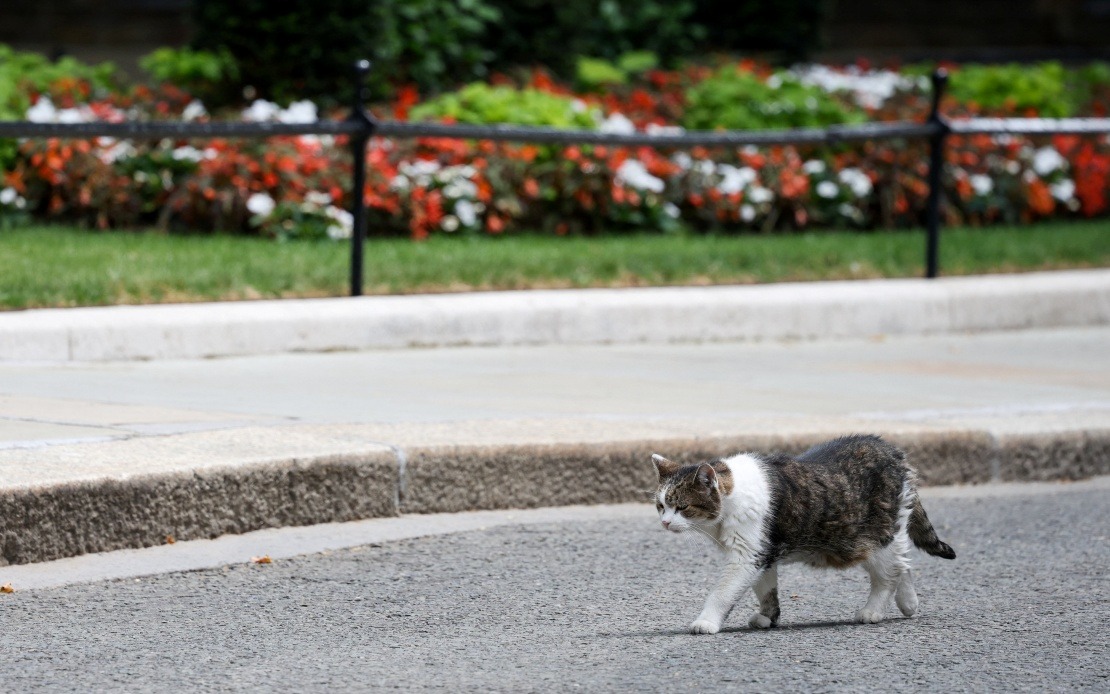
In a quirk of British political life that underscores the tumultuous nature of recent Westminster governance, Larry the cat—the celebrated mouser and unofficial fixture of 10 Downing Street—has now witnessed the passage of six different prime ministers through the famous black door. As Andy Burnham assumed the premiership this week and convened his inaugural Cabinet gathering, Larry was spotted wandering the grounds outside the official residence, seemingly unbothered by yet another transition at the apex of British power. The feline's longevity in his post stands in stark contrast to the increasingly brief tenures that have characterised the office he informally serves.
Larry's presence at Downing Street has become emblematic of institutional permanence in an era marked by political instability. While ministers filed inside to commence the formal business of government under new leadership, the cat's leisurely perambulation around the premises offered an almost philosophical commentary on the revolving door that Westminster has become. His indifference to the changing cast of prime ministers speaks to a deeper truth about the British civil service and the permanent machinery of state—institutions that persist regardless of which politician occupies the corner office.
The cat's tenure spans a period of extraordinary flux in British politics. From David Cameron through to Andy Burnham, Larry has observed administrations rise and fall with accelerating frequency. This compressed timeline of prime ministerial transitions reflects broader turbulence within British governance, including Brexit's aftermath, economic challenges, and shifting electoral fortunes. For international observers, particularly those in Commonwealth nations like Malaysia, Larry's longevity serves as an amusing reminder that even the world's oldest continuous parliamentary democracy experiences moments of governmental chaos.
Larry was originally brought to Downing Street in 2011 as an official rodent control officer, a position that carries more ceremonial than practical weight in the modern era. Yet he has transcended his original job description to become a beloved public figure and unofficial ambassador of the Prime Minister's residence. His presence humanises the often austere and formal atmosphere surrounding British politics, offering the public a relatable touchstone during times of political turbulence. Social media has amplified his celebrity, with photographs and videos of Larry's daily activities regularly generating widespread affection and commentary.
The cat's unflappable demeanour through successive governments highlights something essential about British constitutional practice: the separation between the temporary occupants of high office and the permanent institutions they temporarily lead. While prime ministers come and go with increasing rapidity, Larry remains, a four-legged constant in the corridors of power. This has not been lost on observers of British politics, who have noted with wry humour that the cat has proven more durable than several recent prime ministers combined.
From a Southeast Asian perspective, Larry's story illustrates broader questions about political stability and institutional longevity. Malaysia's own political landscape, which has witnessed multiple changes in government and constitutional crises, offers interesting contrasts. While Malaysia has experienced significant governmental transitions, the institutions surrounding the monarchy and civil service have maintained continuity. Larry embodies a similar principle—that beneath the tumult of electoral politics, certain elements of governance persist with stolid reliability.
The symbolic value of Larry extends beyond mere entertainment. His continued presence at Downing Street reassures both the British public and international observers that certain aspects of government function with clockwork regularity, even as political leadership shifts. During periods of uncertainty or public dissatisfaction with political direction, Larry represents an element of continuity and institutional memory that transcends partisan divisions. This universal appeal—a cat has no political affiliation—has made him perhaps the most genuinely respected resident of 10 Downing Street regardless of which party holds the keys.
As Burnham settles into his role and confronts the substantial challenges that await any British Prime Minister, Larry's presence remains a reminder of what endures beyond political cycles. The cat's casual stroll around the Downing Street grounds during the new Cabinet's first meeting encapsulated this principle perfectly: while ministers debated and decided, Larry simply carried on with his existence, indifferent to the passing parade of prime ministers. In a political era characterised by unprecedented change and instability, such steadiness holds surprising value.

